For the parent who still has to answer the texts, make the exchanges, and protect the child.
Your ex sent another message. This time, you won’t have to guess what to say.
You left the relationship. But the arguments followed you into pickups, school decisions, holidays, money—and sometimes into the words your child brings home.
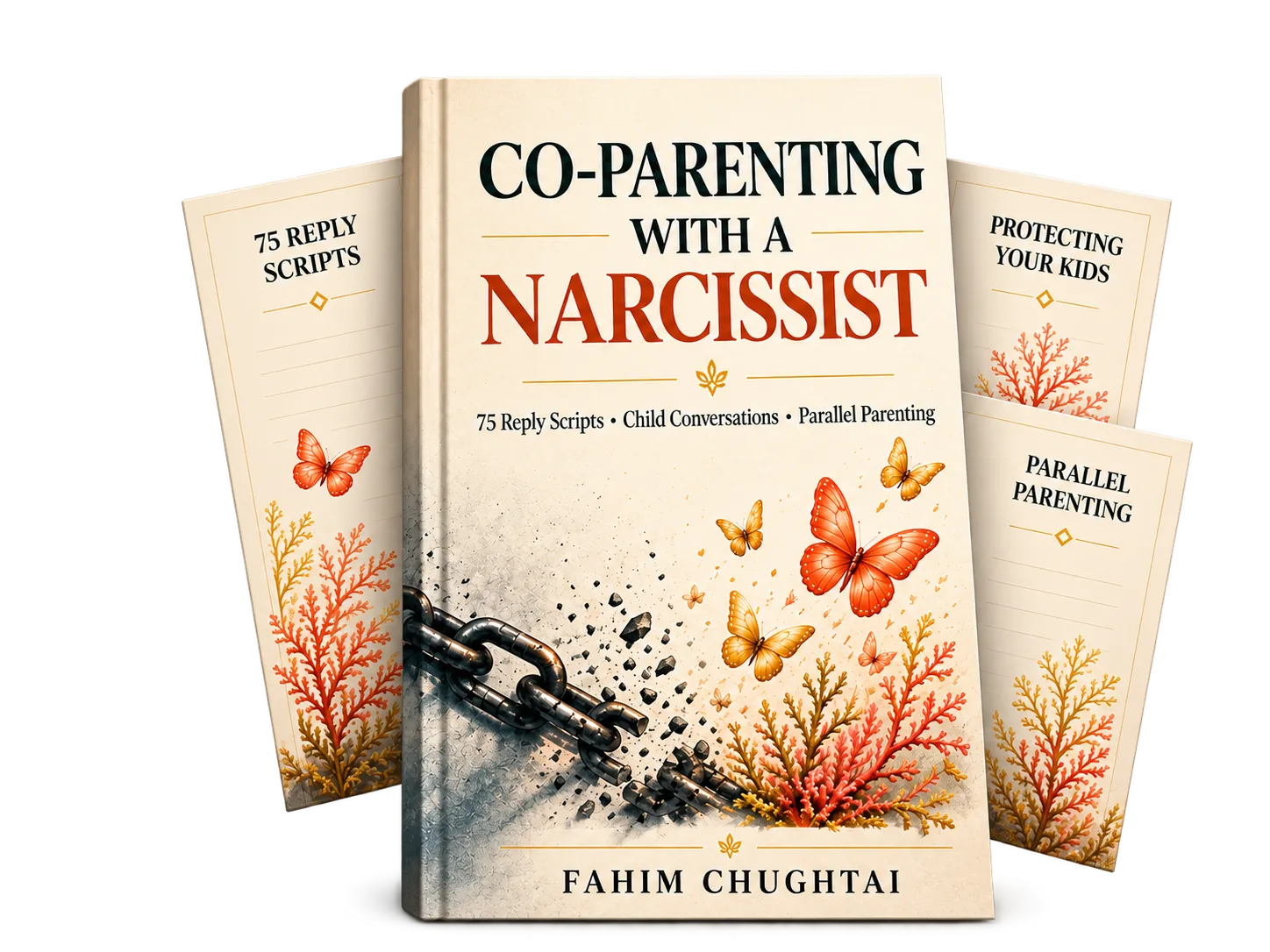
Co-Parenting With a Narcissist gives you 75 ready-to-adapt replies for the situations that keep coming back, 12 age-specific conversations to help your child, and a practical parallel-parenting plan you can turn to when contact feels impossible.
You don’t need to win every argument. You need a clear next step that protects your peace and keeps your child out of the middle.
It was supposed to get easier after you separated.
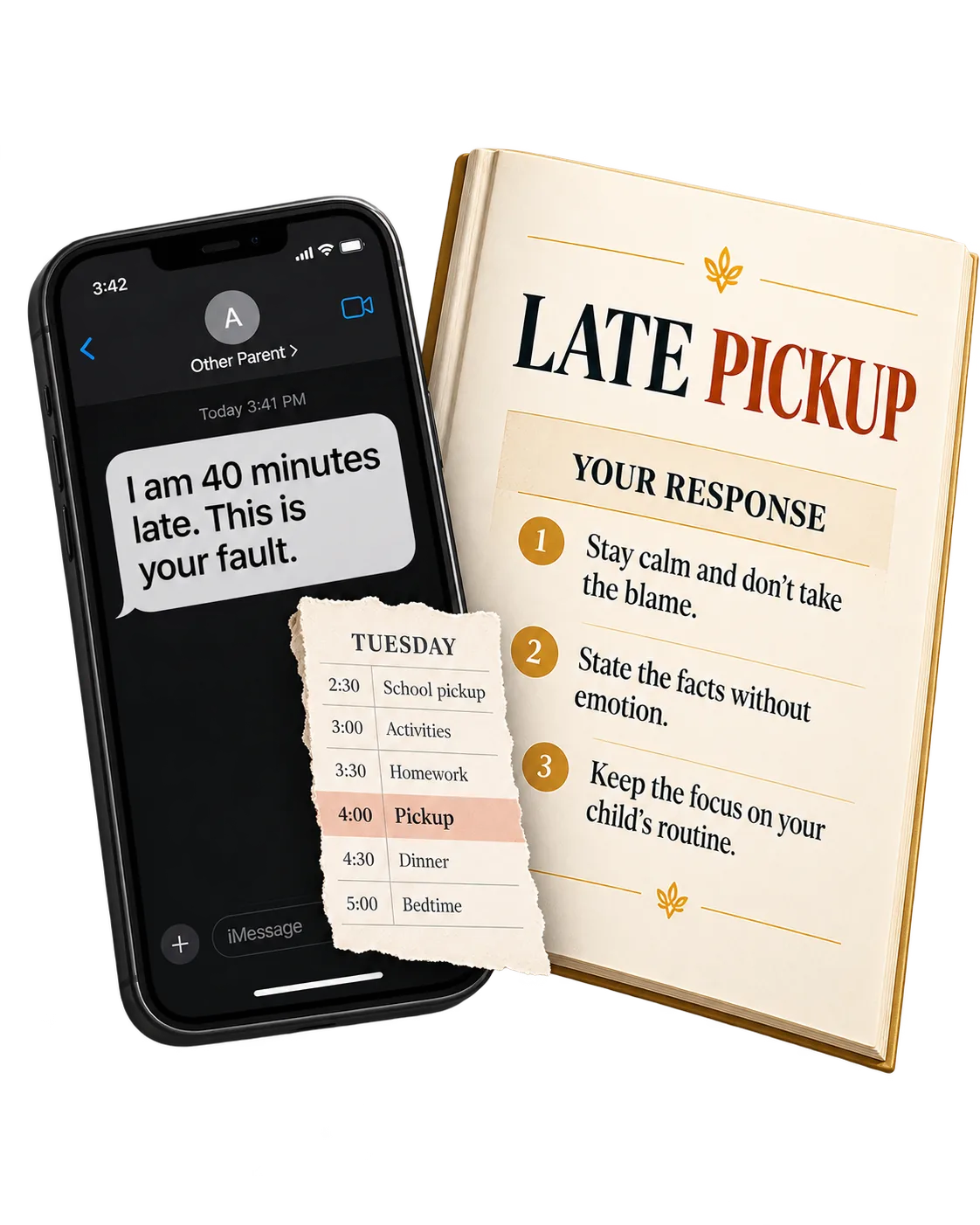
Instead, your phone lights up and your body braces. A simple “What time is pickup?” becomes a fight about the past. A schedule change comes at the last minute. A child repeats something hurtful they heard at the other house. You write a careful paragraph, delete it, try again—and wonder if any reply will be used against you.
So you do what you can: stay polite, explain yourself, give another chance, take a screenshot, keep the child calm. Then the same problem comes back in a different form next week.
The exhausting part is having to make a new plan every single time.
This book puts the recurring situations in one place, so you can stop drafting replies from a place of panic.
You cannot make them cooperate. You can change what happens on your side of the exchange.
The book helps you make five decisions in the moments that matter:
- Does this message actually need a response?
- What short, child-focused reply fits the situation?
- Which argument should you leave out of the reply?
- What facts are worth recording?
- What does your child need to hear from you afterward?
It’s a way to respond with intention when the other person wants an immediate reaction.
Open to the problem. Find words you can actually use.
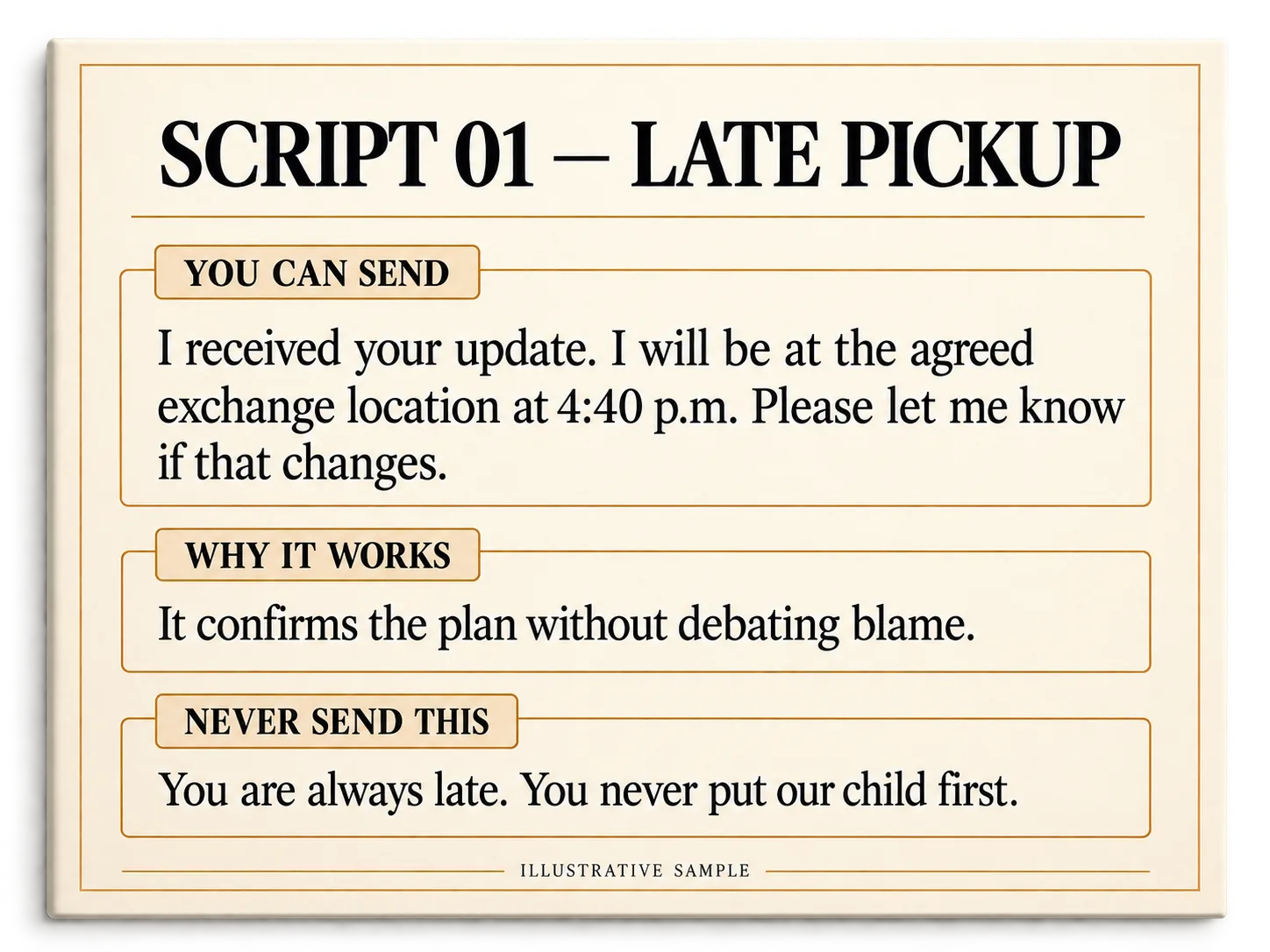
75 scripts, organized around the situations that steal your time and peace:
Exchanges and schedulingLate pickup, last-minute swaps, unexpected visits, conflict at handoff and more.
Money and expensesSupport, medical costs, extra requests and money used as pressure.
Badmouthing and loyalty conflictYour child as messenger, repeated insults and attempts to turn them against you.
Communication controlThe 2 a.m. accusation, a flood of texts, fake emergencies and demands for an immediate answer.
School, medical and decisionsMissing information, unilateral decisions, therapy disputes and conversations with teachers or doctors.
Holidays and birthdaysPressure to change the schedule, blocked calls and competing plans.
New partner and family interferenceDirect contact, relatives applying pressure and confusing roles for your child.
Court and lawyer threatsCustody threats, a lawyer’s letter, CPS threats and accusations that you’re an unfit parent.
Each script includes:
Picture the next time a message arrives.
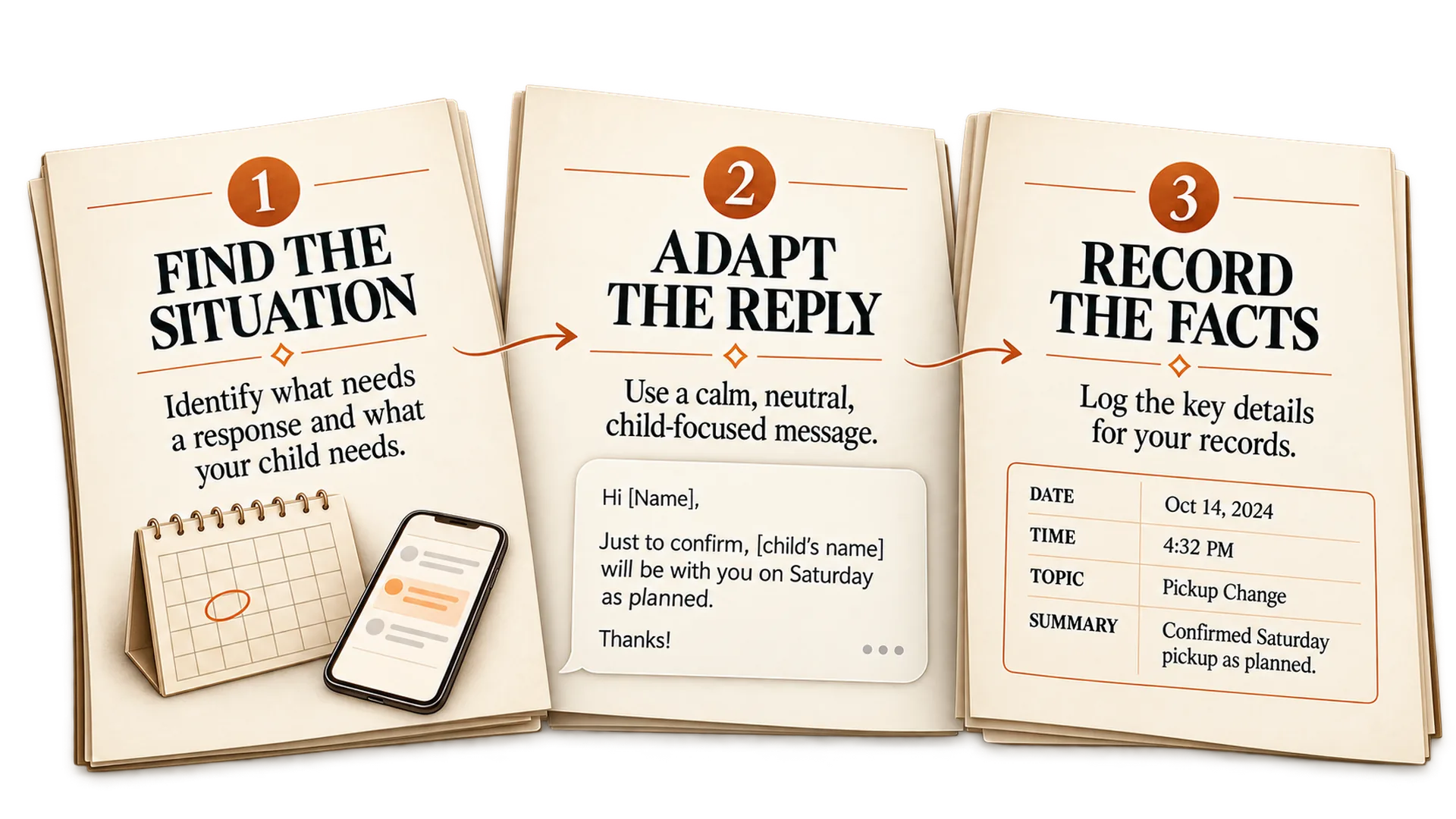
Instead of writing a long defense, you find the matching situation. You check what your order and your child’s immediate needs require. You adapt a short response. If something important happens, you record the date and facts on the right page.
Find the situation
Open directly to the category that matches what is happening now.
Adapt the reply
Check the facts, your order, and your child’s immediate needs.
Record the facts
Write down the date and direct observations when something important happens.
That is the purpose of the book: less guessing in the moment, more consistency over time.
It won’t stop every upsetting message. But you don’t have to meet each one without a plan.
What do you say when the conflict reaches your child?

The right reply to your ex is only half the problem. You may still be holding a child who cries before a visit, comes back withdrawn, asks why you separated, or says, “Mom/Dad told me you don’t love me.”
Protecting Your Kids’ Hearts covers 12 difficult conversations, with different wording for children ages 4–7, 8–12, and teens.
You’ll find guidance for loyalty questions, a child repeating insults, being used as a messenger, distress after a visit, nightmares or regression, and the frightening question: “Is my other parent bad?”
Stop expecting every interaction to become a friendly negotiation.
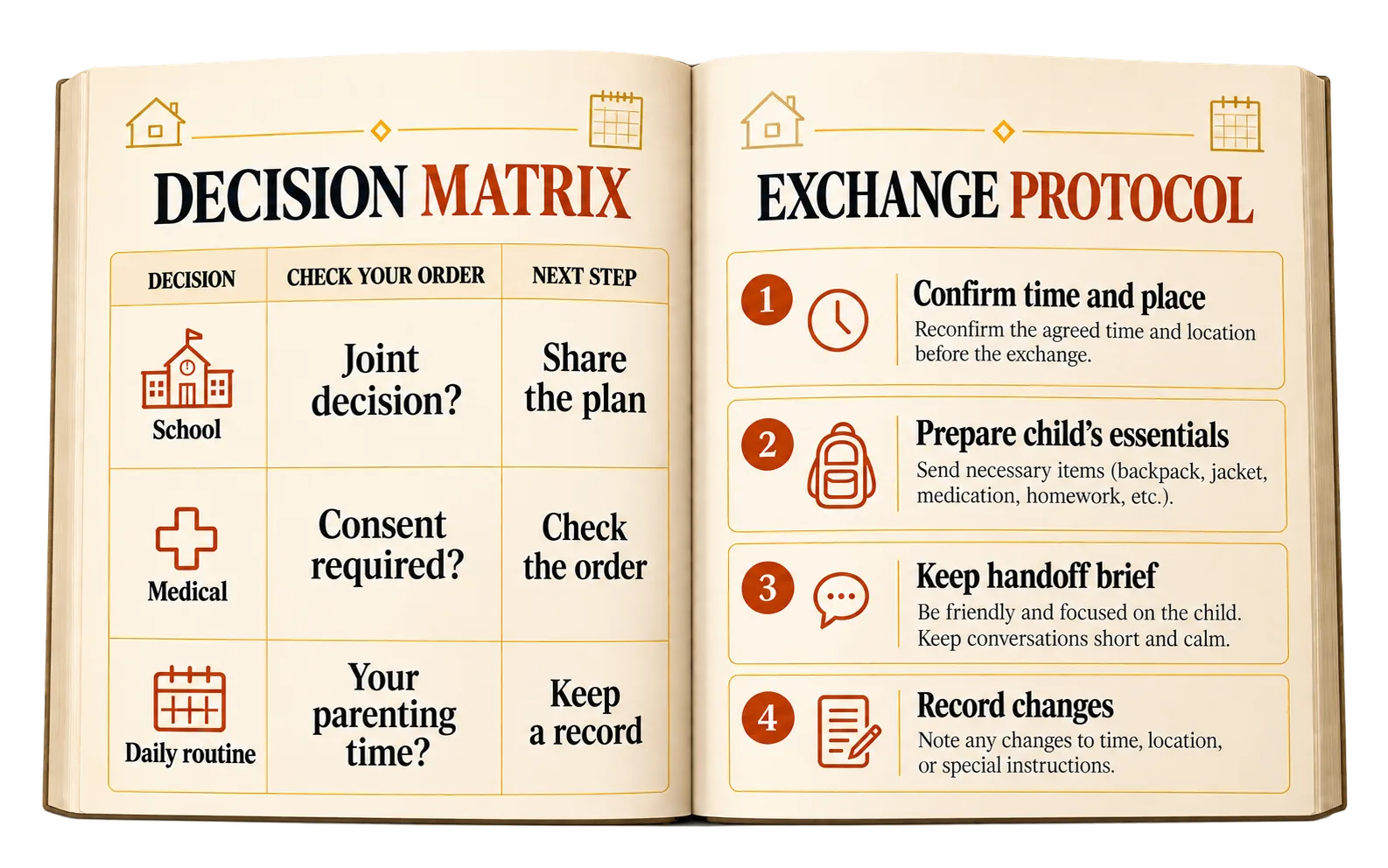
You still need a working system for exchanges, information and decisions. The Parallel-Parenting Playbook gives you:
- Ten rules for lower-conflict contact.
- BIFF replies with examples.
- An exchange protocol, including a public-location option and a short handoff.
- A decision matrix for questions that may need joint input versus decisions you can make under your arrangement.
- Grey-rock communication adapted to child-related matters.
- A disengagement plan when a parenting conversation becomes a personal argument.
You shouldn’t have to reconstruct six months of events from memory.
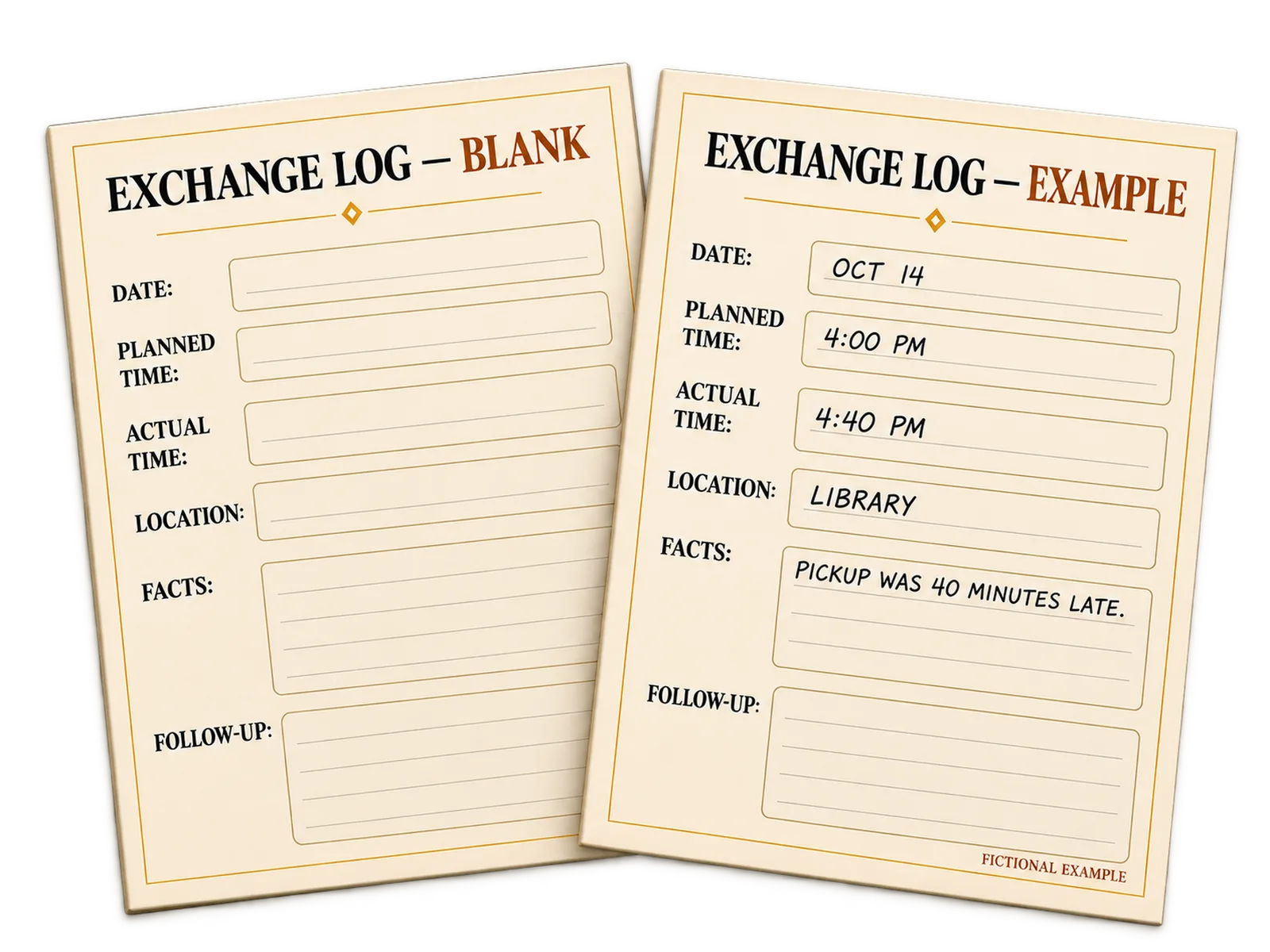
When a pattern keeps repeating, a clear record helps you see what happened without replaying every argument in your head.
Inside the book are reusable pages for:
One book you can read—and return to when you need it.
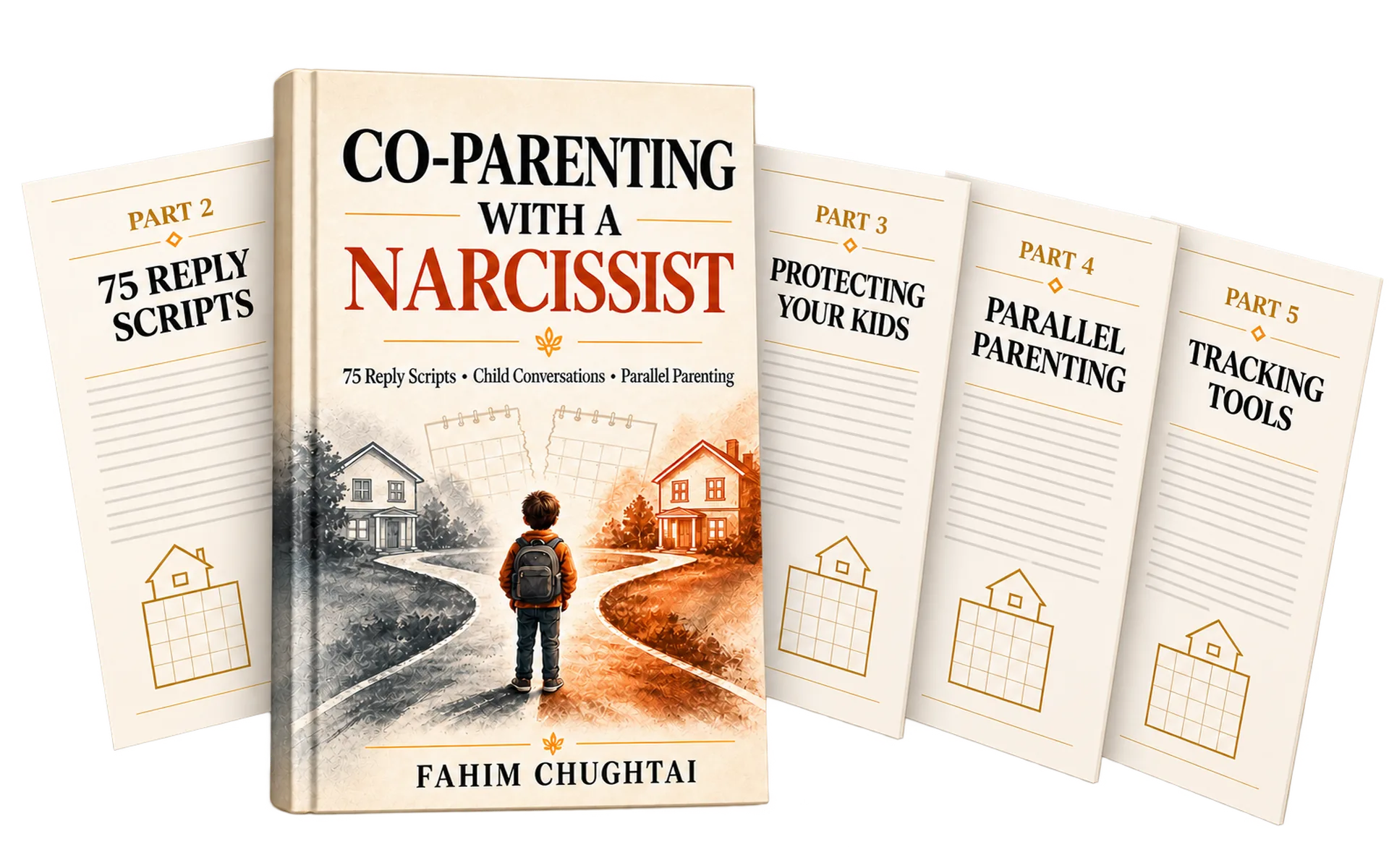
Why “co-parenting” breaks down
Understand recurring dynamics and change the goal from winning cooperation to protecting your child’s day-to-day stability.
75 Reply Scripts
Ready-to-adapt language across eight categories, with explanations and “never send” examples.
Protecting Your Kids’ Hearts
12 conversations with age-specific wording.
Parallel-Parenting Playbook
Practical rules, communication, exchanges and decision-making.
Tracking Tools
Reusable pages for keeping key information organized.
Quick reference and planning
A quick-reference card for stressful moments, pages to note the scripts you use most, emergency contacts and your personal commitment.
You can read from the beginning—or open directly to the problem in front of you.
This book is for you if…
- You must stay in contact with a difficult ex because you share a child.
- You freeze, over-explain or lose hours rewriting ordinary parenting messages.
- Exchanges, schedules, expenses or school decisions repeatedly become fights.
- You’re trying to support a child caught between two homes.
- You want practical words, a clearer system and a place to keep useful records.
You don’t need to prove that the other parent has a personality disorder. The tools address behaviors and situations, not a diagnosis. The book is for mothers and fathers.
Written for the questions that don’t end when the relationship ends.

Most advice tells you to “communicate better” or “stay calm.” Those words are hard to use when a child is waiting at an exchange or your phone is filling with demands. This book turns recurring co-parenting problems into concrete situations, responses, child conversations and record-keeping pages.
Its promise is practical: open the book and find a more considered next step.
Keep one difficult message from taking over the rest of your day.
Co-Parenting With a Narcissist
One complete digital book with:
- 75 adaptable reply scripts
- 12 child conversations with wording for three age groups
- A practical parallel-parenting playbook
- 7 types of tracking and documentation pages
- Emergency quick-reference and personal planning pages
Clear answers, without impossible promises.
No book can control another person’s behavior. This one helps you choose your own responses, support your child and organize important facts more consistently.
You can use the book without a diagnosis. Its scripts address observable high-conflict situations.
No. The book gives communication and record-keeping tools. For custody questions, talk to a qualified professional in your area.
It’s a digital download you can read on your phone, tablet or computer, or print the pages you use most.
The book builds on those ideas with full scripts for specific situations, so you’re not starting from a blank page each time.
The next message doesn’t have to derail your day.
Get the complete digital book with 75 reply scripts, 12 child conversations, the parallel-parenting playbook, and 7 tracking tools.