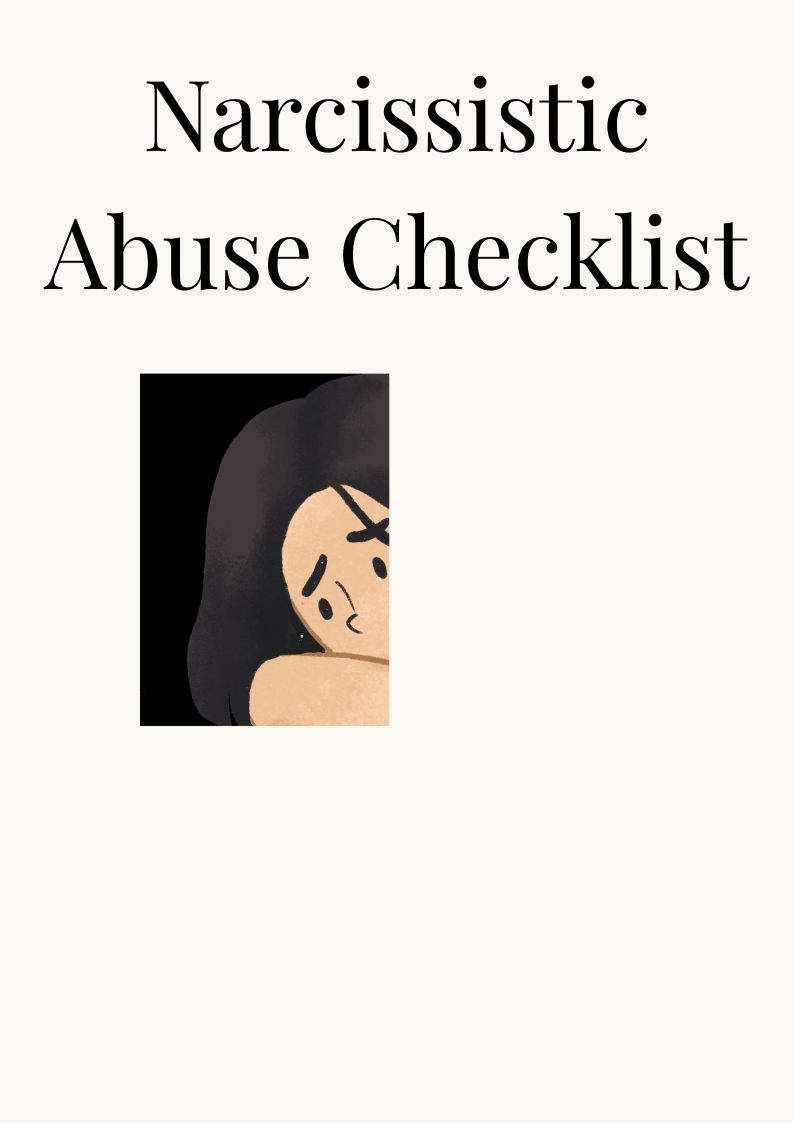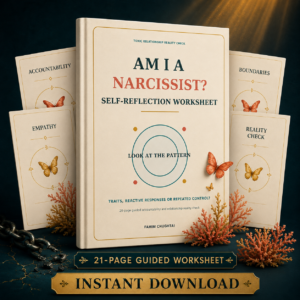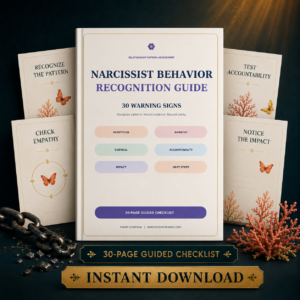

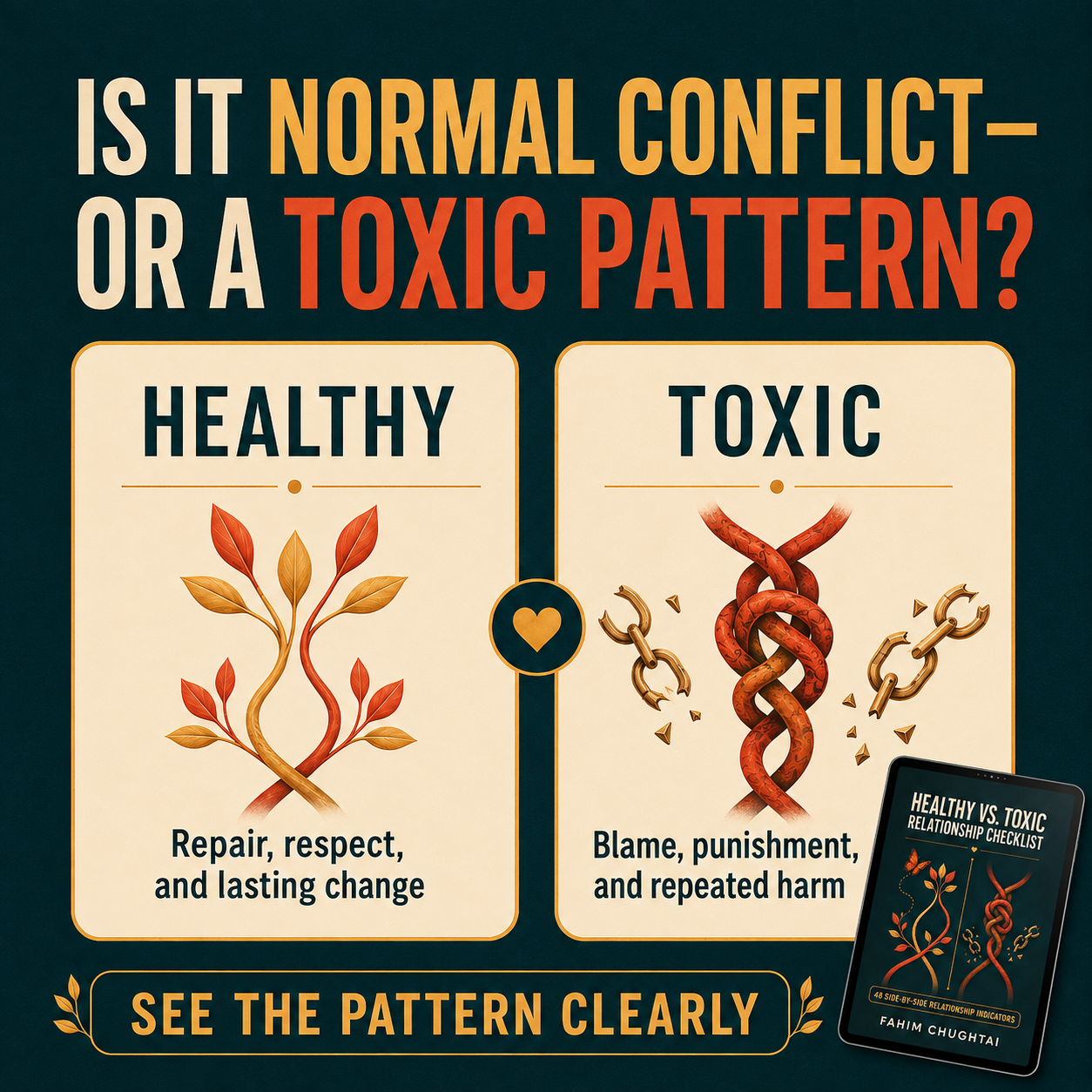
Are you experiencing normal relationship conflict—or a repeated pattern of manipulation, control, and emotional harm?
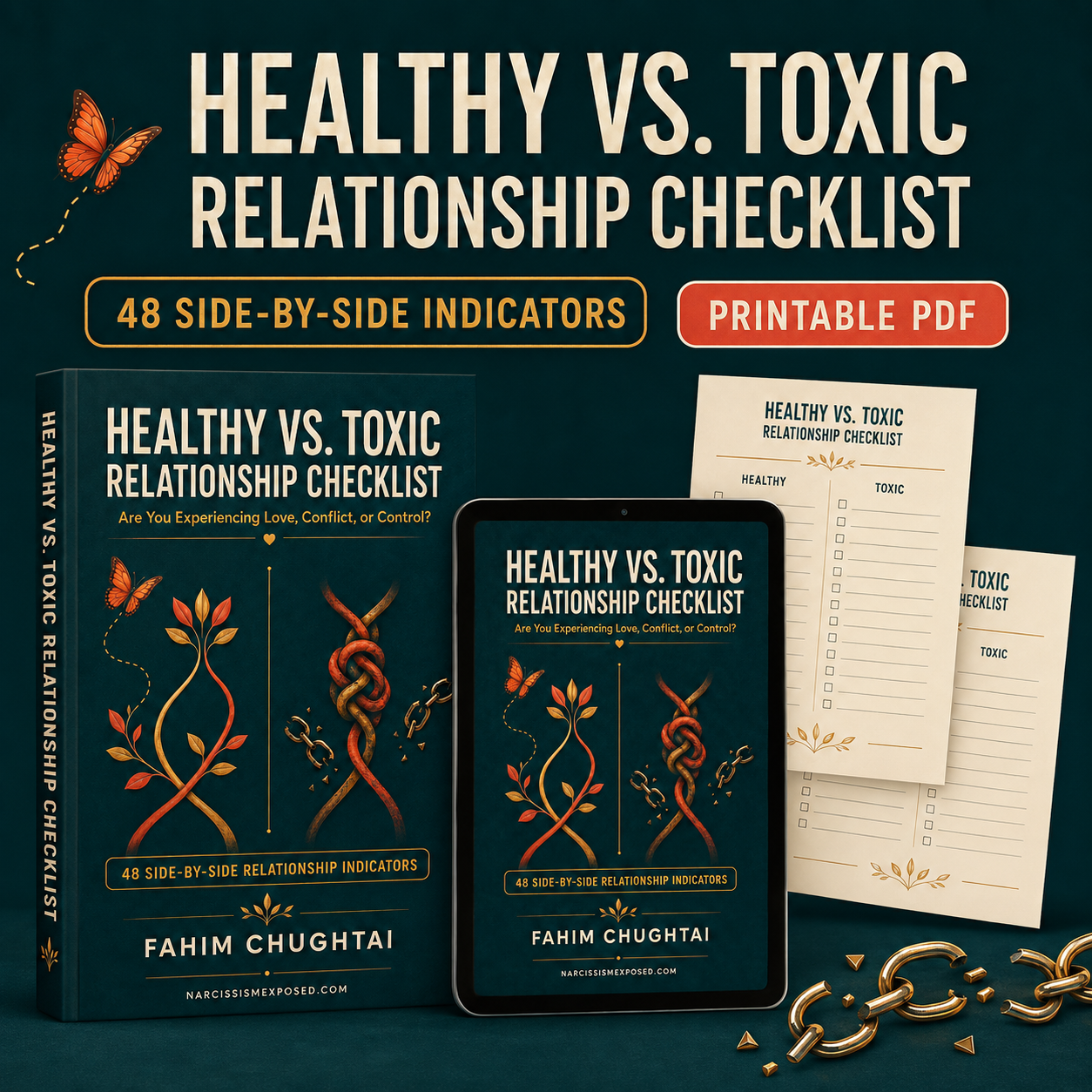
The Healthy vs. Toxic Relationship Checklist helps you compare healthy and unhealthy relationship behaviors side by side. Instead of judging your relationship by promises or occasional good moments, you can examine the patterns that affect your communication, boundaries, trust, emotional safety, and sense of self.
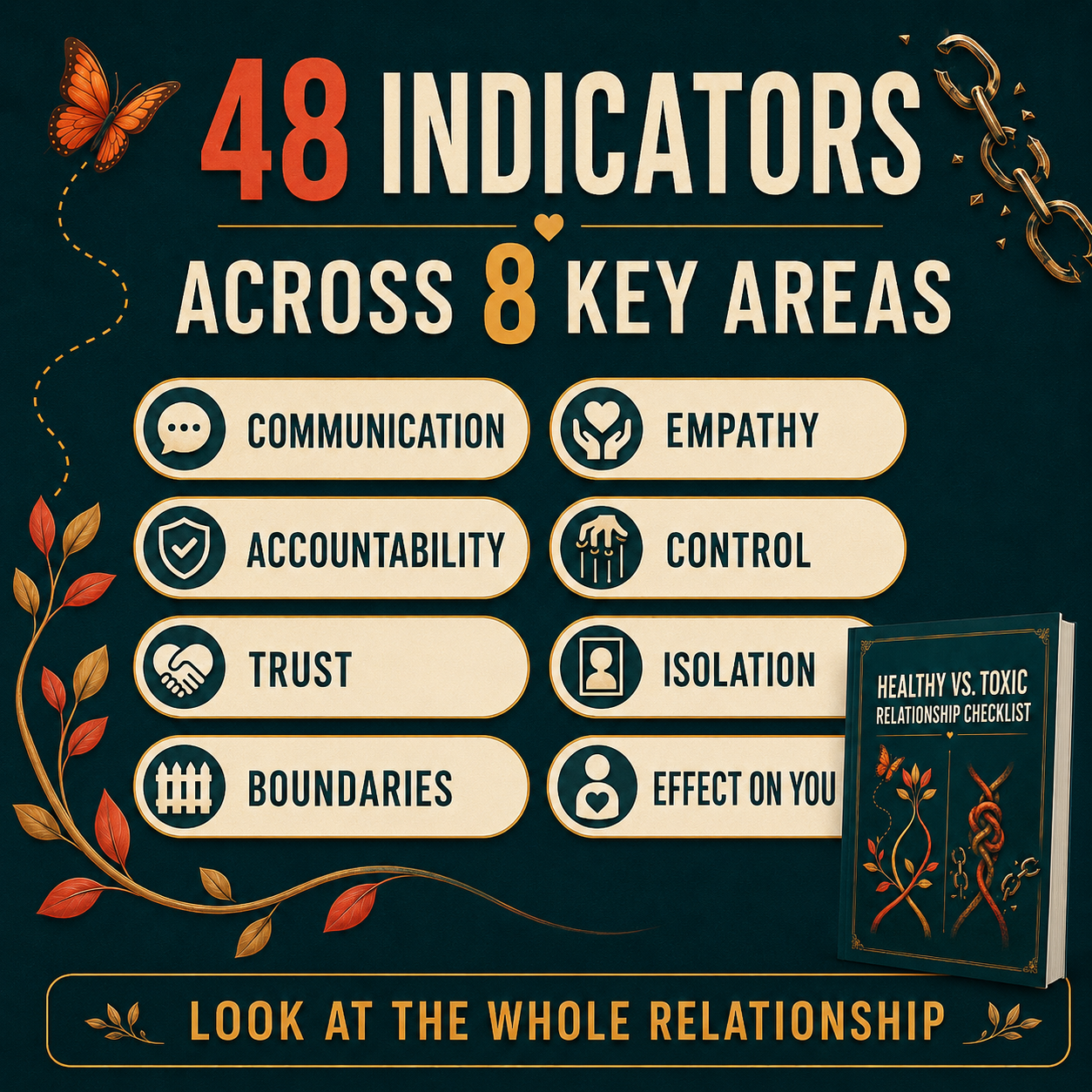
This printable self-reflection resource includes 48 paired relationship indicators across eight important areas.
WHAT’S INCLUDED
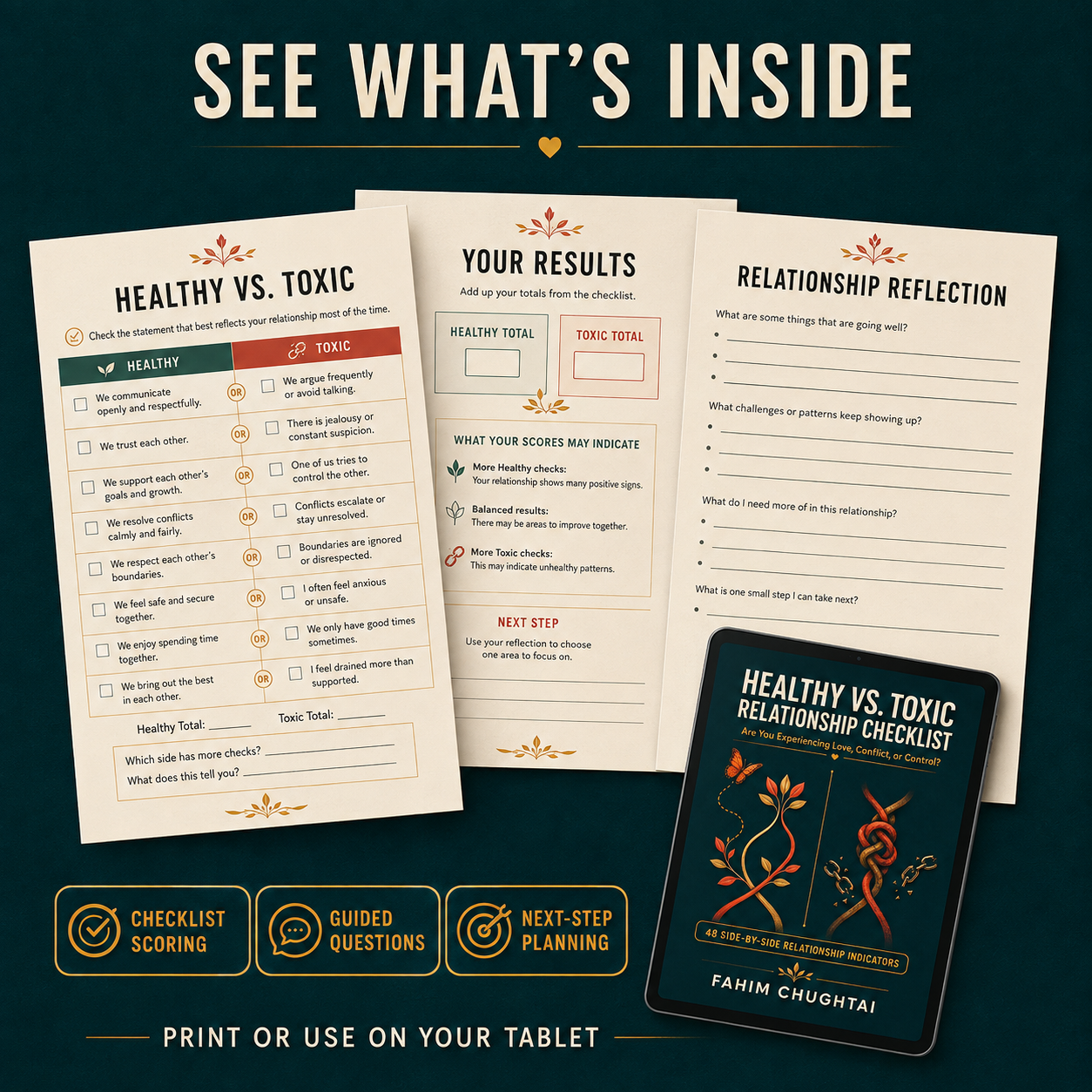
✓ 48 healthy-versus-toxic relationship comparisons
✓ Eight relationship assessment sections
✓ Healthy and toxic indicator totals
✓ Simple score-interpretation guide
✓ High-risk behavior warning page
✓ Eight guided reflection questions
✓ Personal next-step planning prompts
✓ Educational and safety disclaimer
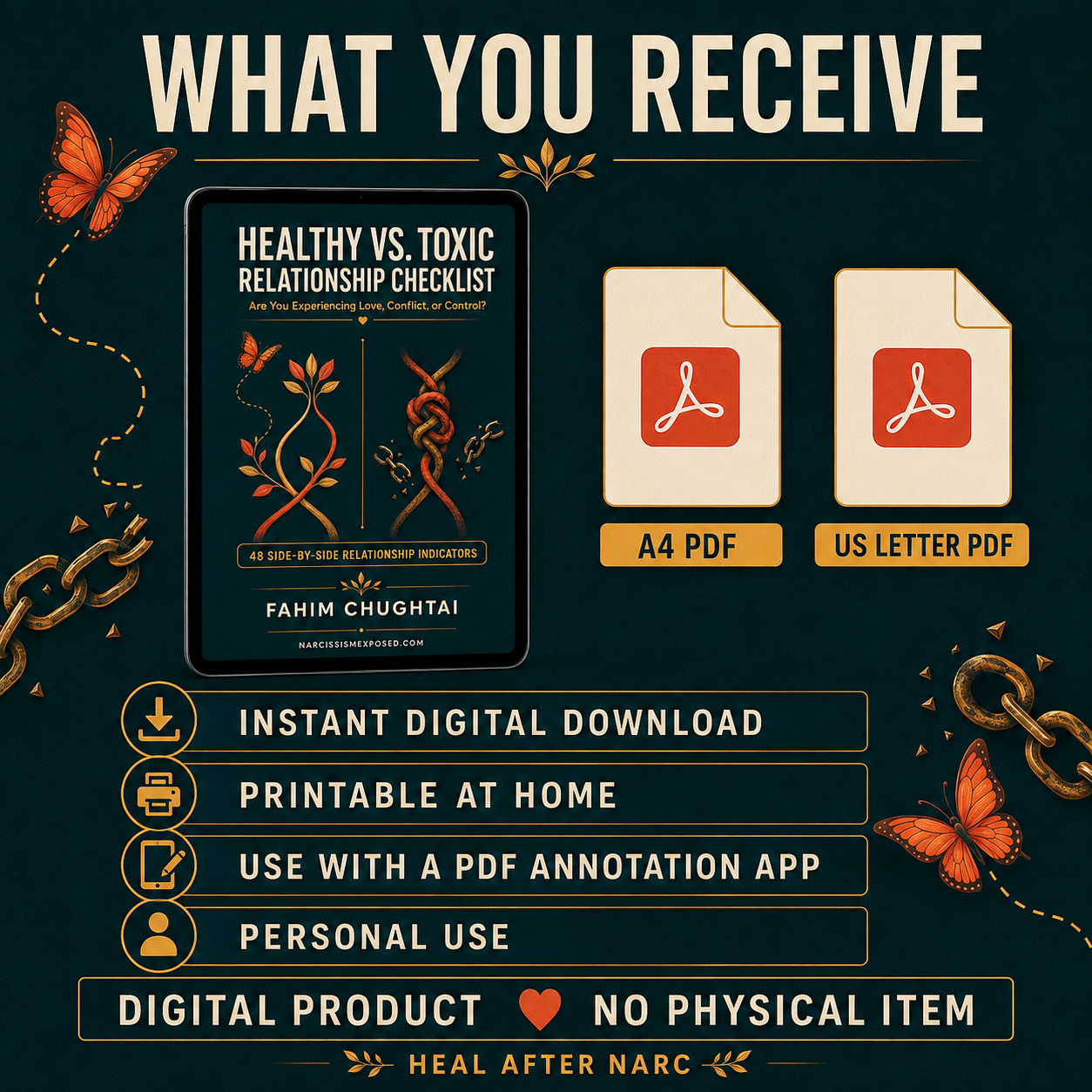
✓ A4 printable PDF
✓ US Letter printable PDF
EIGHT AREAS COVERED
- Communication
- Conflict and accountability
- Trust and honesty
- Boundaries and autonomy
- Emotional support and empathy
- Power, control, and manipulation
- Social life and isolation
- The relationship’s effect on you
THIS CHECKLIST MAY HELP YOU
• Identify relationship red flags you have been minimizing
• Compare respectful conflict with repeated emotional harm
• Recognize control, gaslighting, isolation, and boundary violations
• Understand why you may feel confused, anxious, or unable to trust yourself
• Organize your experiences before seeking additional support
• Reflect on whether apologies lead to meaningful behavioral change
• Identify practical next steps without pressure or judgment
WHO THIS IS FOR
This checklist may be useful if you:
• Feel confused about whether your relationship is healthy
• Regularly walk on eggshells around your partner
• Question your memory or perception after disagreements
• Feel blamed for nearly every relationship problem
• Struggle to maintain personal boundaries
• Feel increasingly isolated or unlike yourself
• Are recovering from a toxic or emotionally harmful relationship
• Want to recognize healthier patterns before dating again
HOW TO USE IT
Read each pair of statements and check the behavior that most consistently describes your relationship.
Focus on repeated patterns rather than one isolated disagreement. Complete the checklist privately and take breaks if any section becomes emotionally overwhelming.
You can print the pages at home or use them on a tablet with a PDF annotation application.
PLEASE REMEMBER
A healthy relationship does not need to be perfect. It does require mutual respect, honesty, accountability, consent, emotional safety, and the freedom to remain yourself.
Some behaviors—including violence, coercion, stalking, threats, physical restraint, and serious financial control—should be taken seriously regardless of the final checklist score.
DIGITAL PRODUCT DETAILS
• Instant digital download
• PDF format
• A4 and US Letter versions included
• No physical product will be shipped
• Colors may vary slightly between screens and printers
• For personal use only
• Resale, redistribution, sharing, and commercial reproduction are prohibited
IMPORTANT DISCLAIMER
This checklist is an educational self-reflection resource. It is not a psychological evaluation, clinical diagnosis, legal opinion, or substitute for individualized medical, mental-health, legal, or emergency support.
A checklist cannot determine whether another person has Narcissistic Personality Disorder or any other diagnosis.
If you are in immediate danger, contact your local emergency services or an appropriate domestic-abuse organization.
Created by Fahim Chughtai
NarcissismExposed.com
Copyright 2026 Fahim Chughtai. All rights reserved.