
What is gaslighting in relationships, and how do you know if it’s happening to you? This question haunts thousands of people who sense something is deeply wrong in their relationship but can’t quite name it. I am seven years into specializing in narcissistic abuse recovery, and I’ve guided countless survivors through understanding this insidious form of emotional manipulation.
- Understanding the Foundation: What Exactly Is Gaslighting in Relationships?
- The Psychology Behind Gaslighting: Why Partners Use This Manipulation
- Recognizing Gaslighting: The Warning Signs and Red Flags
- Common Gaslighting Tactics: How Manipulation Actually Works
- The Gradual Process: How Gaslighting Develops Over Time
- The Devastating Impact: How Gaslighting Affects Your Mental Health
- Protecting Yourself: Strategies for Different Stages of Gaslighting
- Recovery and Healing: Rebuilding Your Relationship with Reality
- When Professional Help Is Needed
- Building Future Relationships: What You Need to Know
- Conclusion: Reclaiming Your Reality and Moving Forward
- Frequently Asked Questions
Let me walk you through everything you need to know about gaslighting in romantic relationships. We’ll start with the fundamental definition and build your understanding step by step, so you can recognize the signs, understand the psychology behind it, and most importantly, learn how to protect yourself and heal.
By the end of this guide, you’ll have a clear framework for identifying gaslighting, understanding why it happens, and taking action to safeguard your mental health and well-being.
Understanding the Foundation: What Exactly Is Gaslighting in Relationships?
Before we dive into the complex patterns and tactics, let’s establish a solid foundation. Think of this section as building the ground floor of a house – we need this understanding to support everything else we’ll learn.
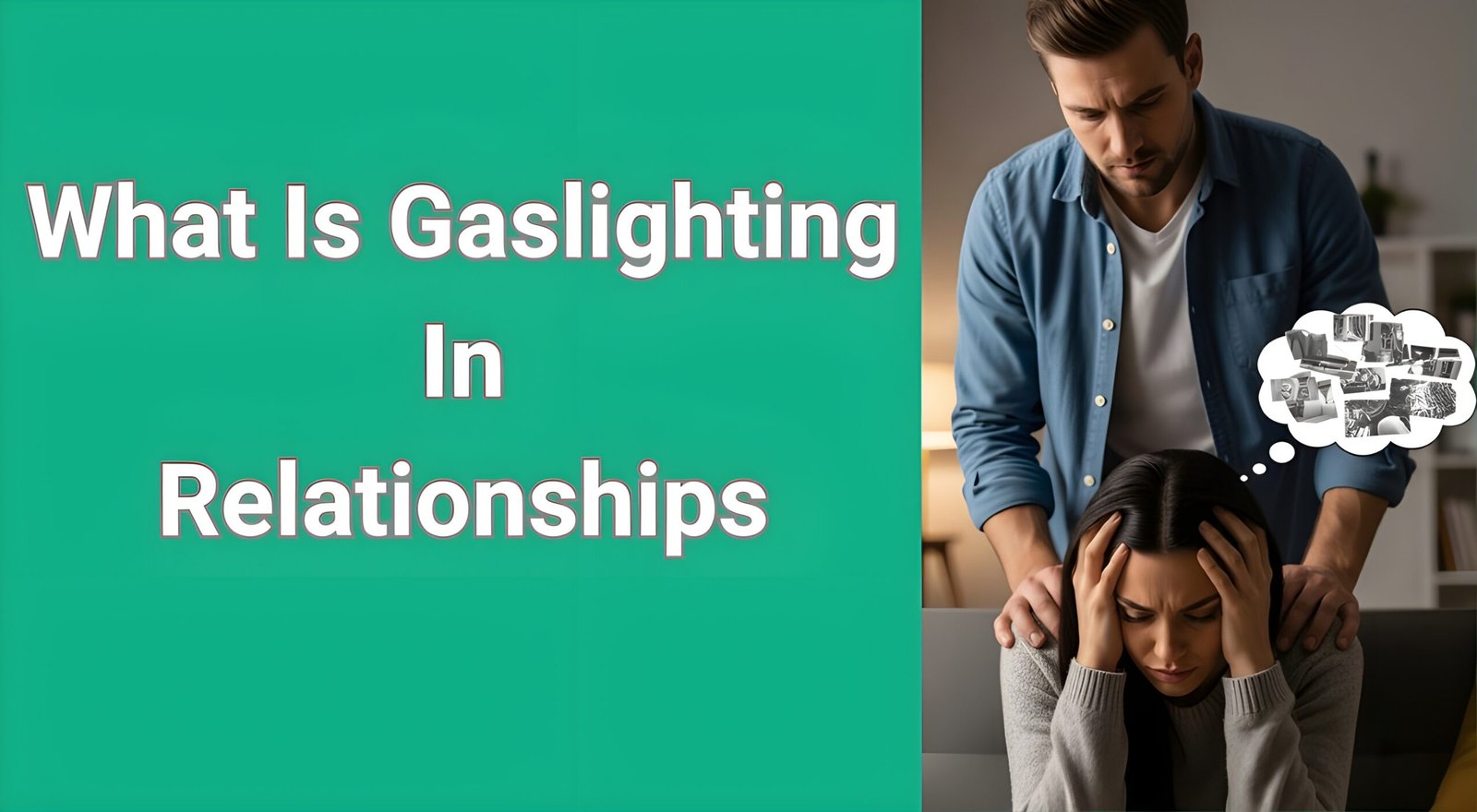
Gaslighting in relationships occurs when a partner repeatedly undermines and distorts your reality by denying facts, dismissing your feelings, or rewriting events to make you question your own perceptions and sanity. The goal is always the same: to gain control and power over you by making you doubt your own mind.
The term comes from the 1944 film “Gaslight,” where a husband systematically manipulates his wife into believing she’s losing her sanity. He dims the gas lights in their home but denies that anything has changed when she notices. This perfectly captures the essence of gaslighting – creating a false reality while insisting it’s the truth.
In modern relationships, gaslighting is a form of emotional abuse and psychological control. Unlike physical abuse, which leaves visible marks, gaslighting attacks your cognitive abilities and trust in your own perceptions. It’s particularly insidious because it happens gradually, often in relationships where you initially felt loved and valued.
Here’s what makes gaslighting different from normal relationship disagreements: in healthy disagreements, both partners acknowledge that people can remember things differently and focus on understanding each other’s perspectives. In gaslighting, one partner consistently negates the other’s perception, insisting they’re wrong or that their emotional reactions are irrational.
This distinction connects directly to understanding is gaslighting always intentional, because while the impact remains devastating, the awareness level of the perpetrator can vary significantly.
The Psychology Behind Gaslighting: Why Partners Use This Manipulation
Understanding why someone would gaslight their partner helps you recognize the behavior more clearly and reduces the self-blame that victims often experience. Let’s explore the psychological mechanisms that drive this behavior.
Gaslighting operates through several key psychological principles:
Power and Control Dynamics: Gaslighters use reality distortion to maintain dominance in the relationship. When you question your own perceptions, you become increasingly dependent on their version of reality, which gives them tremendous control over your thoughts, feelings, and behaviors.
Responsibility Avoidance: Many gaslighters learned this tactic as a way to avoid accountability for their actions. Instead of taking responsibility for hurtful behavior, they convince you that your perception of their behavior is flawed.
Emotional Regulation: Some people gaslight as an unconscious way to manage their own emotional discomfort. When confronted with their mistakes or the consequences of their actions, they automatically deflect by making you question your reality rather than dealing with their own feelings.
Learned Patterns: Research shows that many people who gaslight learned this behavior in childhood, either by experiencing it themselves or witnessing it in their family dynamics. They may not even realize they’re doing it, especially in the early stages.
The connection between gaslighting and certain personality patterns is significant. Studies indicate that narcissistic gaslighting techniques often involve specific tactics designed to maintain the narcissistic person’s sense of superiority and control.
Think of gaslighting as a psychological survival mechanism gone wrong. While healthy people develop communication skills and emotional regulation strategies, gaslighters developed reality manipulation as their primary tool for managing relationships and avoiding uncomfortable feelings.
Recognizing Gaslighting: The Warning Signs and Red Flags
Now that you understand what gaslighting is and why it happens, let’s learn to recognize it in action. This is often the most challenging part because gaslighting is designed to make you doubt your own perceptions – including your perception that you’re being manipulated.
Early Warning Signs (The Foundation Phase):
These signs often appear early in the relationship, during what many call the “honeymoon period.” At this stage, the behavior might seem minor or excusable, but it establishes the foundation for more serious manipulation later.
Your partner dismisses your concerns with phrases like “You’re being too sensitive” or “You’re overreacting.” Notice how this shifts focus from their behavior to your reaction, making you the problem rather than addressing the issue you raised.
They have convenient memory lapses about promises, commitments, or conversations that matter to you. When confronted, they seem genuinely confused rather than defensive, making you wonder if you’re misremembering.
Your gut feelings and instincts are consistently questioned or invalidated. They might say things like “I don’t know why you feel that way” or “That doesn’t make sense” rather than trying to understand your perspective.
Escalation Signs (The Building Phase):
As the relationship progresses and you become more emotionally invested, the gaslighting typically intensifies. These signs indicate that the manipulation is becoming more systematic and deliberate.
Your partner begins rewriting history about significant events, especially arguments or incidents where they behaved poorly. They present such a convincing alternative version that you start doubting your own memory of what happened.
They use your emotional reactions against you, suggesting that your feelings prove you’re unstable, irrational, or mentally ill. This is particularly damaging because it weaponizes your own emotional responses.
Friends and family members begin to seem “turned against you” or suddenly agree with your partner’s version of events. This could indicate triangulation, where the gaslighter has been presenting a false narrative to your support network.
Advanced Signs (The Control Phase):
At this stage, the gaslighting has typically succeeded in significantly undermining your confidence in your own perceptions. These signs indicate serious psychological manipulation that requires immediate attention and support.
You find yourself constantly second-guessing your own thoughts, feelings, and perceptions. You might catch yourself thinking “Am I crazy?” or “Maybe I am too sensitive” on a regular basis.
You’ve started apologizing frequently, even for things that aren’t your fault, because it seems easier than dealing with conflict or having your reality questioned.
You feel like you’re walking on eggshells, carefully monitoring your words and actions to avoid triggering your partner’s displeasure or manipulation tactics.
These patterns often overlap with signs of gaslighting in marriage, where long-term commitment can make the manipulation feel even more confusing and difficult to address.
Common Gaslighting Tactics: How Manipulation Actually Works
Understanding the specific techniques gaslighters use empowers you to recognize them in real-time. Let’s break down the most common tactics, complete with examples so you can identify them in your own experiences.
The Denial Tactic: “That Never Happened”
This is perhaps the most straightforward gaslighting technique. Your partner flatly denies events that you clearly remember, often with such conviction that you begin to doubt your own memory.
Example: You confront your partner about a hurtful comment they made the previous evening. They respond with genuine-seeming confusion: “I never said that. You must be thinking of something else.” Even when you provide specific details about the context and timing, they maintain their denial.
Why it works: This technique exploits the natural flexibility of human memory. Because our recollections aren’t perfect recordings, the gaslighter’s confident denial can create doubt about events you actually experienced.
The Minimization Tactic: “You’re Making a Big Deal Out of Nothing”
Rather than denying that something happened, the gaslighter acknowledges the event but characterizes your response as completely disproportionate and unreasonable.
Example: After your partner embarrasses you in front of friends by making jokes at your expense, you express hurt feelings. They respond: “It was just a joke! You’re being way too sensitive. Everyone else thought it was funny. I don’t know why you always take things so seriously.”
Why it works: This technique makes you question whether your emotional responses are appropriate, gradually training you to suppress your natural reactions to harmful behavior.
The Projection Tactic: “You’re the One Who’s Really…”
In this sophisticated manipulation, the gaslighter attributes their own behaviors, thoughts, or feelings to you. They essentially flip the script, making you the one with the problem.
Example: When you notice your partner has been secretive about their phone and ask about it, they respond angrily: “You’re the one who’s always sneaking around! You’re so paranoid and jealous. I think you’re projecting your own guilt onto me.”
Why it works: Projection is particularly confusing because it contains just enough truth (you are concerned and asking questions) to make their characterization seem plausible, while completely avoiding accountability for the behavior that triggered your concerns.
These tactics often appear alongside specific gaslighting phrases narcissists use, which follow predictable patterns designed to undermine your confidence and redirect blame.
The Gradual Process: How Gaslighting Develops Over Time
Understanding how gaslighting typically unfolds helps you recognize the pattern and understand why it can be so difficult to identify when you’re in the middle of it. Think of this as learning to see the forest, not just the individual trees.
Phase 1: The Foundation Setting (Weeks to Months)
Gaslighting rarely begins with obvious manipulation. Instead, it starts with subtle reality testing that seems minor or even caring.
Your partner might begin with small corrections: “Are you sure you remembered to lock the door? You seem stressed lately and have been forgetting things.” Or they might express concern about your perceptions: “I’m worried about you – you seem to be misunderstanding people a lot recently.”
During this phase, you typically give them the benefit of the doubt. After all, everyone forgets things sometimes, and it seems like they’re just being attentive to your well-being. You might even appreciate their “concern” for your mental state.
The key insight: This phase establishes the gaslighter as the authority on reality in your relationship. They position themselves as the more observant, reliable narrator of events.
Phase 2: The Escalation (Months to a Year)
As your emotional investment in the relationship deepens, the gaslighting becomes more frequent and systematic. The manipulator starts targeting more significant events and deeper aspects of your identity.
Now they’re not just questioning whether you locked the door – they’re questioning your memory of important conversations, your understanding of agreements you made together, or your perception of how they treated you during arguments.
You might find yourself frequently saying things like “I thought you said…” or “I remember it differently…” only to be met with confident corrections that leave you doubting your own recollections.
The key insight: During this phase, your confidence in your own perceptions begins to erode systematically. You start relying more heavily on your partner to help you understand reality.
Phase 3: The Entrenchment (Ongoing)
By this stage, the gaslighting has become so pervasive that you’ve developed a habit of questioning your own thoughts, feelings, and perceptions. The manipulation no longer needs to be as obvious because you’ve internalized the doubt.
You might find yourself thinking things like “Maybe I am too sensitive” or “I probably did misremember that” before your partner even says anything. The gaslighting has become so effective that you’re doing it to yourself.
The key insight: This is when gaslighting transitions from being something that’s done to you to something that continues even in your partner’s absence. Your internal dialogue has been corrupted by the manipulation.
Understanding this progression connects to broader patterns of psychological abuse and helps explain why recovery often involves not just leaving the relationship, but also rebuilding your trust in your own perceptions and cognitive abilities.
The Devastating Impact: How Gaslighting Affects Your Mental Health
The effects of gaslighting extend far beyond temporary confusion or hurt feelings. Let’s explore the serious psychological consequences so you can understand why this behavior is considered a form of emotional abuse and why professional support is often necessary for recovery.
Immediate Psychological Effects:
Reality Monitoring Deficits: This is the clinical term for what many gaslighting survivors describe as feeling like they can’t trust their own mind. You develop decreased confidence in your ability to distinguish between your internal thoughts and external events.
You might find yourself constantly seeking external validation for basic perceptions: “Did he really say that?” or “Am I remembering this correctly?” This represents a fundamental disruption in your relationship with your own cognitive abilities.
Cognitive Dissonance: This occurs when your direct experience conflicts with your partner’s version of reality. The mental stress of trying to hold both versions in your mind simultaneously is exhausting and can lead to anxiety, depression, and decision-making paralysis.
For example, you might simultaneously believe “I love my partner and they love me” while also thinking “Something feels very wrong in this relationship.” The conflict between these beliefs creates ongoing psychological distress.
Long-Term Mental Health Consequences:
Complex Trauma and PTSD: Prolonged gaslighting can result in symptoms similar to complex post-traumatic stress disorder (C-PTSD). Survivors often experience hypervigilance, emotional flashbacks, and difficulty with emotional regulation long after the relationship ends.
Attachment Disruption: Gaslighting can fundamentally alter your ability to form secure attachments in future relationships. When someone you love consistently undermines your reality, it can create lasting patterns of mistrust and fear of intimacy.
Identity Confusion: Constant reality distortion can lead to fundamental uncertainty about your own identity, values, and worth. Many survivors describe feeling like they “lost themselves” during the gaslighting relationship.
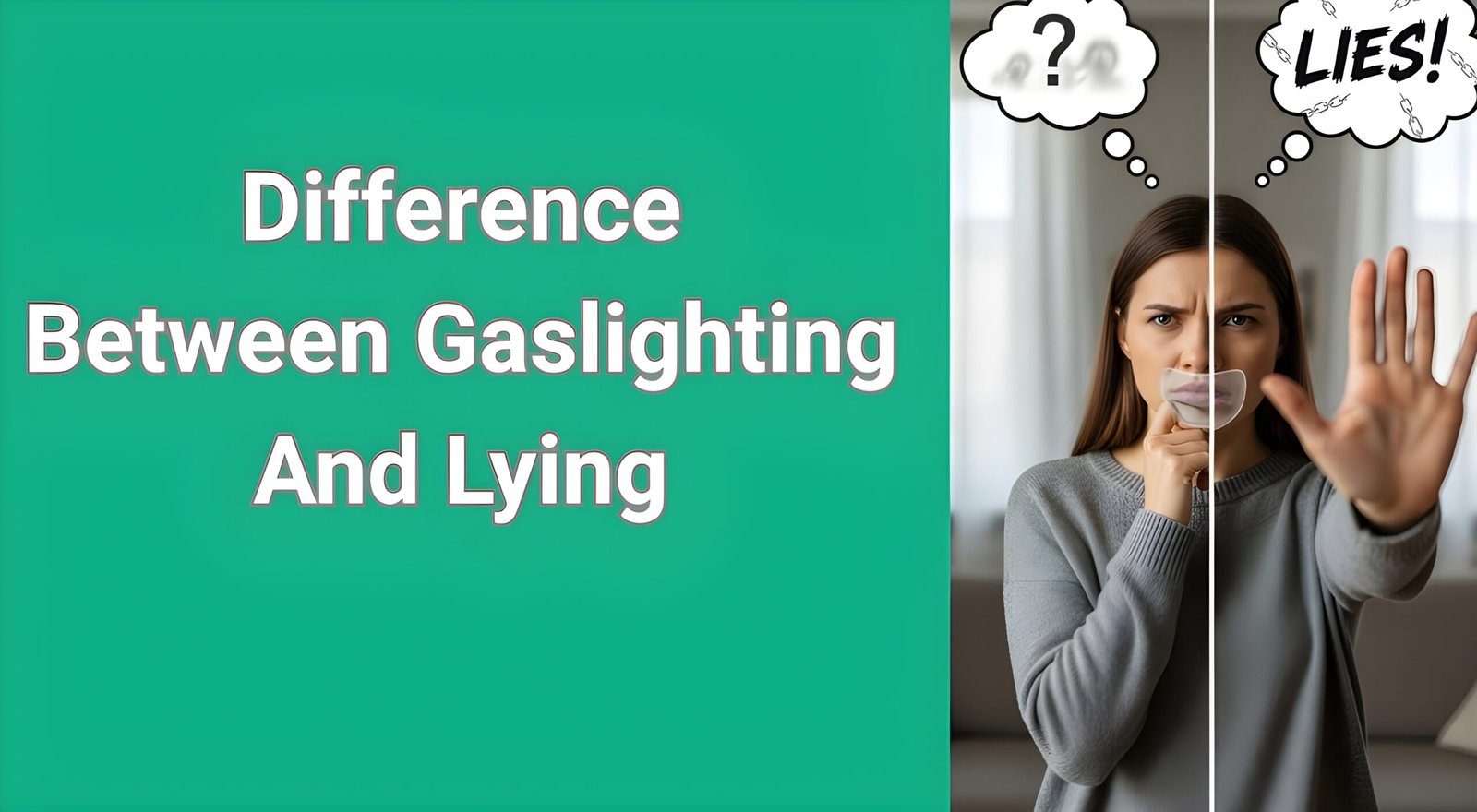
The connection between these psychological effects and the specific tactics used helps explain why understanding the difference between gaslighting and lying matters so much – gaslighting specifically targets your cognitive abilities and self-trust in ways that simple dishonesty does not.
Physical Health Consequences:
The chronic stress of gaslighting doesn’t just affect your mind – it takes a significant toll on your physical health as well. Survivors commonly report:
Sleep disturbances and insomnia from the constant mental vigilance required to navigate the relationship. Your brain remains in a heightened state of alertness, making it difficult to achieve restorative sleep.
Digestive issues, headaches, and other stress-related physical symptoms. The ongoing psychological pressure manifests in various somatic complaints that may seem unrelated to the relationship dynamics.
Fatigue and decreased immune function from the exhaustion of constantly doubting and second-guessing yourself. The mental energy required to navigate gaslighting is enormous and depletes your overall physical resources.
Protecting Yourself: Strategies for Different Stages of Gaslighting
Now that you understand what gaslighting is and how it affects you, let’s focus on practical protection strategies. The approach you need depends on how far the manipulation has progressed and your current circumstances.
Early Stage Protection (When You First Notice Red Flags):
Document Your Reality: Start keeping a private journal of conversations and events. This isn’t about building a legal case – it’s about maintaining your connection to your own version of reality when it’s being systematically questioned.
Write down specific quotes, dates, and circumstances immediately after concerning interactions. Over time, this documentation helps you identify patterns and trust your own perceptions when they’re challenged.
Maintain Your Support Network: Gaslighters often try to isolate their victims by turning them against friends and family or convincing them that others “don’t understand” the relationship. Resist this by maintaining regular contact with people who knew you before the relationship began.
Share your experiences with trusted friends or family members who can provide objective perspectives on your relationship dynamics. Their outsider viewpoint can help you reality-check situations when you’re feeling confused.
Advanced Stage Protection (When Manipulation Is Established):
Gray Rock Technique: When direct confrontation leads to more gaslighting, become as uninteresting as possible. Provide minimal emotional reactions and stick to factual, brief responses. This reduces the gaslighter’s ability to manipulate your emotions or use your reactions against you.
Example: Instead of explaining why their comment hurt your feelings (which gives them material to twist), simply say “I disagree” and change the subject or leave the conversation.
Reality Anchoring: Develop relationships with people outside the gaslighting dynamic who can help you maintain perspective on what healthy interactions look like. This might include a therapist, support group, or trusted friends who understand psychological abuse.
Strategic Planning: If you’re beginning to recognize the extent of the manipulation, start making practical plans for protecting yourself. This might involve gathering financial resources, identifying safe places to stay, or researching therapists who specialize in emotional abuse.
Sometimes leaving immediately isn’t possible, and that’s okay. There are strategies for How to Survive When You Can’t Leave Yet that help you maintain your mental health and safety while working toward long-term solutions.
Crisis Stage Protection (When You’re Deeply Affected):
Professional Support: At this stage, the psychological damage typically requires professional intervention. Look for therapists who specifically understand gaslighting and psychological abuse, as traditional relationship counseling may not address the power dynamics effectively.
Safety Planning: Work with a domestic violence counselor or therapist to develop a comprehensive safety plan that addresses both your physical safety and psychological well-being. This plan should include strategies for leaving if necessary, as well as methods for protecting your mental health if you need to remain in the situation temporarily.
Understanding these protection strategies helps you see that recovery is possible, regardless of how severely the gaslighting has affected you. Each survivor’s journey looks different, but the fundamental principle remains the same: rebuilding your trust in your own perceptions and reclaiming your cognitive autonomy.
Recovery and Healing: Rebuilding Your Relationship with Reality
Recovery from gaslighting involves more than just leaving the relationship or stopping the manipulation – it requires actively rebuilding your trust in your own mind and perceptions. Let me guide you through what this healing process typically looks like.
Phase 1: Reality Restoration
The first step in healing involves re-establishing your connection to your own experiences and perceptions. This can feel surprisingly difficult because gaslighting specifically targets your ability to trust your own mind.
Validation and Witnessing: Find people who can validate your experiences without trying to “fix” you or convince you to take specific actions. This might be a therapist, support group, or trusted friends who understand psychological abuse.
The goal isn’t to have others tell you what to think, but rather to experience having your perceptions acknowledged as valid and important. This helps rebuild the neural pathways that connect you to your own inner wisdom.
Emotional Reconnection: Gaslighting teaches you to doubt your emotional responses, so healing involves learning to trust your feelings again. Start by simply noticing and naming emotions without judging them as right or wrong.
Practice statements like “I notice I’m feeling angry about this” or “I’m aware that I feel sad when this happens.” The goal is rebuilding the connection between your emotions and your conscious awareness.
Phase 2: Cognitive Recovery
This phase focuses on healing the damage to your thinking processes and decision-making abilities.
Memory Validation: Work on trusting your own memories and perceptions again. This might involve writing down your recollections of events and noticing how accurate they prove to be over time.
Many survivors are surprised to discover that their memories were actually quite accurate – the gaslighter’s denials and distortions were the source of confusion, not any deficit in their own cognitive abilities.
Decision-Making Practice: Start with small, low-stakes decisions and gradually work up to more significant choices. This helps rebuild confidence in your judgment and ability to assess situations accurately.
The process often involves catching yourself second-guessing decisions that you would have made confidently before the gaslighting experience, then consciously choosing to trust your initial judgment.
Phase 3: Relational Healing
The final phase of recovery involves learning to recognize and create healthy relationship dynamics.
Boundary Setting: Practice setting and maintaining boundaries based on your own needs and feelings rather than trying to prevent someone else’s negative reactions.
This often feels scary at first because gaslighters typically react poorly to boundaries, but healthy people respect reasonable limits and adjust their behavior accordingly.
Healthy Communication Recognition: Learn to distinguish between normal relationship disagreements and manipulative tactics. In healthy disagreements, both people’s perspectives are valued, even when they differ.
Breaking trauma bonds that often develop alongside gaslighting requires structured daily work. I’ve seen transformation happen when people commit to consistent daily exercises through a 30 Day Trauma Bond Recovery Workbook designed to rebuild their connection to their own reality and self-worth.
Green Flags of Healthy Relationships:
As you heal, it’s important to know what healthy relationship dynamics look like so you can recognize them when you encounter them:
Your feelings and perceptions are treated as valid and important, even when your partner disagrees with them. Disagreements focus on understanding each other’s perspectives rather than proving one person wrong.
Mistakes are acknowledged and addressed directly rather than denied or minimized. Healthy partners take responsibility for their actions and work to make amends when they cause harm.
Your autonomy and independence are supported and encouraged. Healthy partners want you to maintain your own friendships, interests, and decision-making abilities.
When Professional Help Is Needed
Recognizing when you need professional support is crucial for effective recovery from gaslighting. Let me help you understand what different types of professional help can offer and how to find the right support for your situation.
Individual Therapy for Gaslighting Recovery:
Look for therapists who specifically understand psychological abuse and trauma. Traditional relationship counseling may not be appropriate if you’re still in the gaslighting relationship, as it assumes both parties are acting in good faith.
Trauma-Informed Therapy: This approach recognizes how gaslighting affects your nervous system and cognitive processing. Techniques like EMDR, somatic therapy, or trauma-focused CBT can be particularly helpful for healing the psychological damage.
Narrative Therapy: This approach helps you reclaim your own story and perspective after having it systematically undermined. It’s particularly useful for rebuilding your sense of identity and personal agency.
Support Groups and Community Healing:
Connecting with other survivors can provide validation and practical strategies that you might not get from individual therapy alone. Many survivors describe the relief of finally being understood by people who have had similar experiences.
Look for support groups specifically focused on psychological abuse rather than general domestic violence groups, as the dynamics and recovery needs can be quite different.
If you’re still questioning whether what you experienced was abuse, many survivors find clarity through proper assessment of the patterns they’ve experienced and validation of their reality through a Narcissistic Abuse Clarity Report.
Couple’s Therapy: When It’s Helpful and When It’s Harmful:
Couple’s therapy can be helpful if the gaslighting was truly unintentional and your partner is genuinely committed to understanding and changing their behavior. However, it can be harmful or even dangerous if the gaslighting is deliberate manipulation.
Signs couple’s therapy might help:
- Your partner acknowledges the impact of their words and actions
- They show genuine remorse without making excuses
- They’re willing to examine their own behavior patterns
- The gaslighting hasn’t involved threats or escalation
Signs couple’s therapy could be harmful:
- Your partner uses therapy sessions to further manipulate or blame you
- They refuse to acknowledge their behavior or its impact
- You feel afraid to speak honestly in sessions
- The gaslighting has escalated or includes threats
Building Future Relationships: What You Need to Know
Recovery from gaslighting isn’t just about healing from the past – it’s also about developing the skills and awareness to create healthy relationships in the future. Let me share what I’ve learned from working with survivors about this crucial aspect of healing.
Recognizing Healthy vs. Unhealthy Dynamics Early:
After experiencing gaslighting, many survivors struggle with two extremes: either becoming hypervigilant and suspicious of everyone, or being so relieved to find someone who seems “nice” that they ignore red flags.
Healthy Early Relationship Signs: Your feelings and opinions are consistently treated as valid and important, even when they differ from your partner’s. Disagreements focus on understanding rather than winning.
Your partner encourages your independence and supports your existing relationships rather than trying to become your primary or only source of emotional support.
When conflicts arise, they take responsibility for their part without making excuses or blaming you for their behavior.
Red Flags That May Indicate Future Gaslighting: Early in the relationship, they seem to know you better than you know yourself or frequently correct your perceptions of your own experiences.
They have a pattern of intense, quick attachment (love bombing) followed by small criticisms or corrections of your behavior or perceptions.
Stories about their past relationships consistently cast them as the victim of “crazy” or “oversensitive” partners.
Developing Your Internal Navigation System:
One of the most important aspects of recovery involves rebuilding your ability to trust your own instincts and perceptions about relationships.
Body Awareness: Learn to pay attention to physical sensations when you’re around different people. Healthy relationships should generally leave you feeling calm and energized, not anxious or drained.
Energy Patterns: Notice whether you feel like yourself when you’re with someone, or whether you find yourself constantly adjusting your personality, opinions, or reactions to manage their emotions.
Boundary Testing: Pay attention to how potential partners respond when you set small boundaries or express different preferences. Healthy people respect boundaries even when they’re disappointed.
The skills you develop in recovery often make you better at recognizing healthy relationship patterns than people who have never experienced manipulation. Your heightened awareness, while born from difficult circumstances, can become a valuable tool for creating genuinely fulfilling relationships.
This connects to understanding broader patterns of emotional abuse and helps you recognize that workplace gaslighting and other forms of manipulation share many characteristics with romantic gaslighting, so your awareness can protect you across different relationship contexts.
Conclusion: Reclaiming Your Reality and Moving Forward
Understanding what is gaslighting in relationships represents the first crucial step toward reclaiming your mental freedom and emotional well-being. Through this comprehensive exploration, we’ve built a complete framework for recognizing, understanding, and protecting yourself from this insidious form of psychological manipulation.
The key insights to carry forward:
Gaslighting is a systematic attack on your cognitive abilities and self-trust, designed to give your partner control over your reality. It’s not simply disagreement or miscommunication – it’s deliberate or unconscious manipulation that undermines your fundamental relationship with your own mind.
The progressive nature of gaslighting means that early recognition and intervention are crucial. What begins as minor reality testing can escalate into serious psychological control if left unchecked.
Recovery is not just possible but probable with proper support and understanding. Your ability to recognize and name what happened to you demonstrates that the manipulation did not succeed in permanently damaging your cognitive abilities.
Your experiences are valid, your perceptions matter, and you deserve relationships that support and enhance your mental health rather than undermining it. The fact that you’re seeking information about gaslighting shows that your inner wisdom is still intact, even if it has been temporarily suppressed.
Moving forward with confidence:
Trust your instincts when something feels wrong in a relationship, even if you can’t immediately articulate what the problem is. Your gut feelings are valuable data that deserve attention and respect.
Maintain connections with people who knew you before any questionable relationship began. These relationships serve as anchors to your authentic self and can provide reality checks when you need them.
Remember that healthy love enhances your sense of self rather than requiring you to doubt your own perceptions. You should feel more like yourself in a healthy relationship, not less.
The knowledge you’ve gained through this difficult experience, while painful, has equipped you with awareness and skills that will serve you well in all future relationships. Your journey through gaslighting and recovery, challenging as it has been, demonstrates remarkable psychological resilience and strength.
You have everything within you needed to create relationships based on mutual respect, honest communication, and genuine care. Your reality matters, your perceptions are valid, and you deserve nothing less than relationships that honor and support your mental health and personal growth.
If you recognize yourself in these patterns, remember that recognition is the beginning of recovery, not the end of hope. With proper support, understanding, and commitment to your own healing, you can rebuild a life where your reality is respected, your voice is heard, and your worth is never questioned.
Frequently Asked Questions
How do I know if what I’m experiencing is gaslighting or normal relationship problems?
Normal disagreements acknowledge different perspectives and focus on mutual understanding. Gaslighting consistently makes you question your own perceptions, memory, and emotional responses while positioning your partner as the authority on reality.
Can gaslighting happen unintentionally, and does it matter?
Yes, gaslighting can be unconscious, often learned from childhood experiences. While intent affects potential for change, the impact on your mental health remains serious regardless of whether it’s deliberate manipulation.
What should I do if I think my partner is gaslighting me?
Start by documenting events privately, maintaining outside relationships for perspective, and considering professional support from a therapist who understands psychological abuse. Trust your instincts and prioritize your mental health.
How long does it take to recover from gaslighting?
Recovery varies by individual and the extent of manipulation experienced. With appropriate support, many people report significant improvement in 6-18 months, though rebuilding complete trust in your perceptions may take longer.
Will I ever be able to trust my judgment again after being gaslighted?
Yes, recovery of cognitive confidence is absolutely possible. Many survivors report that their heightened awareness actually makes them better at recognizing healthy vs. unhealthy relationship dynamics than before.