
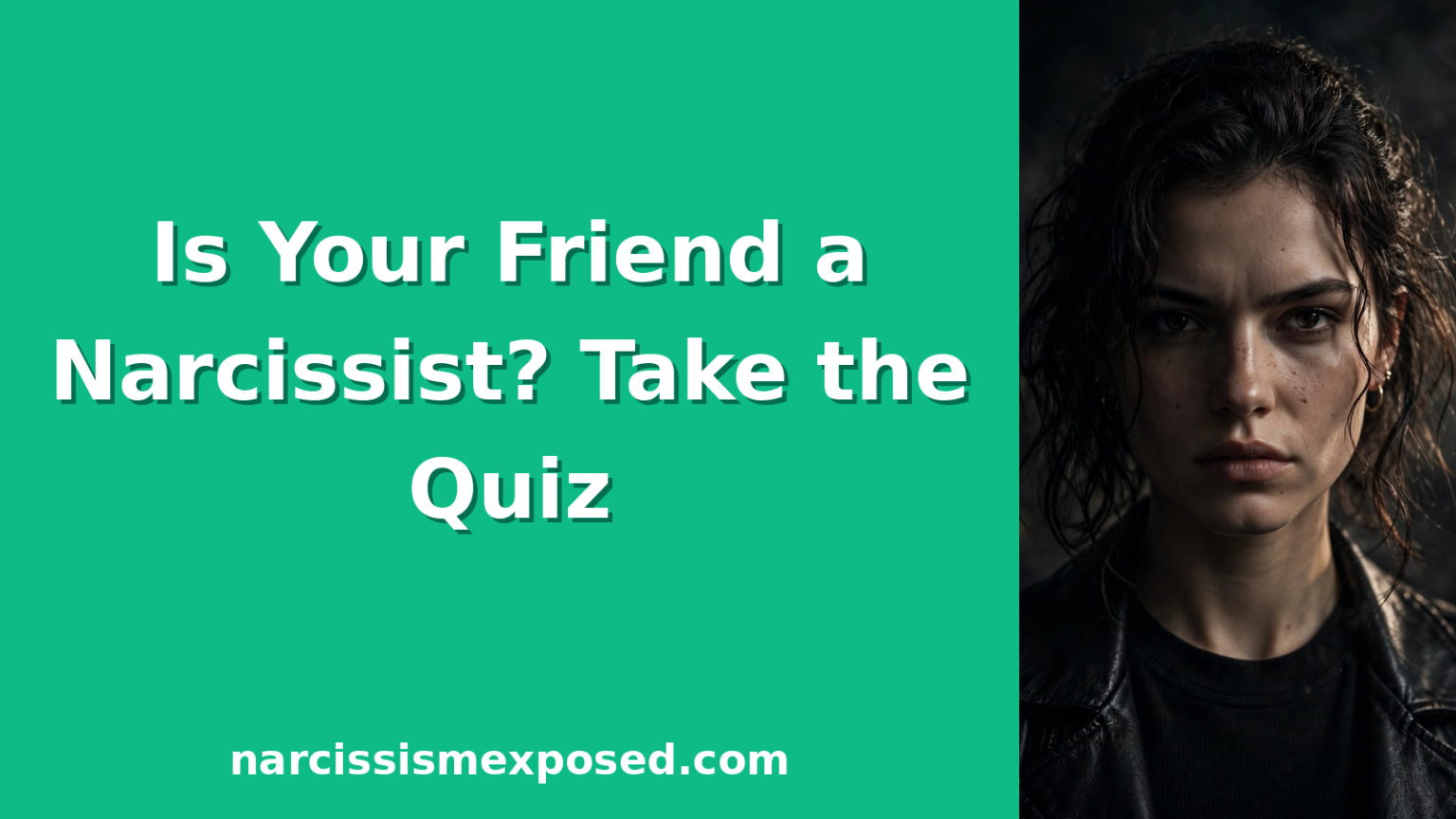
If you typed “is my friend a narcissist quiz” into Google, you are probably sitting with a question that feels disloyal to even think. A friend is supposed to be the person who shows up for you, who celebrates your wins, who listens when life gets hard. So what do you do when that person leaves you feeling drained, guilty, or smaller every single time you spend time together?
Here is the truth: asking the question does not make you a bad friend. It makes you an honest one. Friendships are supposed to be mutual. When the dynamic turns one-sided, when you start measuring every word before you speak, when you apologize for things you are not sure you did, something is wrong. This is not about one bad week. It is about a pattern that has been quietly wearing you down for months, maybe years.
People in your position describe the same things. Their feelings always come first. Yours get dismissed as drama or overreacting. Conversations revolve around their problems, their achievements, their drama. You only hear from them when they need something. Warmth arrives on their schedule and vanishes without warning. If that sounds familiar, you are not imagining it.
One honest note before we go further: this quiz is an educational self-assessment, not a medical diagnosis. Only a qualified mental health professional can diagnose narcissistic personality disorder. What this quiz can do is help you see the pattern clearly, so you can stop second-guessing yourself and make better decisions about the friendship.
What This Quiz Measures
This quiz looks at 10 specific, observable behaviors tied to narcissistic traits: one-sided conversations, constant need for admiration, guilt-tripping, gaslighting, lack of empathy, entitlement, emotional exploitation, control of your other friendships, defensiveness at feedback, and the draining effect they have on you. These are the same patterns mental health professionals watch for when narcissistic personality disorder is discussed, because the disorder is diagnosed from a consistent pattern of behavior, not from one bad argument.
Each question asks how often you see the behavior: Never, Rarely, Sometimes, or Often. Your answers produce a score out of 30, which places the friendship in one of three bands: low likelihood, concerning patterns, or strong narcissistic patterns. The point is clarity, not a label. You will finish the quiz knowing what you have actually been living with, and that changes everything about how you handle it.
What Narcissism Looks Like in a Friendship Day to Day
Narcissism in a friendship does not always look like arrogance. Sometimes it looks like the friend who always has a bigger problem than yours. You call about a breakup, and within minutes the conversation is about their situationship. You share a promotion, and they respond with a lukewarm “cool” before launching into their own news. The imbalance is so consistent that you stop expecting to be heard at all.
It can also look like generosity with strings attached. The narcissistic friend does favors loudly, then holds them over you for months. They paid for dinner once, so now you owe them your Saturday, your loyalty, and your silence when they hurt you. Real generosity does not keep a ledger. If you feel like you are always in debt to someone who calls you their best friend, pay attention to that feeling.
Another common shape is the jealous gatekeeper. They get cold when you spend time with other friends. They make jokes that sting just enough to land. They tell you embarrassing stories about you in front of people you just met, then call you sensitive for reacting. This is not protectiveness or playful teasing. It is control dressed up as closeness, and it keeps you smaller than you actually are.
The most exhausting version is the perpetual victim. Every story they tell has them as the one who was wronged. The coworker, the ex, the other friend, the waiter, all villains in a drama where your friend is always the hero or the martyr. After a while you realize you are not allowed to have bad days, because their bad days are always worse. Empathy only flows one direction, toward them, never from them.
None of these patterns alone proves narcissism. Everyone has selfish seasons. But when the behaviors repeat across months and years, when apologies never come and accountability never lands, you are looking at a pattern, not a phase. That is exactly what this quiz helps you measure.
10 Signs of a Narcissistic Friend to Check
- Every conversation circles back to them, and your news barely gets a reaction.
- They only contact you when they need something, then disappear once they get it.
- They dismiss your feelings or call you dramatic when you open up about your struggles.
- Honest feedback triggers defensiveness, anger, or days of cold silence.
- They exaggerate their achievements and need constant praise to feel good.
- They expect special treatment and favors but rarely return them.
- You feel drained, guilty, or anxious after spending time with them.
- They deny things they said or did, leaving you doubting your own memory.
- They guilt-trip you or play the victim to get their way.
- They try to control your other friendships through jealousy or triangulation.
A Note Before You Start
Answer based on the whole history of the friendship, not the best days and not the worst fight. Think about what happens most of the time, not what happened once. Be honest, even about the answers that hurt. The quiz only helps if you tell the truth about what you have actually seen.
Also, resist the urge to diagnose out loud. A quiz result is information for you, not a weapon to use in an argument. If the pattern turns out to be serious, the smartest move is quiet clarity: boundaries, distance if needed, and support from people who understand the dynamic. You can explore how these patterns show up in other relationships too, like the Is My Mother a Narcissist quiz or the Is My Boss a Narcissist quiz, because narcissistic traits look surprisingly similar across different relationships.
Interpreting Your Results: What Your Score Means
Your score is out of 30. Each question gave you 0 points for Never, 1 for Rarely, 2 for Sometimes, and 3 for Often. The total places the friendship in one of three bands.
0 to 10: A Difficult Friendship, Not Necessarily Narcissism. Your answers describe friction, stress, or a friend going through a rough patch. Not every selfish moment means narcissism. Keep trusting what you observe over time and keep your boundaries clear.
11 to 20: Concerning Patterns Worth Watching. Several of your answers line up with narcissistic traits: one-sidedness, guilt-tripping, and a hunger for admiration. This is not a diagnosis, but the pattern is real enough to take seriously. Start setting boundaries and watch whether the behaviors are occasional or constant.
21 to 30: Strong Narcissistic Patterns. Your answers describe a consistent pattern of grandiosity, entitlement, and lack of empathy. Living inside this pattern is exhausting, and it rarely improves on its own. This is not a diagnosis, but your answers deserve to be taken seriously, and getting clarity on your exact situation is the smartest next step.
What to Do With Your Result
If your score landed low, breathe. You may be dealing with a friend who is stressed, immature, or going through something hard. That does not mean you have to tolerate being treated badly. Low scores still deserve boundaries. The difference is that a low-score friendship has a real chance of improving once you speak up. Have the honest conversation. See how they respond. Someone who cares about you will at least try to hear you.
If your score landed in the middle, this is where most people get stuck. The friendship has good parts, which is exactly why the bad parts are so confusing. Do not wait for a dramatic blowup to take the pattern seriously. Start small: say no to one unreasonable request. Notice what happens. Keep a private record of the incidents that bother you, because people with narcissistic traits have a way of making you forget what actually happened. For practical scripts on protecting yourself, the Survival Workbook was built for exactly these dynamics.
If your score landed high, do not confront them with the quiz result. Confrontation with someone who has strong narcissistic traits usually leads to rage, denial, or punishment, not insight. Instead, talk to a trusted friend or therapist, start documenting the pattern privately, and decide how much access this person gets to your life. You are allowed to outgrow a friendship that is shrinking you. If you want a personal map of your exact situation rather than a score, the Narcissistic Abuse Clarity Report gives you a plan built around what you are actually dealing with.
Whatever your score, stop explaining away the pattern. You took this quiz because something felt off, and that instinct was worth listening to. Trust it.
Frequently Asked Questions
Can a friendship really be narcissistic, or is that just for romantic relationships?
Absolutely. Narcissistic traits show up in friendships, family relationships, and workplaces, not just romantic partners. The core pattern is the same: grandiosity, entitlement, and lack of empathy playing out across the relationship. The Is My Wife a Narcissist quiz covers the romantic version, and the dynamics rhyme more than you would expect.
What is the difference between a selfish friend and a narcissistic friend?
Everyone is selfish sometimes. The difference is the pattern and the response. A selfish friend can hear feedback, feel genuine remorse, and change. A friend with strong narcissistic traits denies, deflects, punishes you for bringing it up, and keeps doing the same things. Consistency is the dividing line, not any single behavior.
Should I cut this friend off completely?
Not necessarily, and not immediately. Start with boundaries and distance, and watch what happens. Some friendships survive a firm reset. But if every boundary gets punished and every conversation becomes a battle, you have your answer. You do not owe lifelong access to someone who keeps hurting you. For ongoing guidance on navigating this, the Narcissistic Abuse Newsletter shares practical strategies every week.
Why do I feel guilty for even questioning the friendship?
Because you are a loyal person, and possibly because your friend has trained you to feel that way. Guilt is the favorite tool of people with narcissistic traits. Questioning a friendship is not betrayal. It is self-respect. The guilt usually fades once you see the pattern clearly and realize your instincts were right.
Can a narcissistic friend ever change?
Change is possible in theory, but it requires the person to recognize the problem, take accountability, and do sustained work, usually with professional help. People with strong narcissistic traits rarely do any of those things voluntarily. Make your decisions based on the pattern you have seen, not the person you hope they will become.