
You drive to your mother’s house with your stomach in knots. You rehearse what you will say, what you will not say, how you will keep it light.
- What A Narcissistic Mother Actually Does To A Child
- Step 1: Name The Pattern And Stop Minimizing It
- Step 2: Grieve The Mother You Needed, Not The One You Had
- Step 3: Set Boundaries, Or Step Back: Low Contact Versus No Contact
- Step 4: Work Through The Guilt And Self Doubt
- Step 5: Reparent Yourself And Heal Your Inner Child
- Step 6: Get The Right Therapy: EMDR, Trauma Informed Care, And IFS
- Step 7: Rebuild Your Identity From Scratch
- Step 8: Survive Family Holidays And Gatherings
- Step 9: Break The Cycle And Build Your Chosen Family
- When Healing Feels Like It Is Going Backwards
- Frequently Asked Questions
- You Deserve A Mother, Even If You Have To Become Her For Yourself
Twenty minutes later she has made a comment about your weight, turned your sibling against you with one well placed joke, and somehow you are the one apologizing for being too sensitive.
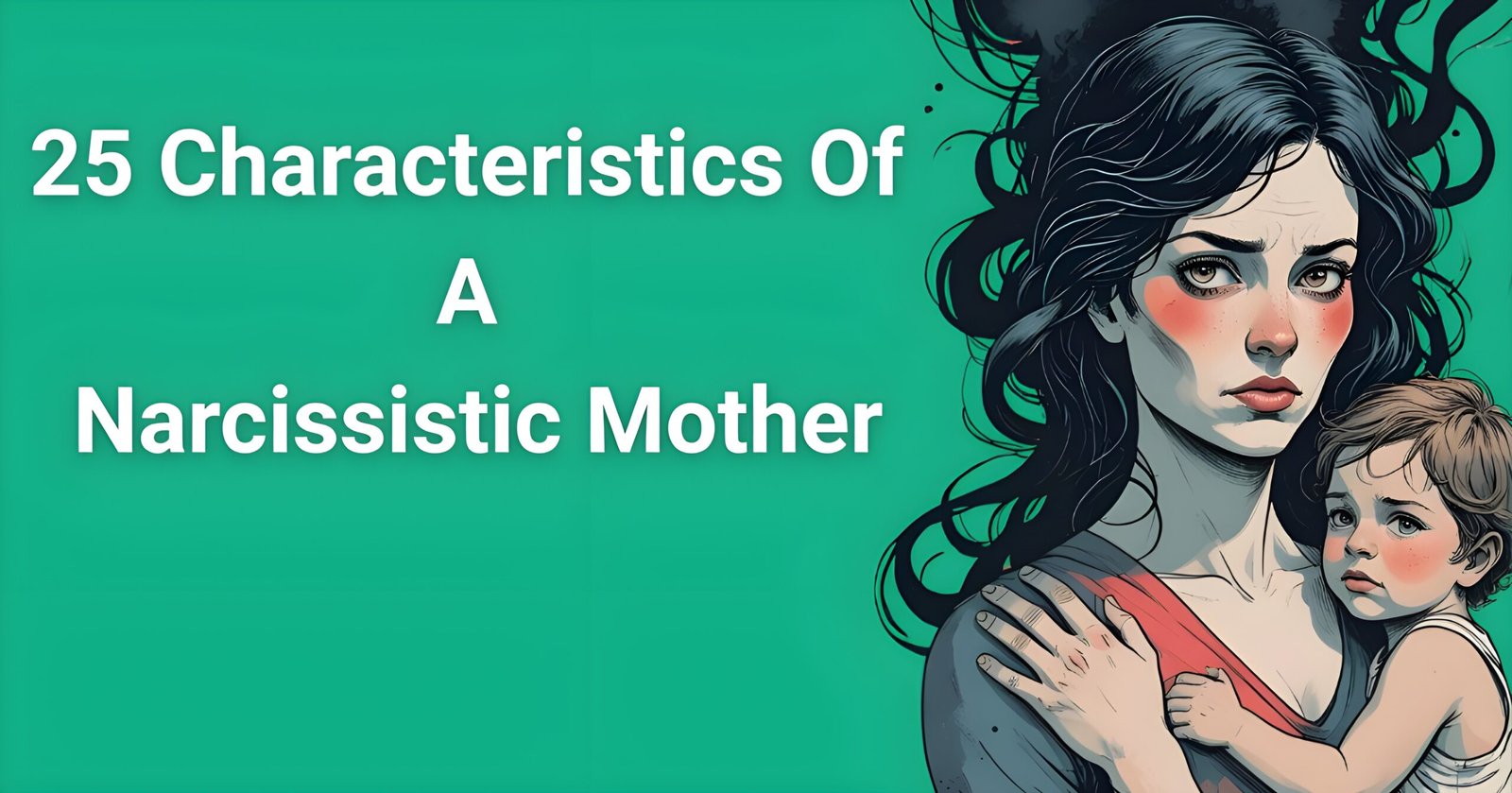
If this is your life, this article is for you. Learning how to heal from a narcissistic mother starts with one radical idea: it was never about you. The narcissistic mother, the mother wound she leaves behind, and the family roles she carved into her children, the golden child who could do no wrong and the scapegoat who could do no right, these are patterns she created, not flaws you were born with.
Healing from a narcissistic mother is not a miracle and it is not quick. It is a process, sometimes slow, sometimes two steps forward and one step back. But it is absolutely possible. Thousands of adult children of narcissistic mothers rebuild their self worth, their relationships, and their peace every single year. Below is the recovery roadmap therapists use, broken into 9 clear steps you can start today.
What A Narcissistic Mother Actually Does To A Child
Before the healing steps, you need to see the wound clearly. A mother with strong narcissistic traits, and in clinical terms a mother who meets the criteria for narcissistic personality disorder, relates to her children as extensions of herself, not as separate people with their own feelings.
The Mayo Clinic explains that narcissistic personality disorder involves an inflated sense of self importance, a deep need for admiration, and a lack of empathy for others. In a mother, this looks like love that comes with conditions. Affection arrives when you perform, achieve, or reflect well on her. It disappears the moment you have a need of your own.
The research backs up how deep this damage goes. A systematic review published by the National Institutes of Health found that parental narcissism predicts increases in child depression and anxiety, with insecure attachment acting as the main pathway. In plain language, the way she related to you shaped the way you attach to people now. You can read the full review here: https://pmc.ncbi.nlm.nih.gov/articles/PMC12843898/
Common effects therapists notice in adult children of narcissistic mothers include a harsh inner critic, people pleasing, difficulty trusting others, fear of conflict, and a persistent feeling of not being good enough. If you recognize yourself in the signs of a narcissistic mother, none of these traits mean you are broken. They mean you adapted to survive. Now you get to adapt to heal.
Step 1: Name The Pattern And Stop Minimizing It
The first step in learning how to heal from a narcissistic mother is the hardest one: admitting it out loud.
“She did her best.” “Other people had it worse.” “She is not that bad, really.” Minimizing is a survival habit. When you were small, your brain could not afford to believe the person keeping you alive was unsafe. So it told you the story that she was fine and you were the problem.
Naming the pattern does not mean you are ungrateful or cruel. It means you are finally describing what happened with adult eyes. Psychologists call this validation, and it is the foundation of everything that follows. You cannot heal a wound you keep pretending is a scratch.
Try this. Write down five things your mother did that hurt you, exactly as they happened, with no softening and no excuses. Then read them back as if a friend had written them about her own mother. What would you say to that friend? Say it to yourself.
Step 2: Grieve The Mother You Needed, Not The One You Had
Here is the grief nobody warns you about. When you start healing from a narcissistic mother, you do not only grieve what she did. You grieve what she never was and never will be.
Therapists call this ambiguous loss, grief for a person who is still alive. You can love your mother and still grieve the mother you needed: the one who would have protected you, believed you, and loved you without a price tag.
This grief does not arrive once and leave. It shows up at weddings, when you watch a friend’s mother hug her. It shows up when you have your own children and feel the love she never gave you, pouring out of you toward them. It shows up on Mother’s Day, in the greeting card aisle.
Let it come. Grief is not a detour from healing, it is the road. Journaling, voice notes to yourself, or simply sitting with the sadness instead of numbing it all count as grief work. You are allowed to cry for the childhood you deserved.
Step 3: Set Boundaries, Or Step Back: Low Contact Versus No Contact
You cannot heal from a narcissistic mother while she still has full access to your nervous system. Sooner or later, every adult child of a narcissistic mother faces the same decision: how much contact, if any, is safe?
The Three Options
Low contact means you stay in touch on your terms: short calls, planned visits, topics that stay surface level, and a fast exit when she starts. This works when you have the energy to hold the line and her behavior, while painful, is not destroying your mental health.
Structured contact means contact with rigid rules: holidays only, or group settings only, or one 20 minute call a week with a hard stop. Many people find that learning how to talk to a narcissistic parent with short, calm, boring responses keeps the peace without costing their sanity.
No contact means you end the relationship for your own wellbeing. It is not punishment and it is not cruelty. For some people, especially those whose mothers escalate or recruit the whole family against them, it is the only way to heal. If you are considering going no contact, read that guide before you decide.
There is no morally correct choice here. The right choice is the one that protects your health. And it can change over time. Low contact today can become no contact next year, or the reverse. You are allowed to adjust the distance as you heal.
Step 4: Work Through The Guilt And Self Doubt
Guilt is the leash. Almost every adult child of a narcissistic mother feels it: guilt for setting a boundary, guilt for talking about her in therapy, guilt for being happy while she is upset.
Here is the truth therapists repeat until it sinks in. Guilt after boundary setting is not evidence that you did something wrong. It is withdrawal. Your brain was trained for decades to feel good only when she was pleased. The guilt is the old programming running, not your conscience speaking.
When the guilt hits, run it through this filter. Did you harm anyone? No. Did you protect yourself? Yes. Would you tell a friend she was selfish for doing the same thing? No. Then the guilt is a feeling, not a fact. Feelings are allowed to visit. They are not allowed to run your life.
Self doubt works the same way. That voice saying “maybe it was not that bad” is the voice she installed. Counter it with evidence. Keep a short note on your phone of three things that actually happened. When doubt creeps in, read the note. Reality is your anchor.
Step 5: Reparent Yourself And Heal Your Inner Child
Reparenting sounds strange until you understand what it means. Your mother could not give you consistent comfort, validation, or safety. Now you learn to give those things to yourself.
This is not about pretending your childhood was fine. It is about becoming, for yourself, the parent you needed. When you feel anxious, you speak to yourself the way a loving mother would: “You are safe. You are doing fine. I am here.” When you make a mistake, you respond with compassion instead of the harsh criticism you grew up hearing.
Inner child work is one practical form of this. It can be as simple as keeping a photo of yourself as a child where you will see it, and asking that child what she needed to hear. Many people write letters to their younger self, or do small things their childhood self never got: rest without guilt, play without purpose, comfort without earning it.
If you were cast as the scapegoat in your family, this step is especially powerful. The child who was blamed for everything finally gets to hear, from an adult who matters, that none of it was her fault.
Step 6: Get The Right Therapy: EMDR, Trauma Informed Care, And IFS
Healing from a narcissistic mother often needs professional support, and not all therapy is equal for this kind of wound. You are not looking for general talk therapy where you vent for an hour and leave with the same patterns. You are looking for trauma informed care.
Three modalities therapists recommend most for this work:
EMDR (Eye Movement Desensitization and Reprocessing) helps your brain reprocess stuck traumatic memories so they lose their emotional charge. It is well researched for trauma and many adult children of narcissists report that specific memories, the screaming match, the silent treatment, the humiliation in front of others, stop hijacking their body after EMDR.
IFS (Internal Family Systems) works with the different “parts” of you: the inner critic that sounds like her, the people pleaser, the frightened child. Instead of fighting these parts, IFS helps you understand and calm them. For people raised by a narcissistic mother, this can be life changing because so many of your inner voices are actually hers.
Trauma informed talk therapy with a therapist who understands narcissistic family systems gives you a safe relationship to practice healthy attachment in. Look for words like “narcissistic abuse,” “complex trauma,” or “CPTSD” in a therapist’s profile. The Mayo Clinic’s overview of narcissistic personality disorder (https://www.mayoclinic.org/diseases-conditions/narcissistic-personality-disorder/symptoms-causes/syc-20366662) and WebMD’s guide (https://www.webmd.com/mental-health/narcissistic-personality-disorder) are also solid starting points for understanding the clinical picture before you walk into a first session.
If therapy is not accessible to you right now, start with what you can afford: support groups for adult children of narcissists, trauma informed books, and structured programs. Many survivors begin their healing journey with guided workbooks before they ever sit down with a therapist, and that counts.
Step 7: Rebuild Your Identity From Scratch
When your mother used you as a mirror, you never got to find out who you actually are. Her opinions became your opinions. Her moods decided your days. Her approval was the currency of your worth.
Rebuilding your identity means asking, for possibly the first time in your life: what do I actually like? Not what looks good, not what she would approve of, but what feels like you.
Start small and concrete. Try a hobby she would have mocked. Wear the color she said did not suit you. Order the food you actually want. Say no to one small thing this week and notice that the world does not end.
Deeper identity work means examining the beliefs she installed. “I am too much.” “I am hard to love.” “My needs are a burden.” Each of these is a sentence she wrote in your head. You get to edit the manuscript now. For every old belief, write a new one grounded in evidence from your real life. It feels fake at first. It stops feeling fake with repetition.
Step 8: Survive Family Holidays And Gatherings
Holidays are where all your progress gets stress tested. The same living room, the same dynamics, the same jokes at your expense, except now you see it all clearly and it hurts in a new way.
Going in with a plan changes everything. Decide before you arrive how long you will stay, and make it shorter than you think you can handle. Drive yourself so you can leave. Bring a support person if possible, a partner or friend who knows the situation and can squeeze your hand under the table.
Set your topics in advance: boring, surface level, and short. Grey rock the provocations. When she makes the comment, and she will, respond with the emotional range of a weather report. “Hmm. Anyway.” Then change the subject or walk to the kitchen.
Give yourself full permission to skip events that will cost you weeks of recovery. Protecting your peace is not ruining the holiday. The holiday was already ruined for you years ago. You are just choosing not to reenact it.
Step 9: Break The Cycle And Build Your Chosen Family
The final step of healing from a narcissistic mother is also the most hopeful one: making sure the pattern stops with you.
Many adult children of narcissistic mothers fear becoming like her. Here is what therapists want you to know. The fact that you are reading this article, worried about repeating the pattern, is itself strong evidence you will not. Narcissistic mothers do not lie awake wondering if they are hurting their children.
Still, awareness is not enough on its own. Break the cycle actively. If you have children, learn about gentle, attuned parenting. Apologize to your kids when you get it wrong, something your mother likely never did for you. Let them see you have feelings and repair ruptures. That repair is the single most protective thing a parent can do.
And build your chosen family. Friends who feel like siblings, mentors who parent you in the ways she could not, a partner who is safe. The trauma bond you formed with your mother taught you that love means anxiety. Your chosen family teaches you the replacement lesson: love can mean calm.
When Healing Feels Like It Is Going Backwards
You will have weeks where you feel strong, clear, and free. Then one phone call will send you spiraling, and you will think you have lost all your progress.
You have not. Healing from a narcissistic mother is not a straight line. Therapists describe it as a spiral: you revisit the same themes, but each time from a higher level, with more understanding and faster recovery.
A setback is data, not failure. After a hard interaction, ask yourself: what got me this time? What boundary slipped? What old belief flared up? Then adjust. Shorten the next visit. Strengthen the boundary. Text your support person sooner.
Recovery from narcissistic abuse is measured in trends, not moments. Look at where you were a year ago, not where you were yesterday. If the line is going up overall, you are healing. That is the only math that matters.
Check out the Survival Workbook here. It was built for the middle stage of this journey, when you can see the pattern clearly but you cannot go no contact yet, and you need day by day tools to protect your peace while you are still in contact.
Frequently Asked Questions
How long does it take to heal from a narcissistic mother?
There is no fixed timeline, and anyone who promises you one is selling something. Most therapists say meaningful change takes months of consistent work, and deeper identity rebuilding takes one to three years. The timeline depends on the severity of what you experienced, whether you are still in contact, and what support you have. What matters is direction, not speed. If you are making steadier progress year over year, you are healing.
Can you fully recover from narcissistic mother abuse?
Yes, in the sense that matters most. You can reach a place where her behavior no longer controls your emotions, your choices, or your self worth. Most survivors describe recovery not as forgetting what happened, but as the memories losing their power. You may always feel a pang on Mother’s Day, and that is normal. Recovery means the pang no longer ruins your week.
How do I know if my mother is actually a narcissist?
Only a qualified clinician can diagnose narcissistic personality disorder, and this article cannot do that for you. What you can notice are patterns: does she lack empathy when you are hurting, need constant admiration, react with rage or cold withdrawal to criticism, use guilt to control you, and treat you as an extension of herself rather than a separate person? A consistent pattern of these behaviors over years is what therapists look for, not one bad argument.
How do you heal from a covert narcissistic mother?
A covert narcissistic mother is harder to name because her control hides behind victimhood, martyrdom, and quiet manipulation. Healing follows the same steps, but step one, naming the pattern, takes longer because you may feel guilty calling someone who “never yelled” abusive. Trust the effects over the presentation. If you grew up anxious, hypervigilant, and starved for approval, the impact is real regardless of how sweet she seemed to outsiders.
Is it okay to cut off a narcissistic mother?
Yes. No contact is a valid, healthy choice when a relationship consistently harms your mental health and boundaries have failed. It is not a punishment you inflict on her, it is protection you give yourself. Many survivors find that guilt about going no contact fades once they experience what life feels like without constant criticism and manipulation. The peace is the proof.
How do you grieve a mother who is still alive?
This is called ambiguous loss, and it is one of the strangest pains in this process. You grieve the mother you needed but never had, while the mother you have keeps calling. Allow both truths at once: you can love her and grieve her at the same time. Rituals help, writing an unsent letter, marking the anniversary of going low contact, or simply letting yourself cry when the sadness arrives instead of pushing it away.
Why do I feel so guilty about healing from my mother?
Because guilt was her management tool. From childhood, you were trained to monitor her emotions and sacrifice your own needs to keep her stable. Setting a boundary now triggers the old alarm: bad child, selfish child. This guilt is a conditioned response, not a moral signal. It fades as you build new evidence that you can protect yourself and still be a good person.
Can healing happen without therapy?
It can begin without therapy, and many survivors make real progress with books, support groups, journaling, and structured programs. But a trauma informed therapist accelerates the work significantly, especially for deep seated patterns like the inner critic and attachment wounds. Think of self guided work as physical therapy exercises and a good therapist as the surgeon: you can do a lot on your own, but some wounds need expert hands.
Will my narcissistic mother ever change?
Honest answer: probably not in the way you hope. Personality patterns this deep rarely shift without years of dedicated therapy, and most narcissistic mothers never seek it because they do not believe they are the problem. Healing means accepting this reality instead of waiting for an apology that may never come. Your recovery cannot depend on her changing. It has to be yours alone.
How do I stop attracting narcissistic partners after being raised by one?
You were trained to recognize anxiety as love, so calm, kind people can feel boring at first. Healing your attachment patterns is the core work: learn what secure love feels like, notice red flags early, and slow down new relationships. Many survivors find that as their self worth rebuilds, their taste in partners changes on its own. You stop auditioning for love and start selecting for it.
What is the mother wound?
The mother wound is the emotional injury left by a mother who could not meet her child’s needs for safety, attunement, and unconditional love, often because of her own trauma or narcissistic traits. It shows up in adulthood as people pleasing, fear of abandonment, difficulty trusting women, and a harsh inner critic. Naming it is powerful because it moves the problem from “something is wrong with me” to “something happened to me, and I can heal from it.”
Should I confront my narcissistic mother about the past?
Most therapists advise against a big confrontation, not because you do not deserve to speak, but because it rarely gives you what you want. A narcissistic mother typically responds to confrontation with denial, rage, DARVO, or weaponized tears, and you leave feeling worse. If you need to say it, say it in a letter you never send, or in therapy. Closure comes from your own understanding, not from her admission.
You Deserve A Mother, Even If You Have To Become Her For Yourself
Healing from a narcissistic mother is one of the bravest things a person can do. You are looking directly at the wound most people spend their lives avoiding, and choosing to treat it instead of passing it on.
Start with one step. Name the pattern. Grieve what you lost. Set one small boundary. Find one safe person. Each step compounds, and one day you will realize the voice in your head sounds like you now, not her.
Get your Clarity Report here. It maps your exact situation, names the patterns running in your family, and gives you a personalized action plan for what to do next, so you stop guessing and start healing with direction.