
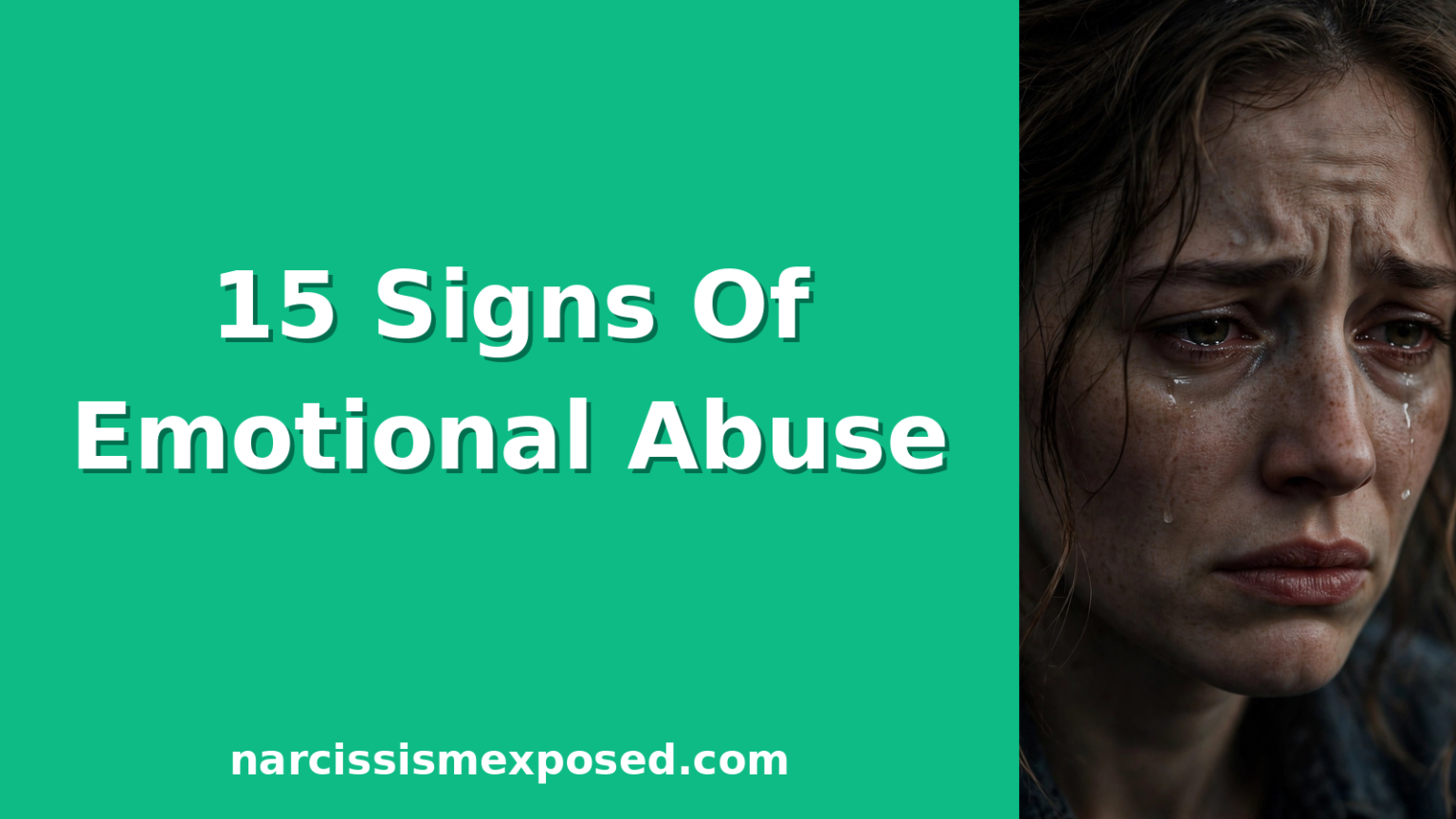
You've probably replayed certain moments over and over, wondering if you're overreacting. You're not. Emotional abuse rarely looks dramatic — it hides in everyday conversations and the slow way your world gets smaller.
- 1. They Turn Every Disagreement Into Your Fault
- 2. You Edit Yourself Before You Speak
- 3. Your Feelings Are Treated As Attacks
- 4. They Joke About Things That Actually Cut You
- 5. You've Lost Friends You Can't Fully Explain Losing
- 6. Compliments Come With An Expiration Date
- 7. You Apologize For Things You Didn't Do
- 8. They Keep Score Of Your Mistakes But Erase Theirs
- 9. Decisions Require Their Permission (Unofficially)
- 10. They Punish You With Silence
- 11. You Feel Exhausted In A Way Sleep Doesn't Fix
- 12. They've Convinced You Nobody Else Would Put Up With You
- 13. Your Gut Sends Warnings You Keep Overriding
- 14. Good Periods Feel Like Relief, Not Happiness
- 15. You've Become Someone You Don't Recognize
- The Bottom Line
If you're reading this with a knot in your stomach, this list is for you. Not to label your partner overnight, but to help you name what's been happening. Naming it is the first step back to yourself.
1. They Turn Every Disagreement Into Your Fault
No matter how a conversation starts, it ends with you apologizing. You could raise a small concern — they forgot something important, they snapped at you — and within minutes you're defending yourself while the original issue vanishes. This pattern isn't bad communication. It's a redirect that trains you to stop bringing anything up at all.
2. You Edit Yourself Before You Speak
You rehearse your words in your head before saying anything, the way you'd carefully cross a frozen lake. You're always checking: will this upset them? Will they take it wrong? A healthy relationship lets you speak freely without running every sentence through a filter first. If you've become a full-time speech editor, that tells you something about the environment you're in.
3. Your Feelings Are Treated As Attacks
You say you're hurt, and they hear an accusation. You cry, and they call you dramatic. Emotional abuse rewrites your inner life as a weapon you supposedly use against them. Over time, you stop sharing how you feel — not because the feelings disappear, but because sharing them costs too much. A partner who loves you might not always understand your feelings, but they won't punish you for having them.
4. They Joke About Things That Actually Cut You
The "just kidding" defense is one of emotional abuse's favorite tools. They mock your appearance, your intelligence, or something sensitive in front of others, then act wounded if you don't laugh. Pay attention to the pattern: the jokes always punch down, never target their own flaws, and you never feel safe saying "that hurt."
5. You've Lost Friends You Can't Fully Explain Losing
Maybe they never outright forbade you from seeing people. They just made it miserable every time — the long sighs, the cold silence when you came home, the commentary about how your friend "doesn't really like you." Bit by bit, your circle shrank. Isolation rarely arrives as a rule. It arrives as friction until you give up.
6. Compliments Come With An Expiration Date
Early on, they may have worshipped you. Now praise is a tool — it appears right after they've hurt you, or right before they need something. "You're so amazing" sounds sweet until you notice it only shows up during the repair cycle. Genuine appreciation is steady and free. Weaponized praise is scheduled and always comes with strings.
7. You Apologize For Things You Didn't Do
You've caught yourself saying sorry for their bad mood, for asking a question, for simply existing in the wrong room at the wrong time. This isn't politeness — it's a survival reflex you built to keep the peace. When "sorry" becomes your most-used word, it's worth asking what you're really apologizing for: usually, it's for taking up space.
8. They Keep Score Of Your Mistakes But Erase Theirs
They remember the one time you were late three years ago with perfect clarity, yet can't recall screaming at you last weekend. Your errors become permanent exhibits; theirs evaporate. This double standard isn't forgetfulness. It's a system that keeps you permanently on probation.
9. Decisions Require Their Permission (Unofficially)
You check with them before making plans, buying small things, or even texting a friend back — not because you agreed to, but because the fallout of not checking is worse than the inconvenience of asking. Somewhere along the way, your autonomy quietly transferred to them. Adults in healthy partnerships consult each other out of respect. They don't need a permission slip for a normal life.
10. They Punish You With Silence
The cold shoulder isn't just avoidance — it's a training tool. You say something they don't like, and suddenly you're talking to a wall for hours or days. No discussion, no repair, just absence until you break down and apologize or fix whatever they decided was wrong. Silence used as punishment is control wearing a calm mask. It teaches you that your voice has a price.
11. You Feel Exhausted In A Way Sleep Doesn't Fix
Friends ask how you are and you say "tired," but it's not the tired of a long day. It's the tired of walking on eggshells for months or years — of managing someone else's emotions while ignoring your own. Emotional abuse drains you at the nervous-system level. If rest never restores you, the problem might not be your schedule. It might be your relationship.
12. They've Convinced You Nobody Else Would Put Up With You
"You'd be nothing without me." "Nobody else would deal with you." This line is never true, but it's devastatingly effective. It keeps you from leaving, from telling friends the full story, from even imagining a better life. Notice the strategy: they're not arguing that the relationship is good. They're arguing you don't deserve anything better. That's not love talking. That's ownership.
13. Your Gut Sends Warnings You Keep Overriding
Somewhere underneath the rationalizing, your body knows. The tight chest before they get home. The relief when they leave. The instinct to hide your phone or soften your tone. You've learned to call this anxiety, but it's information. Your nervous system was reading the situation correctly long before your mind caught up. Start trusting the signals you've been dismissing.
14. Good Periods Feel Like Relief, Not Happiness
Ask yourself: when things are "good," do you feel genuinely happy, or do you feel relieved that the bad stuff stopped? There's a difference. Real joy is warm and full. Relief is what you feel when a storm passes — and it always comes with the knowledge that another one is coming. If your good days are just pauses between bad ones, the relationship is running on fear, not love.
15. You've Become Someone You Don't Recognize
This is the sign that matters most. The anxious, shrinking, second-guessing version of you isn't who you are — it's who this relationship turned you into. Think back to who you were before: louder, freer, more confident, more yourself. You didn't lose that person. They got buried under someone else's control. They're still in there, waiting for you to come back for them.
The Bottom Line
You don't need all 15 of these to be in an unhealthy situation. Even a few, repeated over time, are enough to damage your sense of self. Emotional abuse works by making you doubt the very mind that's trying to warn you — so if your mind is warning you right now, believe it. You deserve a partner who makes you feel safe, not one you need to survive. Start by telling one trusted person the truth. You don't have to have a plan yet. You just have to stop carrying it alone.