
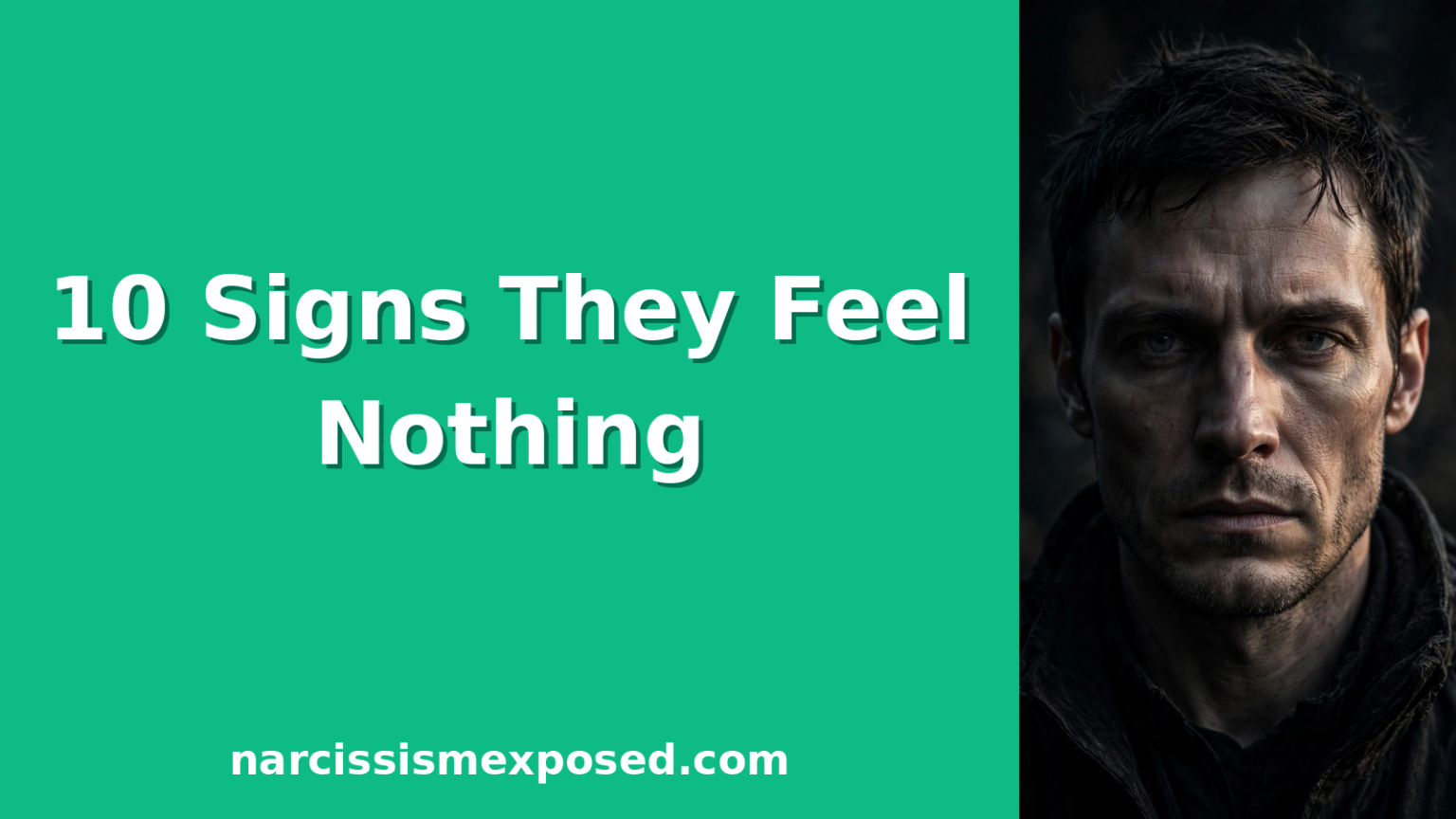
You just told him about the worst day of your year. Your voice cracked halfway through. He looked up from his phone, said “that sucks,” and asked what was for dinner. No follow up question. No hand on your shoulder. Nothing. You sat there wondering if you were asking for too much, or if something in him was simply missing. What you were seeing has a name. It is called lack of empathy, and it reveals more about a person than almost any other trait.
- What Lack of Empathy Actually Means
- Cognitive Empathy vs Emotional Empathy: The Distinction That Changes Everything
- 10 Signs of Lack of Empathy
- Lack of Empathy vs Sympathy vs Compassion: What Each One Sounds Like
- What Causes Lack of Empathy: Three Buckets
- Why It Matters Which Bucket You Are In
- Can a Lack of Empathy Be Fixed? The Honest 30-Day Test
- How to Deal With Someone Who Lacks Empathy
- FAQ: Lack of Empathy
- The Bottom Line
Here is what is ahead: what lack of empathy actually means, the cognitive vs emotional empathy distinction that changes everything, 10 signs with the exact phrases you will hear, what causes it, why he is warm to strangers and cold to you, whether it can be fixed, and how to protect yourself.
What Lack of Empathy Actually Means
Lack of empathy means a person cannot or will not tune into what someone else is feeling. It is not shyness. It is not being bad with words. It is the absence of that inner resonance most people feel when someone they love is hurting, the tug that makes you put your phone down and listen.
Psychologists split empathy into two parts, and the split matters more than most people realize. We will get to that in a moment, because it explains the most confusing thing about the narcissist in your life: how someone can read you so well and care so little.
A quick honesty note before we go further. “Empathy deficit disorder” gets thrown around online, but it is not a real DSM diagnosis. It is pop psychology language from a 2013 book. Lack of empathy is a symptom and a trait, not a disorder on its own. It shows up inside real diagnoses like narcissistic personality disorder and antisocial personality disorder, and it also shows up in ordinary people who are burned out, depressed, or defending themselves. Knowing which one you are dealing with changes everything about what you should do.
Cognitive Empathy vs Emotional Empathy: The Distinction That Changes Everything
If you only learn one thing from this article, make it this. There are two kinds of empathy, and a person can have one while completely lacking the other.
Cognitive Empathy: Knowing What You Feel
Cognitive empathy is the ability to read someone’s emotional state. To look at your face and know you are hurt, to predict what will upset you, to understand which words will land hardest. It is a skill, almost a radar. Many narcissists have excellent cognitive empathy. That is precisely what makes them dangerous.
Emotional Empathy: Feeling It With You
Emotional empathy, also called affective empathy, is different. It is the part where someone else’s pain actually moves you. Your partner cries and something in your chest tightens. You do not just register their hurt, you share a piece of it. This is the part the narcissist is missing.
The Narcissist’s Predatory Empathy
Here is the sentence that reframes your entire relationship: a large meta-analysis of the research (N=32,200, Urbonaviciute and Hepper) found that grandiose narcissism is linked to impaired affective empathy, the felt kind, while cognitive empathy, the ability to read people, stays largely intact when measured behaviorally. They can read you. They just do not feel you.
Read that again. He knows exactly how you feel. That is how he knows where to hurt you.
This is why your arguments feel so lopsided. You are fighting with someone who can see your wounds with perfect clarity and feels nothing about pressing on them. It is not that he does not understand. Understanding was never the problem. Caring was.
10 Signs of Lack of Empathy
Read these slowly. If you recognize more than a few in one person, trust what you are seeing. Each sign includes the kind of thing you will actually hear, because lack of empathy is easiest to spot in real sentences.
Sign 1: Your Pain Bores Them or Irritates Them
You tell them something that hurt you, and their face does not change. Or worse, it tightens with annoyance, like you are being an inconvenience. “You are too sensitive.” “It was not that big a deal.” “Can we not do this right now?” A person with empathy might not always respond perfectly, but your pain never bores them. It registers. With someone who lacks empathy, your suffering is background noise, and eventually they punish you for making the noise.
Sign 2: They Turn Every Conversation Back to Themselves
You mention your sick mother. Within two minutes you are hearing about their coworker, their headache, their day. It is not occasional self absorption, which everyone has. It is a pattern so consistent you have stopped bringing things up, because you already know how the conversation ends: with you comforting them about something smaller than what you came in with. Conversational narcissism is one of the most reliable day to day markers of a lack of empathy.
Sign 3: They Laugh, Smirk, or Go Cold When You Cry
This one is chilling because it is so visible. Tears that would move almost anyone produce amusement, contempt, or a flat stare in them. You have seen the smirk. You have watched them check their phone while you cried. Some even laugh and call it a joke when you flinch. Mocking someone’s pain, or going ice cold in the face of it, is not a communication problem. It is the absence of the thing that makes cruelty feel wrong from the inside.
Sign 4: “That Would Never Happen to Me”
They cannot step into your shoes, so they judge you from outside them. “I would have just quit.” “I do not know why you let it bother you.” “That would never happen to me.” Perspective taking is empathy’s engine, and theirs does not start. Instead of imagining your situation, they grade your reaction to it, usually as weak, dramatic, or stupid. If you have ever explained your hurt for an hour and been met with a shrug, you have felt this sign directly.
Sign 5: They Keep Score Instead of Showing Care
Relationships with them feel transactional in a way that exhausts you. “I drove you last week, so you owe me.” “I listened to your problem, now you have to listen to mine, and mine is worse.” Care, for them, is a currency to be tracked and spent strategically. Genuine empathy gives without a ledger. When someone lacks it, every kindness comes with an invoice, and the invoice always arrives at the worst moment.
Sign 6: Apologies That Change Nothing
“Sorry you feel that way.” “I said I was sorry, what more do you want?” “Fine, I apologize, can we move on?” The words arrive, the behavior never does. A real apology requires empathy: I see what I did to you, I feel the weight of it, I will act differently. Without empathy, an apology is just a tool to end the conversation. Watch what happens after. If the same hurt repeats on schedule, the apology was theater.
Sign 7: They Are Cruel About Your Weakest Moments
Everyone has tender spots: the insecurity you confessed at 1am, the failure you swore you would never repeat, the grief you are still carrying. A person with empathy guards those things. A person without it stores them. Then, in an argument, or casually, to get a laugh, they use them. “No wonder your ex left.” Said with a smile. Said in front of people. This is not forgetfulness. It is what happens when someone understands your wounds and feels no reason not to press them.
Sign 8: Your Wins Get Minimized or Competed With
You got the promotion. Their response: “Must be nice.” Or a story about their bigger win. Or a sudden problem that needs your attention right now. Joy, like pain, is an emotion they cannot share, so your happiness becomes either a threat or an irrelevance. People with empathy light up when you light up. People without it change the subject, because your good news does nothing for them.
Sign 9: They Cannot Handle Your Boundaries
“I need some space this weekend” becomes “You are so dramatic.” “Please do not raise your voice” becomes “Now I cannot even talk?” Boundaries ask for empathy: understand that I have limits even when they inconvenience you. Without it, your boundary sounds like an attack, and they respond like they are under one. If every reasonable request you make gets reframed as cruelty, you are not the cruel one. You are talking to someone who cannot feel why the request matters.
Sign 10: Everyone Else Gets Their Kindness, You Get the Cold Version
This is the sign that breaks people, because it looks like proof that you are the problem. They are charming with friends, generous with strangers, beloved at work, and a glacier at home. Here is the truth: selective empathy is not real empathy. Being warm when there is an audience is performance. The version of them you get behind closed doors, where there is nothing to gain, is the real one. If you have ever thought “why is he nice to everyone but me,” this is your answer. You are not harder to love. You are just the person they no longer need to impress.
Lack of Empathy vs Sympathy vs Compassion: What Each One Sounds Like
People mix these up constantly, and the difference matters when you are grading your partner in real time. Imagine you come home upset about a hard day.
| Empathy | Sympathy | Compassion | |
|---|---|---|---|
| What it is | Feeling with you | Feeling for you, from a distance | Feeling with you, plus the urge to help |
| What it sounds like | “That sounds crushing. I am right here.” | “Oh no, that is awful. Poor thing.” | “That sounds crushing. Sit down, I will handle dinner, tell me everything.” |
| What the narcissist does | Skips it entirely | Performs it for an audience | Never reaches it |
Sympathy without empathy is pity at a distance. Compassion is empathy in motion. What you need in a partner is at least empathy, the sense that your inner life lands somewhere inside them. If all you ever get is the flat “that sucks” or the performed concern that vanishes when no one is watching, you have your answer.
What Causes Lack of Empathy: Three Buckets
Not every unempathetic moment means the same thing. Before you decide what to do, figure out which bucket you are looking at.
Bucket 1: Temporary Shutdown
Even deeply empathetic people lose access to it under strain. Defensiveness in a heated argument, burnout, depression, grief, exhaustion, trauma responses: all of these can temporarily shut empathy down. The key word is temporary. When the pressure lifts, the empathy comes back, and there is usually remorse for how they acted without it. “I am sorry I was cold last night, I was overwhelmed” is a shutdown talking. If this is your person, the pattern is the exception, not the rule.
Bucket 2: A Stable Trait
Some people are simply wired this way. Chronically entitled, chronically self focused, chronically unbothered by other people’s inner lives. There is no shutdown and recovery cycle, because there was never much empathy to shut down. This is the territory pop psychology calls “empathy deficit disorder,” but remember: that is not a real diagnosis. It is a description of a pattern. The pattern is consistent across years, across relationships, and across moods. Good day or bad day, your pain gets the same flat response.
Bucket 3: A Clinical Disorder
Lack of empathy is a core feature of narcissistic personality disorder and antisocial personality disorder in the DSM-5. In NPD it pairs with grandiosity and a need for admiration. In ASPD it pairs with disregard for others’ rights and deceit. Two important caveats. First, only a qualified professional can diagnose these, not a blog post and not you. Second, lack of empathy also appears in autism and alexithymia, where the mechanism is completely different: difficulty reading emotions, not indifference to them. An autistic person may miss your cues and feel terrible when they realize. A narcissist reads your cues perfectly and feels nothing. Never use this article to diagnose someone neurodivergent. For the clinical picture, see the Mayo Clinic overview of narcissistic personality disorder.
Why It Matters Which Bucket You Are In
Bucket 1 calls for patience, rest, and honest conversation. Bucket 2 calls for boundaries, lowered expectations, and a serious look at whether the relationship is survivable. Bucket 3 calls for professional guidance and, very often, an exit plan. Most of the generic advice online (“communicate better, practice active listening, try couples therapy”) assumes Bucket 1. If you are living in Bucket 2 or 3, that advice will waste years of your life. Couples therapy with someone who lacks empathy often becomes a stage for them to perform victimhood while a professional nods along. Know which bucket before you pick a strategy.
Can a Lack of Empathy Be Fixed? The Honest 30-Day Test
This is the question that keeps people stuck for years, so here is the honest answer. Empathy can grow in people who have some of it and want more of it. Therapy, especially approaches focused on perspective taking and emotional awareness, helps people in Bucket 1 enormously. For Bucket 2, change is rare and slow, and it only happens when the person sees their lack of empathy as their problem, not yours. For Bucket 3, the clinical literature is blunt: personality disorders are deeply ingrained, change is the exception, and waiting for it is not a plan.
Stop grading their intentions. Grade their behavior with the 30-day test. Pick one specific, reasonable change: “When I say I am hurt, ask me what happened before you respond.” Then watch for 30 days. Real change looks like effort, slip ups followed by genuine repair, and curiosity about your experience. Performative change looks like a week of perfect behavior that collapses the moment you relax, or empathy that appears only when others are watching. If 30 days pass and nothing has actually shifted, believe the data. The WebMD guide to narcissistic behavior signs is a useful reality check while you run the test.
How to Deal With Someone Who Lacks Empathy
You cannot argue someone into feeling. But you can change how much their emptiness costs you.
Stop over explaining. You have given the hour long presentation of your hurt. It did not work because understanding was never missing. Say it once, plainly, then stop. Repetition just gives them more material.
Expect the DARVO flip. When you name the lack of empathy, many narcissists deny it, attack your tone, and reverse into the victim. “So now I am a monster?” Learn the pattern so it stops working: our guide on DARVO breaks down exactly how the reversal works.
Document the pattern, not the incidents. One cold moment means nothing. Fifty, written down with dates, reveals the structure. Patterns are what convince you, and later a therapist or lawyer, that this is not in your head.
Set boundaries built for someone without empathy. Do not frame boundaries as feelings (“it hurts me when…”), because that is the channel that is broken. Frame them as consequences: “If you yell, I leave the room.” Then do it, every time. Our breakdown of the narcissist meaning in a relationship shows what these dynamics look like across the full abuse cycle.
Protect your exits. If you are in Bucket 2 or 3, keep your own support system, your own money knowledge, and your own plan. When contact is unavoidable, the yellow rock method gives you scripts that stay warm on the surface while giving them nothing to use.
Stop auditioning for their empathy. This is the hardest one. You keep performing your pain more vividly, hoping this time it lands. It will not land, because there is nowhere for it to land. Grieve that, and put the energy into people whose empathy works.
FAQ: Lack of Empathy
What is the meaning of lack of empathy?
Lack of empathy means being unable or unwilling to recognize, understand, or share another person’s feelings. In psychology it is best understood as a deficit in emotional empathy: the person may intellectually grasp what you feel (cognitive empathy) while feeling nothing about it themselves.
What are the signs of a lack of empathy?
The clearest signs: your pain bores or irritates them, they turn every conversation back to themselves, they go cold or mocking when you cry, they cannot take your perspective, they keep score instead of showing care, their apologies change nothing, they use your vulnerabilities against you, they minimize your wins, they punish your boundaries, and they are warm to everyone except you.
What is a synonym for lack of empathy?
Common synonyms include callousness, coldness, unfeelingness, and emotional detachment. In clinical contexts you will see “impaired affective empathy” or “empathy deficit.” None of these are formal diagnoses on their own.
Is lack of empathy a disorder?
No, not by itself. It is a symptom and a trait, not a standalone DSM-5 diagnosis. “Empathy deficit disorder” is pop psychology, not medicine. Lack of empathy becomes clinically significant inside diagnoses like narcissistic personality disorder and antisocial personality disorder, which only a qualified professional can diagnose.
What causes a person to lack empathy?
Three main buckets: temporary shutdown from stress, burnout, depression, or defensiveness; a stable lifelong trait of entitlement and self focus; or a clinical personality disorder. Childhood emotional neglect and trauma can also impair empathy development. Figuring out which bucket applies changes what you should do about it.
Do narcissists lack empathy?
Yes, impaired emotional empathy is one of the defining features of narcissism. A large meta-analysis (N=32,200) found narcissists show reduced affective empathy while their cognitive empathy, the ability to read emotions, often stays intact. That combination is why narcissistic abuse feels so targeted: they know exactly what hurts and do it anyway. For the full picture, read the narcissist meaning.
Is lack of empathy a sign of autism?
It can look similar from the outside, but the mechanism is different. Autistic people may struggle to read emotional cues (a cognitive empathy difficulty) while caring deeply once they understand. Narcissistic lack of empathy is the reverse: excellent reading of cues with no caring attached. Never use empathy struggles alone to label someone.
Can a lack of empathy be fixed or learned?
Sometimes. People whose empathy is temporarily shut down by stress or depression usually recover it. People for whom it is a stable trait rarely develop it, and only when they genuinely want to. Run the 30-day behavior test from this article rather than grading their promises.
How do you test for lack of empathy?
There is no single home test, but psychologists use measures like the Interpersonal Reactivity Index. In real life, the test is behavioral: share something vulnerable and watch what happens over the next month. Do they remember? Do they ask follow up questions? Does your pain ever change their behavior? Consistent indifference is the result.
What is the difference between lack of empathy and narcissism?
Lack of empathy is one trait. Narcissism is a full pattern that includes it: grandiosity, entitlement, need for admiration, and exploitative behavior, organized around a fragile sense of self. Someone can lack empathy without being a narcissist (burnout, depression, certain neurodivergence), but a narcissist by definition lacks emotional empathy.
How do you deal with someone who lacks empathy in a relationship?
Stop over explaining your feelings, because understanding is not the missing piece. State needs once, set consequence based boundaries, document the pattern, keep your own support system, and run the 30-day change test. If nothing shifts, accept the data. When they punish you for naming it, you may also be dealing with blame shifting.
Why does my partner have no empathy for me but is nice to everyone else?
Because selective empathy is performance, not empathy. Kindness that appears for an audience and vanishes behind closed doors is impression management. The version you get with no audience is the real one. This is one of the most common confusions survivors report, and the answer is simple: you are not harder to love, you are just the person they stopped needing to impress.
Does a lack of empathy make you a sociopath?
No. Sociopathy, the informal term for antisocial personality disorder, involves a persistent pattern of violating other people’s rights, deceit, impulsivity, and aggression. Low empathy is only one piece of that picture. Many conditions reduce empathy: depression, burnout, autism, alexithymia, PTSD. A lack of empathy is one trait; a diagnosis requires a full pattern assessed by a professional. Armchair diagnosing someone you know from a single trait is exactly how the word loses its meaning.
Why does it feel like empathy is disappearing from society?
Online life rewards outrage, speed, and performance over understanding, and algorithms amplify the loudest, most extreme voices. It is easy to mistake that feed for the whole world. The quieter truth is that most people still help, still care, still show up. The feeling of decline is real, but it is shaped by what you are shown every day. Protecting your own empathy starts with curating what you consume.
The Bottom Line
Lack of empathy is not a communication style and not a phase. It is the missing piece that explains why your pain never lands, why your words never get through, and why the kindest person in the room becomes a stranger at home. Once you see it clearly, you stop asking “how do I make them understand” and start asking the question that actually protects you: “what do I do now that I know they never will?”