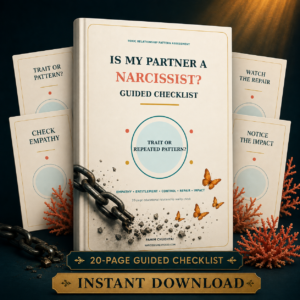

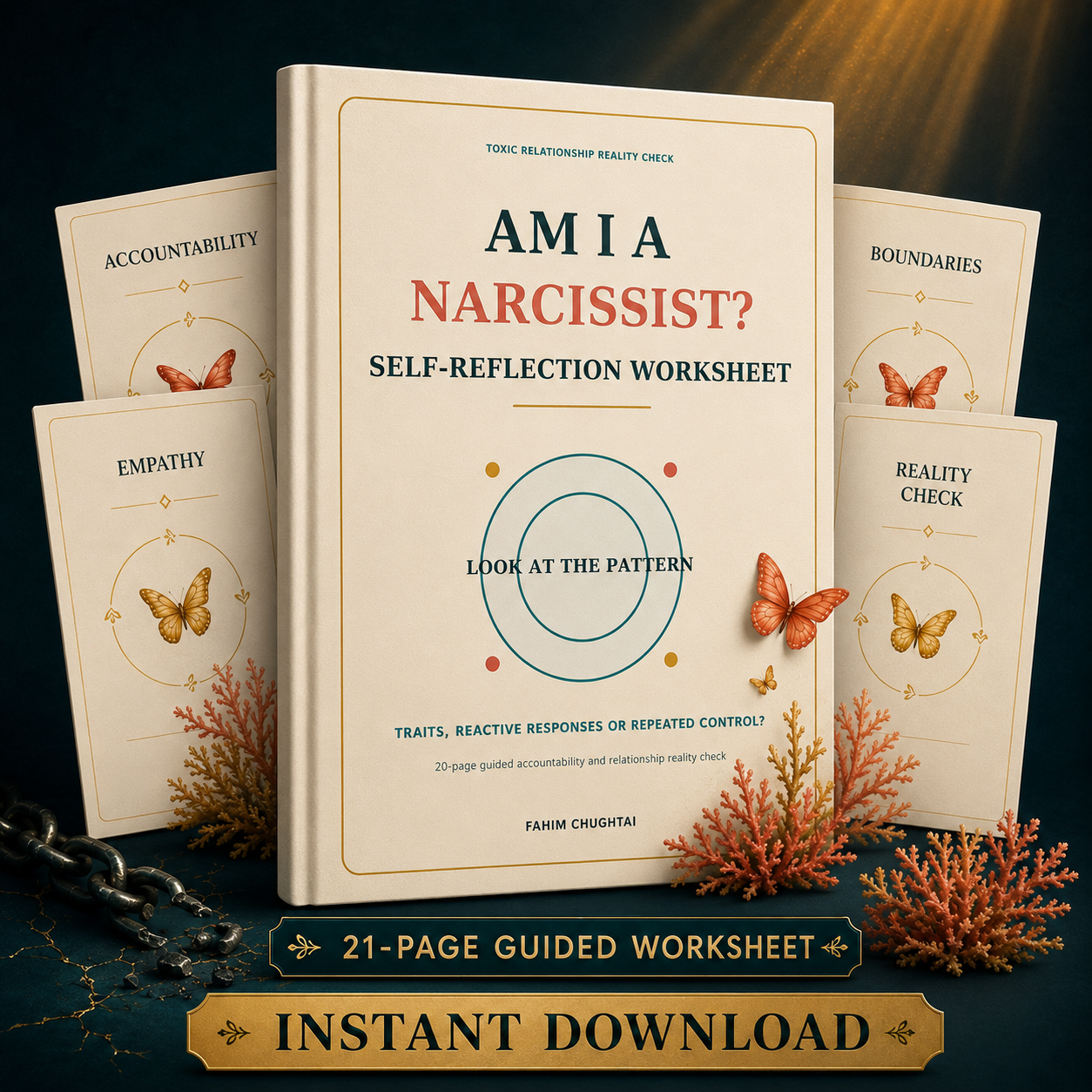
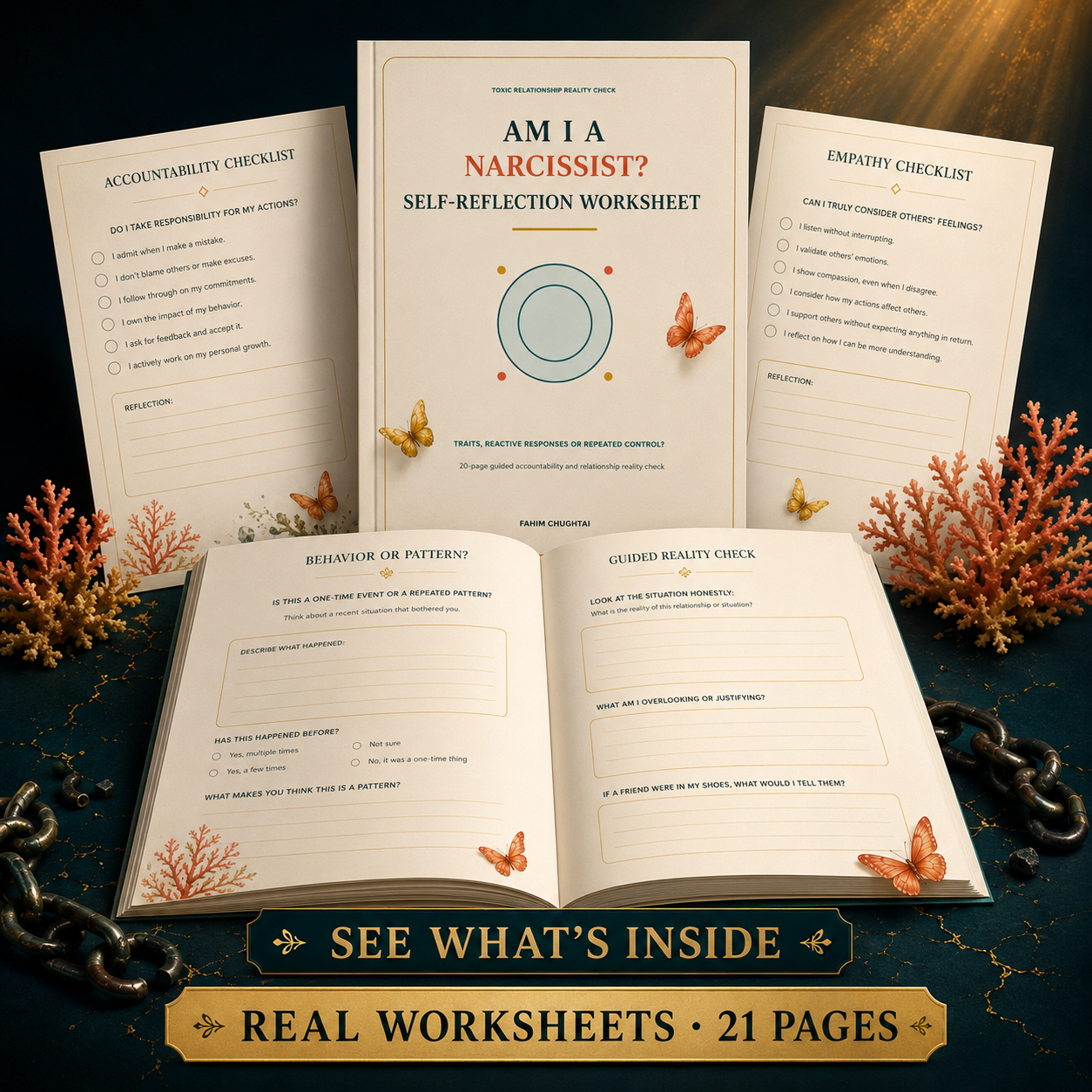
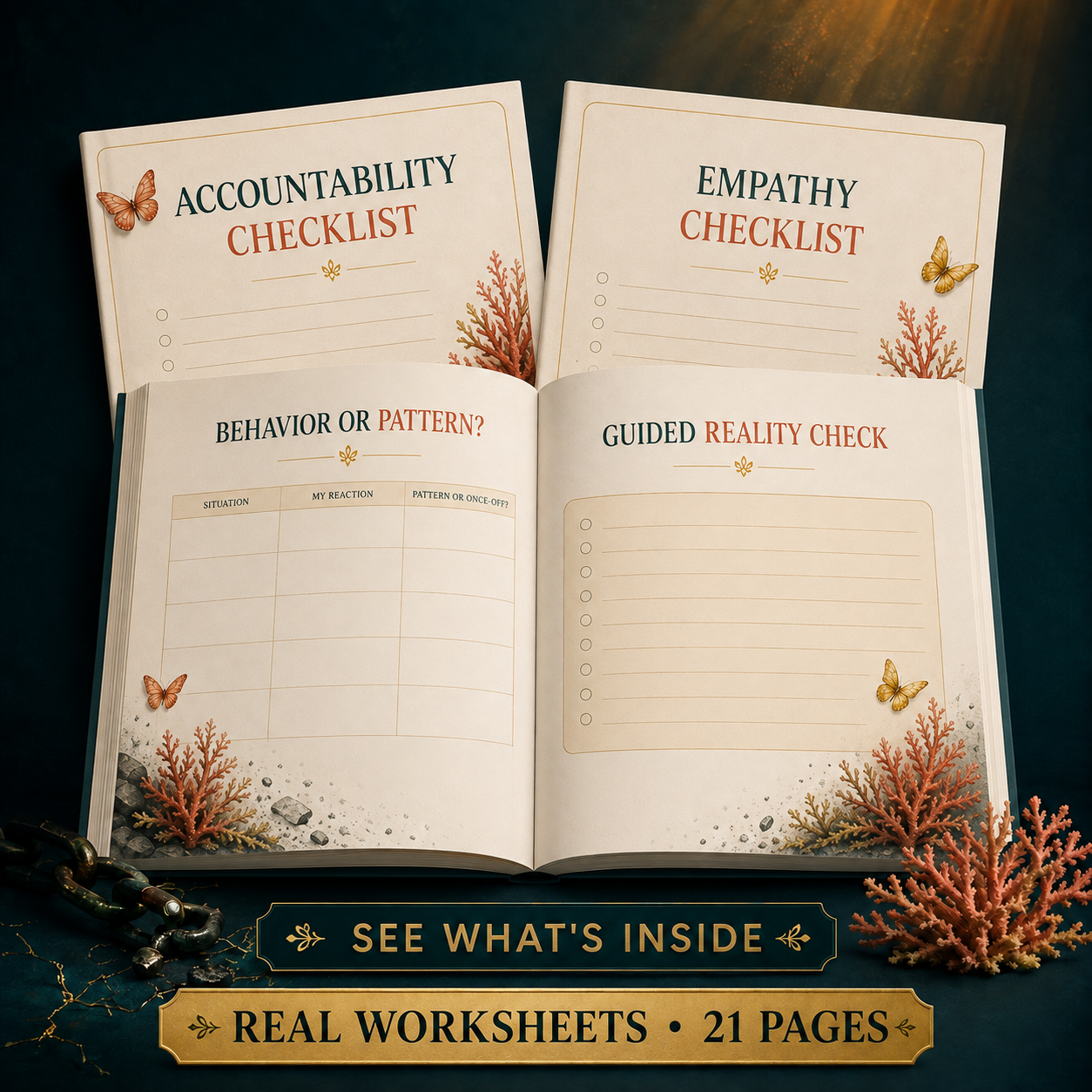
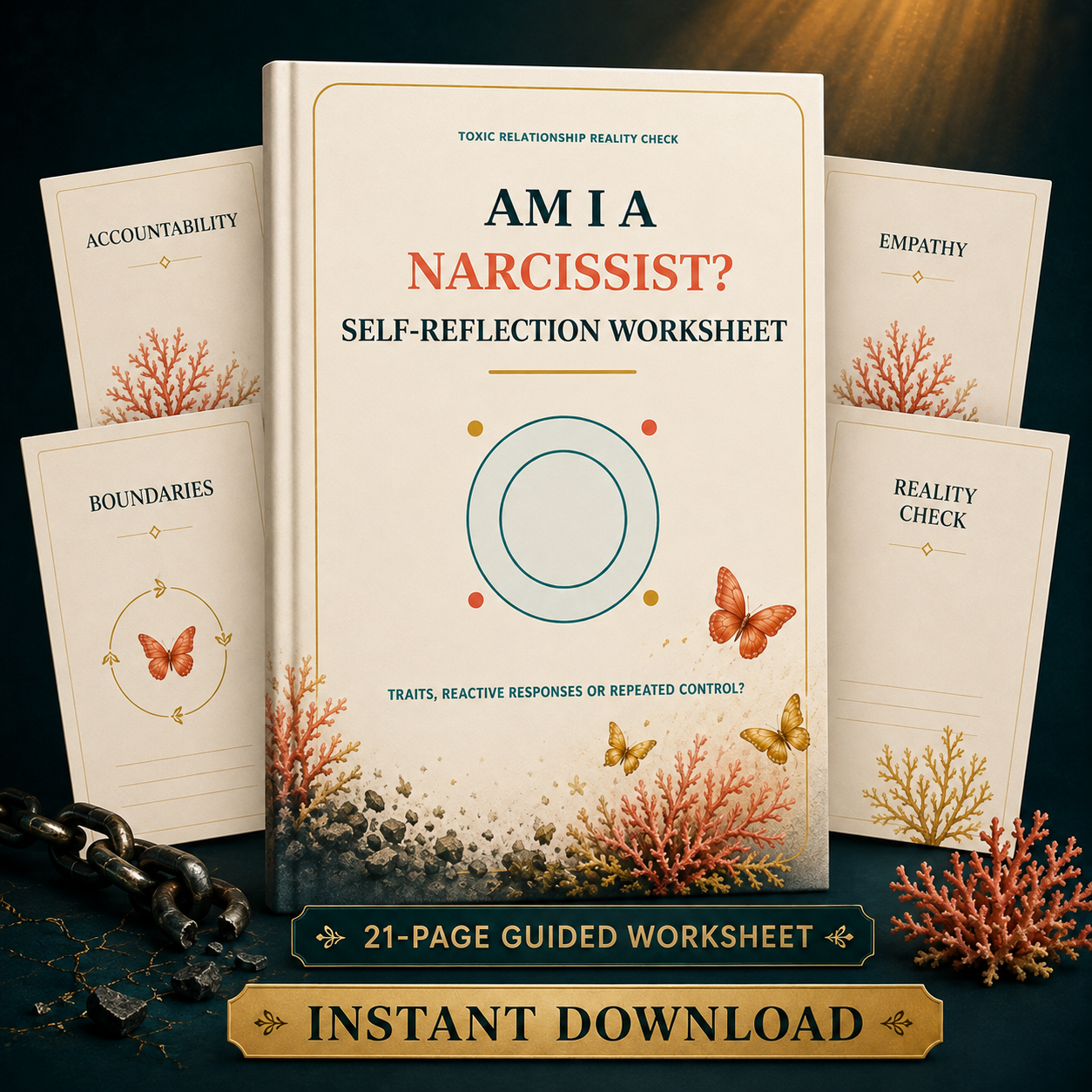
Am I the narcissist worksheet — a 21-page guided reality check resource for people who are questioning their own behavior in a difficult or toxic relationship and genuinely want to know the truth.
Because one of the most painful questions a person in a confusing relationship can ask is this one.
Am I the problem?
Maybe they told you that you are. Maybe you have started to believe it. Maybe you have spent hours replaying interactions, trying to figure out whether your reactions were justified or whether you crossed a line you did not see clearly at the time.
This worksheet does not tell you what to conclude. It helps you examine the actual evidence — your behavior, the patterns behind it, the power dynamics in the relationship, and whether genuine accountability and repair are possible — so you can reach an honest, evidence-based answer instead of an emotionally driven one.
WHAT IS INSIDE YOUR 21-PAGE WORKSHEET:
✓ 21 complete guided pages
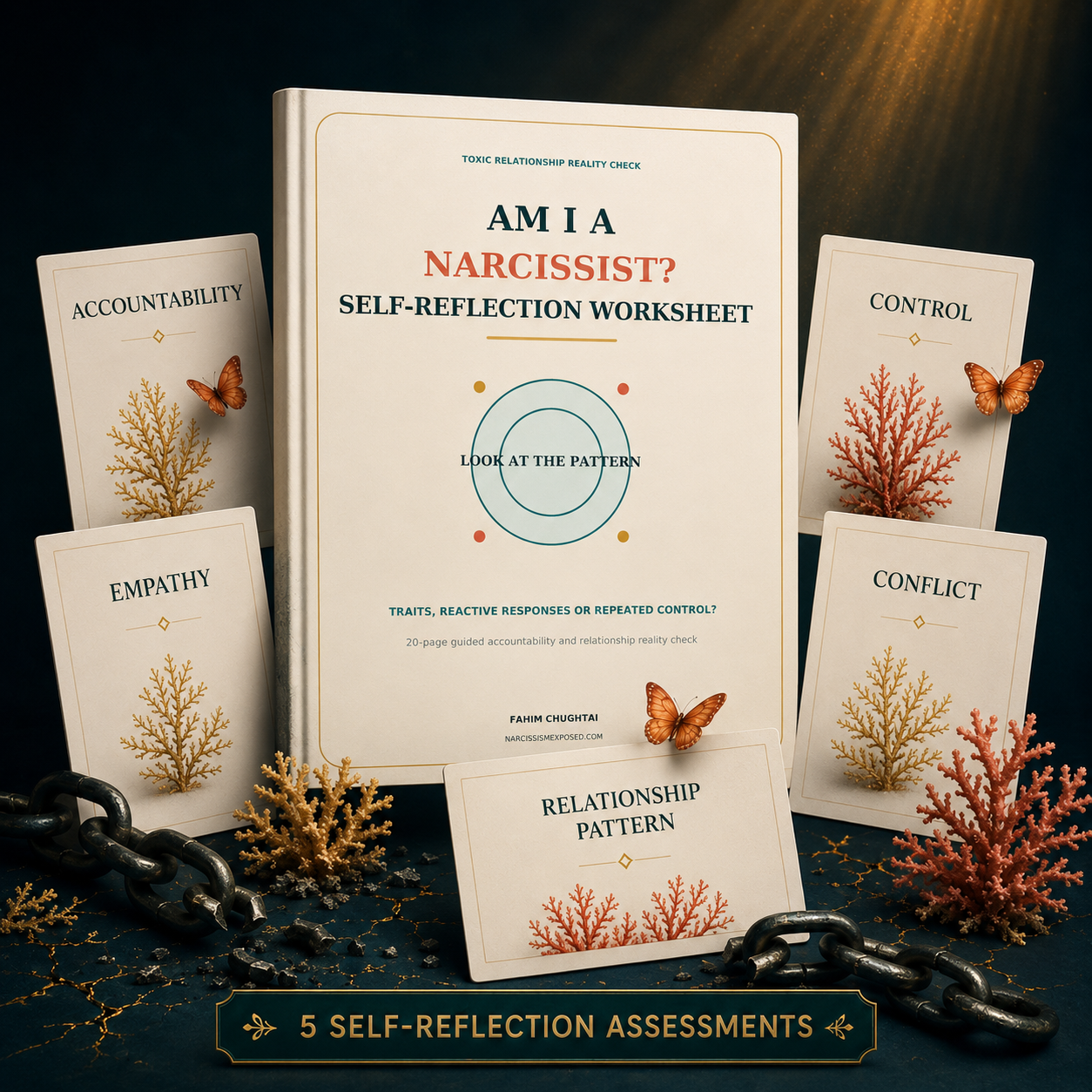
✓ Five scored assessment areas
✓ Behavior versus pattern exercises
✓ Specific incident analysis pages
✓ Power and context questions
✓ Accountability reflections
✓ Impact and repair assessments
✓ Guided writing spaces
✓ Personal behavior change planning
✓ Final evidence-based conclusion page
✓ Instant digital download
SIX AREAS THIS WORKSHEET EXAMINES:
Section 1 — Narcissistic Traits Versus Normal Defensiveness
Everyone can become defensive, selfish, or insensitive occasionally. This section examines whether these behaviors soften with reflection, evidence, and empathy — or continue as a repeated pattern regardless of impact.
Section 2 — Accountability and Repair
Consider whether you deny behavior to protect your image, blame the other person’s reaction, expect forgiveness without changing, rewrite events to appear completely innocent, or whether you can acknowledge harm and make genuine behavioral repairs.
Section 3 — Empathy and Separate Perspectives
Evaluate whether you can respect another person’s emotional experience, listen before defending yourself, separate intention from impact, allow different perspectives, and show empathy without expecting praise or reward in return.
Section 4 — Control, Entitlement and Boundaries
Examine behaviors involving privacy, continuing to pressure someone after a clear no, using silence, money, or affection to gain compliance, applying different rules to yourself and others, and retaliating against boundaries.
Section 5 — Conflict, Criticism and Self-Image
Reflect on how you respond when criticized. Do you attack the other person’s character? Need to win every disagreement? Punish through silence or withdrawal? Or can you receive feedback and return to the original concern without demanding reassurance?
Section 6 — Pattern, Context and Relationship Impact
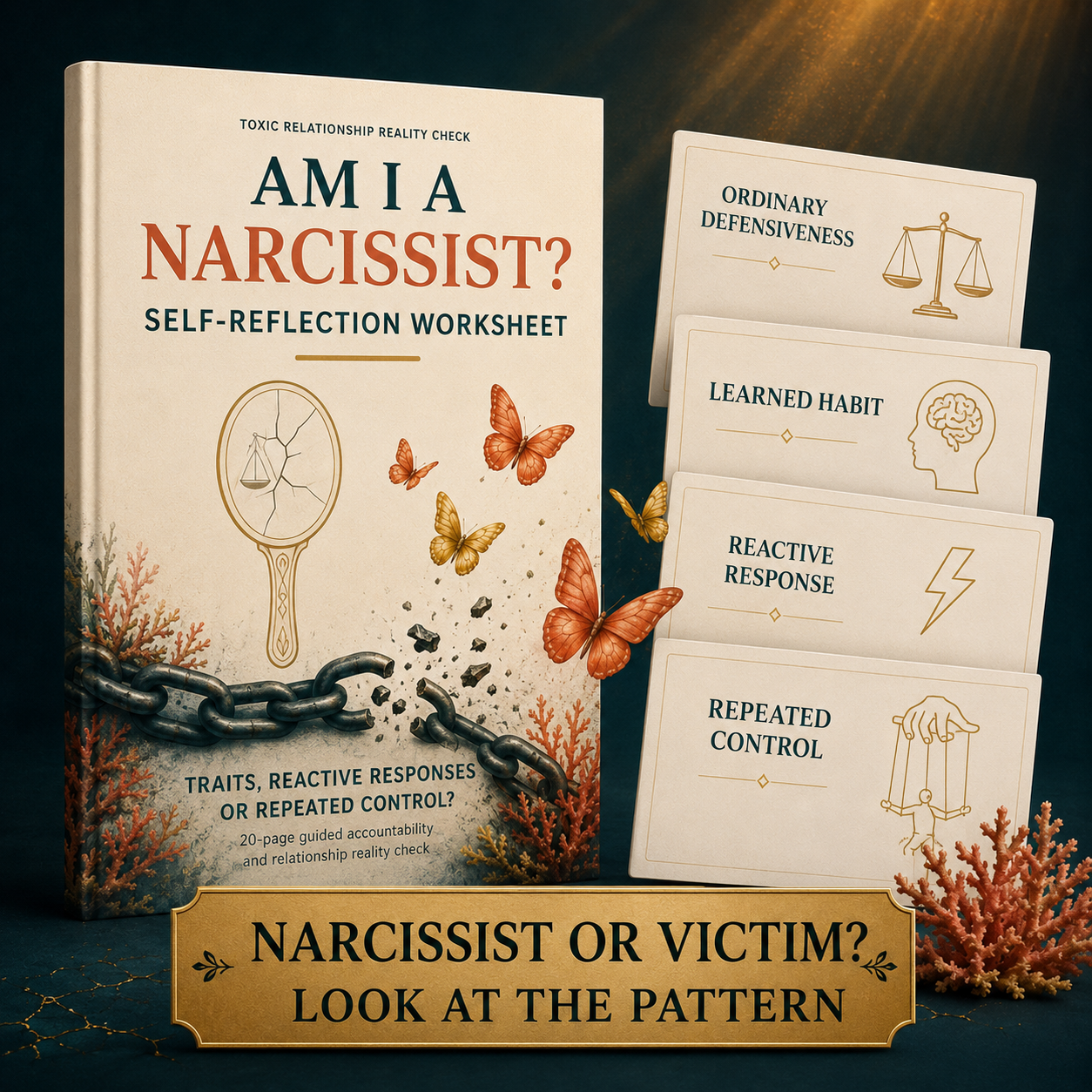
Distinguish between ordinary defensiveness, unhealthy learned behavior, trauma-based reactive responses, and repeated controlling patterns. Consider whether the same concerns appear across several relationships or mainly within one unsafe and highly provoking dynamic.
THE SCORING SYSTEM:
Each of the five assessment areas contains eight statements rated 0 to 3. Every section produces a score out of 24. These scores help you compare behavior across different areas and identify what needs attention.
There is no diagnostic cutoff. A high score does not prove Narcissistic Personality Disorder. A low score does not automatically prove victimhood. The goal is honest, evidence-based self-examination.
THE NARCISSIST OR VICTIM REALITY CHECK:
The final section addresses something rarely discussed — causing harm and experiencing harm are not always mutually exclusive.
A person may need to take responsibility for a reactive behavior while also recognizing a larger pattern of coercion or mistreatment they are living inside. Mutual conflict does not mean both people have equal power, responsibility, or impact.
The goal is to identify what behavior must stop, what harm requires repair, what boundaries are needed, whether safety support is necessary, and whether professional assessment could help.
THIS WORKSHEET IS FOR YOU IF:
- You are genuinely questioning whether your behavior has been harmful
- A partner, parent, or family member has called you the narcissist
- You want an honest self-assessment rather than validation
- You are trying to understand the difference between reactive behavior and controlling patterns
- You are in a confusing relationship and cannot tell who is doing what to whom
- You want clarity before making a decision about the relationship
- You are working with a therapist and want a structured self-reflection tool
INSTANT DIGITAL DOWNLOAD — PDF format. 21 pages. No physical item will be shipped. Print at home or use digitally on any compatible device.
Created by Fahim Chughtai — founder of NarcissismExposed.com, 7 years supporting survivors of narcissistic abuse and toxic relationships.