


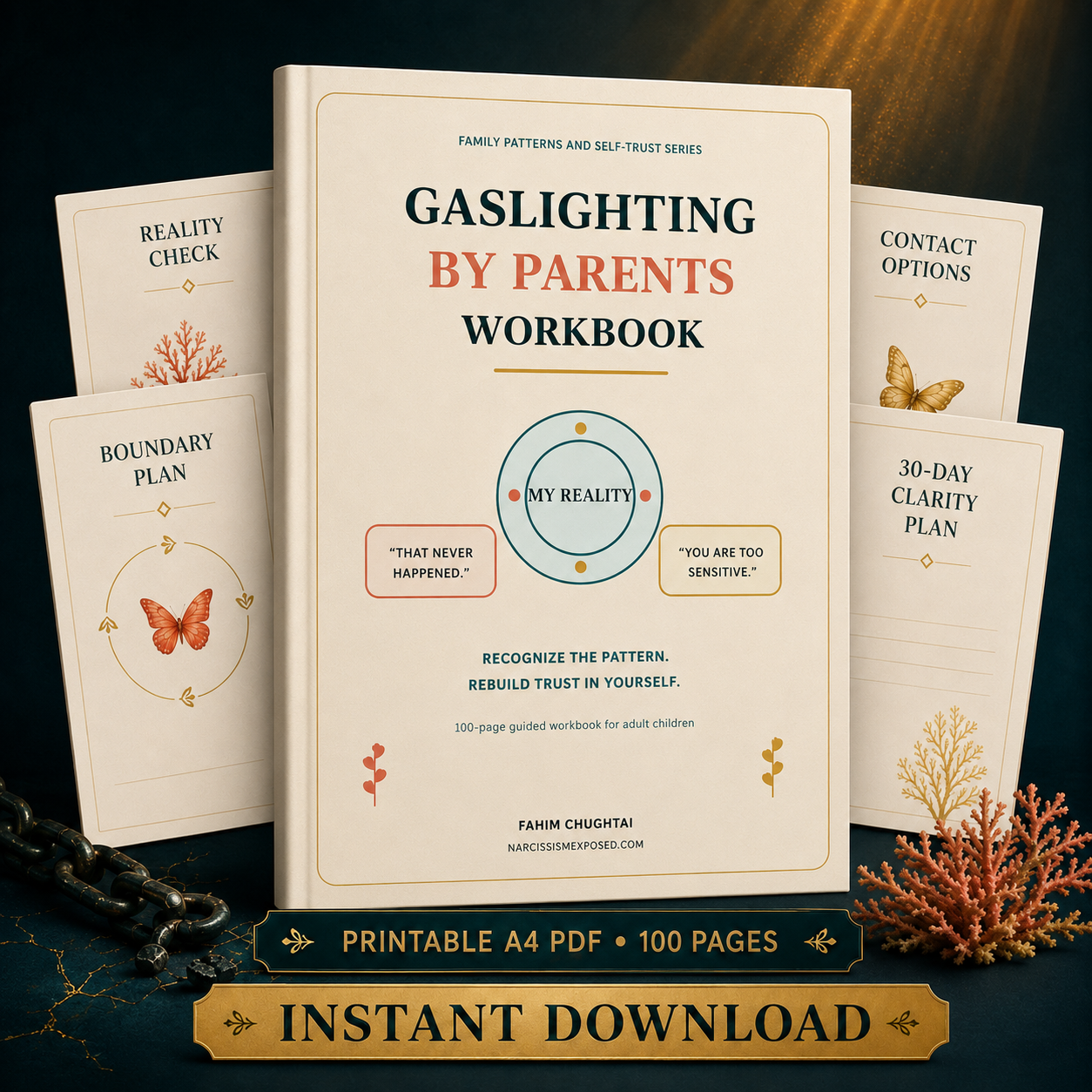

Gaslighting by parents workbook — a 100-page guided resource for adults who repeatedly question their own memories, emotions, and decisions because of the way a parent communicates with them.
Because one of the most disorienting experiences a person can have is growing up with a parent who made you doubt your own reality.
Not through obvious cruelty. Through patterns. Repeated denials. Stories that changed when evidence appeared. Emotions that were consistently dismissed. Conversations that always ended with you feeling confused, guilty, or like the problem.
And now, as an adult, you carry that pattern inside you. You second-guess your memories. You apologize reflexively. You doubt your own judgment even when evidence supports you. You wonder whether your childhood was really as confusing as it felt — or whether you are just being too sensitive.
This workbook helps you examine that question honestly, without needing to diagnose your parent or prove your past, so you can rebuild trust in your own perception and make decisions from clarity rather than guilt.
WHAT IS INSIDE YOUR 100-PAGE WORKBOOK:
✓ 100 complete guided pages
✓ Recognition checklists
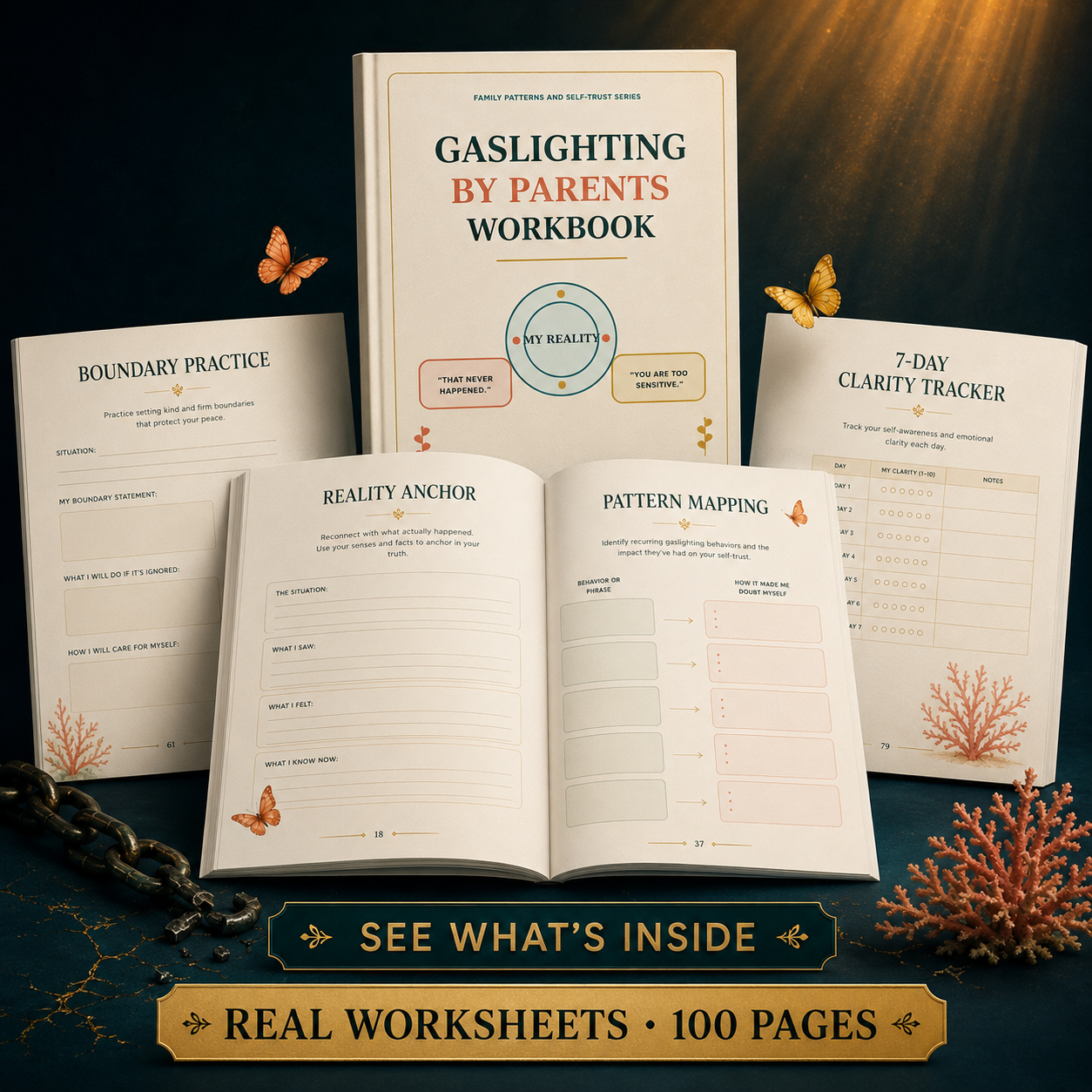
✓ Pattern mapping tables
✓ Reality Anchor exercises
✓ Guided reflection questions
✓ Boundary response scripts
✓ Seven day clarity trackers
✓ Self-trust assessments
✓ Family support maps
✓ Incident analysis pages
✓ Contact decision worksheets
✓ Complete 30 day clarity plan
✓ Instant digital download
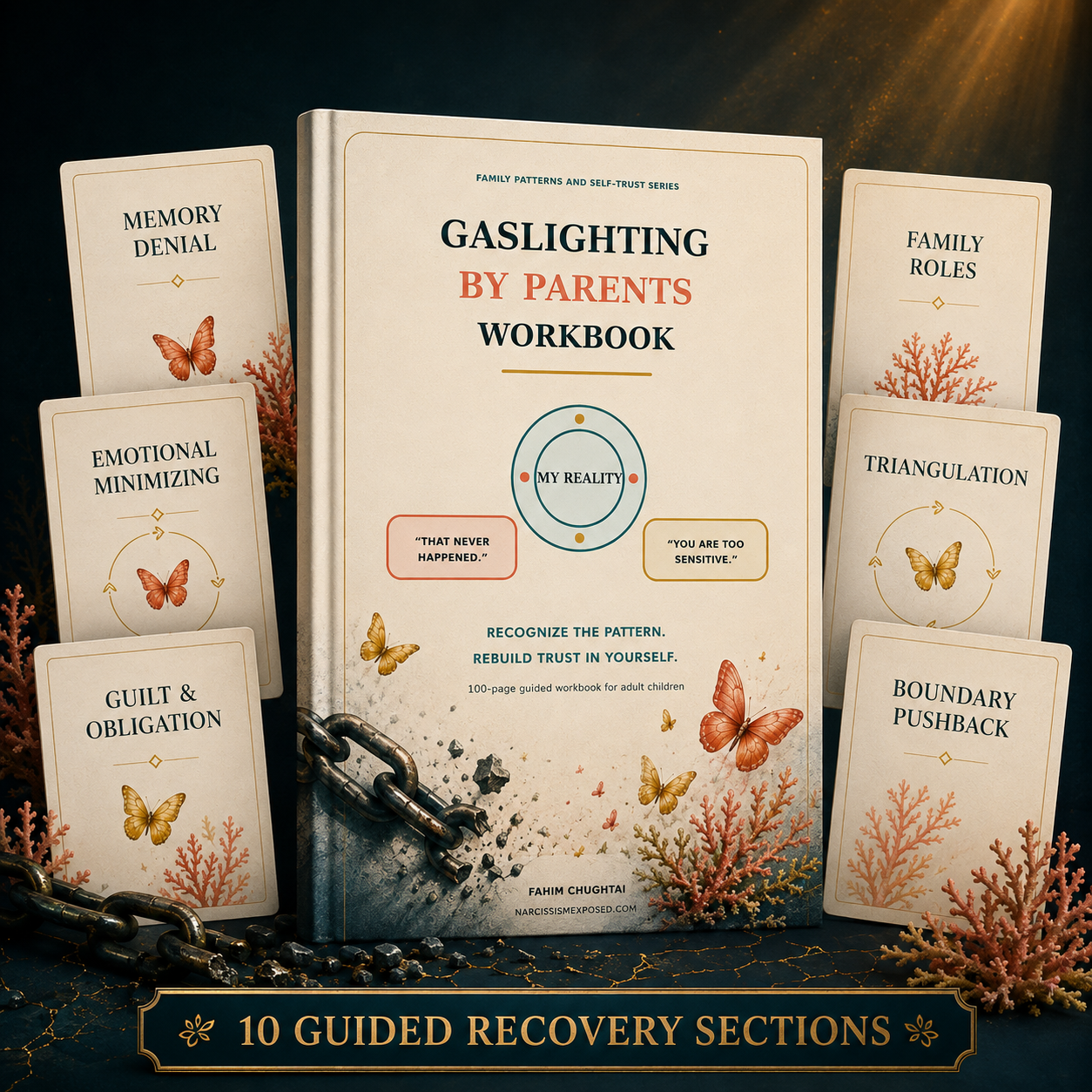
10 SECTIONS INSIDE:
Section 1 — Naming the Pattern
Identify repeated behaviors including denying events that happened, changing the story when evidence appears, treating questions as disrespect, redirecting attention to your reaction, and leaving conversations feeling more confused than before.
Section 2 — Childhood Memory and Reality
Explore disputed childhood memories without needing perfect recall. Separate what you remember clearly, what evidence exists, what remains uncertain, and how the experience affected you regardless of intention.
Section 3 — Emotional Denial and Minimizing
Examine how your emotions may have been dismissed through statements like “you are too sensitive,” “you are being dramatic,” “it was not that bad,” or “I was only trying to help.” A parent’s intention does not automatically erase emotional impact.
Section 4 — Guilt, Obligation and Gratitude
Explore situations where parental care or sacrifice is used to demand permanent obedience, unrestricted access, silence about harmful behavior, responsibility for the parent’s emotions, or loyalty at the expense of your own wellbeing.
Section 5 — Family Roles and Scapegoating
Identify which role you were expected to perform — scapegoat, golden child, peacekeeper, parentified child, or invisible child — and how that role shaped your adult identity.
Section 6 — Triangulation and Family Narratives
Examine situations where relatives are recruited to pressure you, deliver messages, monitor your choices, or support the parent’s version of events. Decide who is safe to trust and what information should remain private.
Section 7 — Boundaries and Pushback
Create practical boundaries around phone calls, visits, personal information, sensitive topics, and guilt-based pressure. Includes ready-to-use scripts for real situations.
Section 8 — Choosing the Right Level of Contact
Evaluate full contact, structured contact, low contact, temporary distance, and no contact — based on your emotional impact, safety, dependence, cultural realities, and available support. No instruction to cut anyone off.
Section 9 — Rebuilding Self-Trust and Identity
Recognize internalized parental criticism, make decisions independently, separate guilt from genuine wrongdoing, rediscover personal preferences, and build an identity beyond the family role.
Section 10 — The 30-Day Clarity Plan
Four weeks of practical daily work involving reality anchoring, emotional validation, boundary practice, self-trust exercises, progress tracking, and support planning.
THIS WORKBOOK IS FOR YOU IF:
- You constantly doubt your memory after conversations with a parent
- You feel guilty for having emotions or needs around family
- You replay family interactions looking for what you did wrong
- You struggle to set limits without feeling like a bad child
- You were told your childhood experiences were exaggerated or invented
- You are navigating complex feelings about contact with a difficult parent
- You want to understand the pattern without labeling or diagnosing anyone
- You are an adult child of a narcissistic or emotionally immature parent
IMPORTANT NOTE:
This workbook does not diagnose parents or assume every disagreement is gaslighting. It examines the complete pattern including repetition, power, accountability, treatment of evidence, and the effect on your self-trust. It is an educational self-reflection resource, not therapy, diagnosis, or legal advice.
INSTANT DIGITAL DOWNLOAD — PDF format. 100 pages. No physical item will be shipped. Print at home or use digitally on any compatible device.
Created by Fahim Chughtai — founder of NarcissismExposed.com, 7 years supporting survivors of narcissistic abuse and toxic relationships.