
Are you questioning whether your partner shows occasional unhealthy traits—or whether you are experiencing a consistent pattern of narcissistic behavior?
Many people ask this question after months or years of confusion:
“Is this normal relationship conflict?”
“Am I being too sensitive?”
“Why does the same cycle keep happening?”
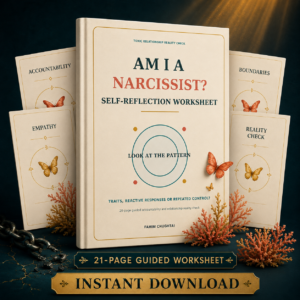
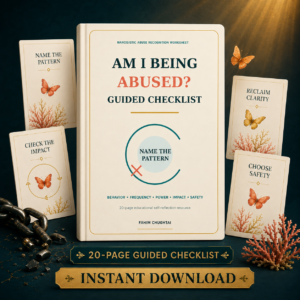
This checklist does not diagnose or label your partner. It helps you examine observable behavior, repeated patterns, accountability, boundaries, emotional impact, and what happens after harm occurs.
Instead of focusing only on:
“Is my partner officially a narcissist?”
This assessment helps you explore more useful questions:
What behavior keeps repeating? Does my partner accept responsibility? Does anything genuinely change? How is this relationship affecting me?
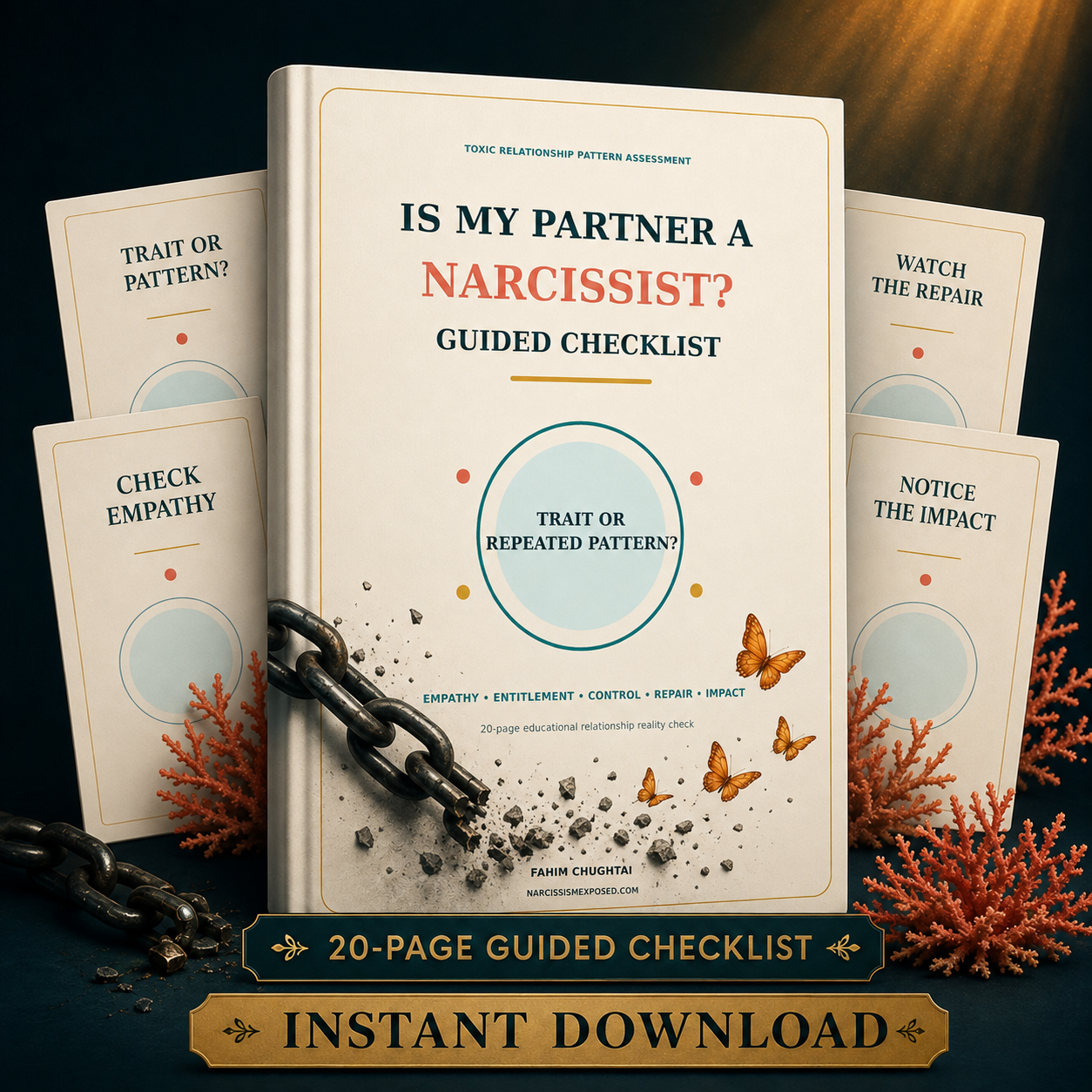
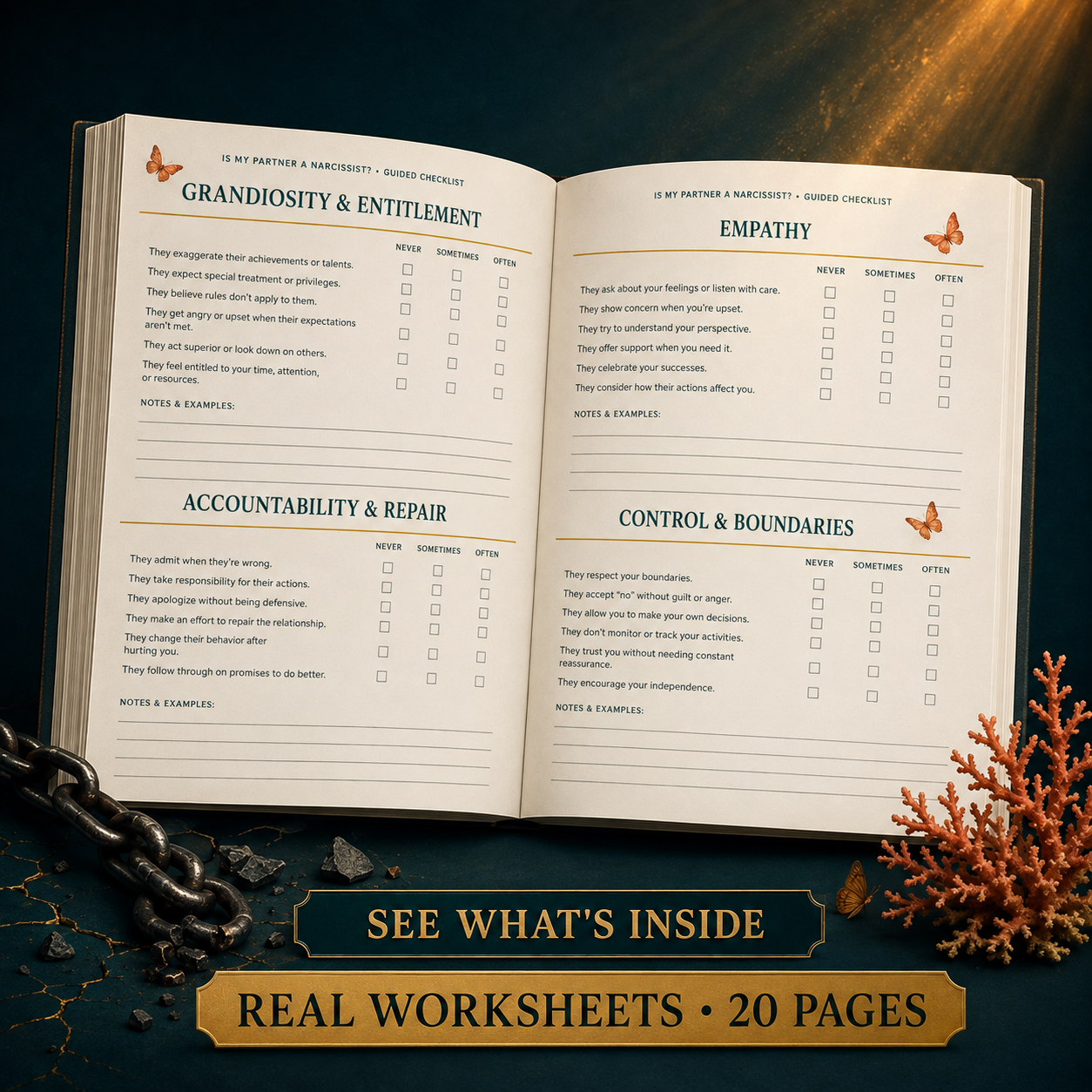
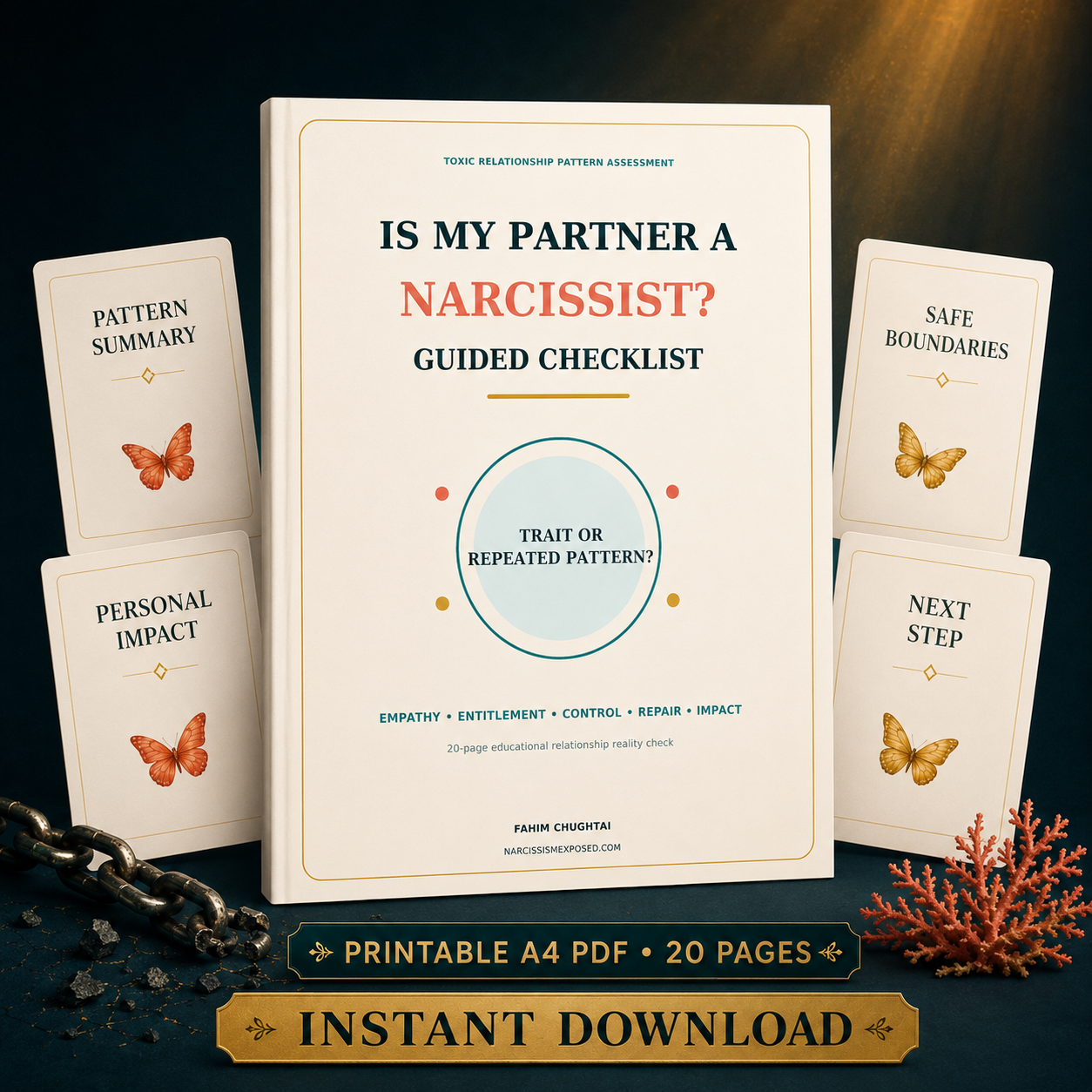
WHAT IS INSIDE YOUR 20-PAGE CHECKLIST:
✓ 20 complete guided pages
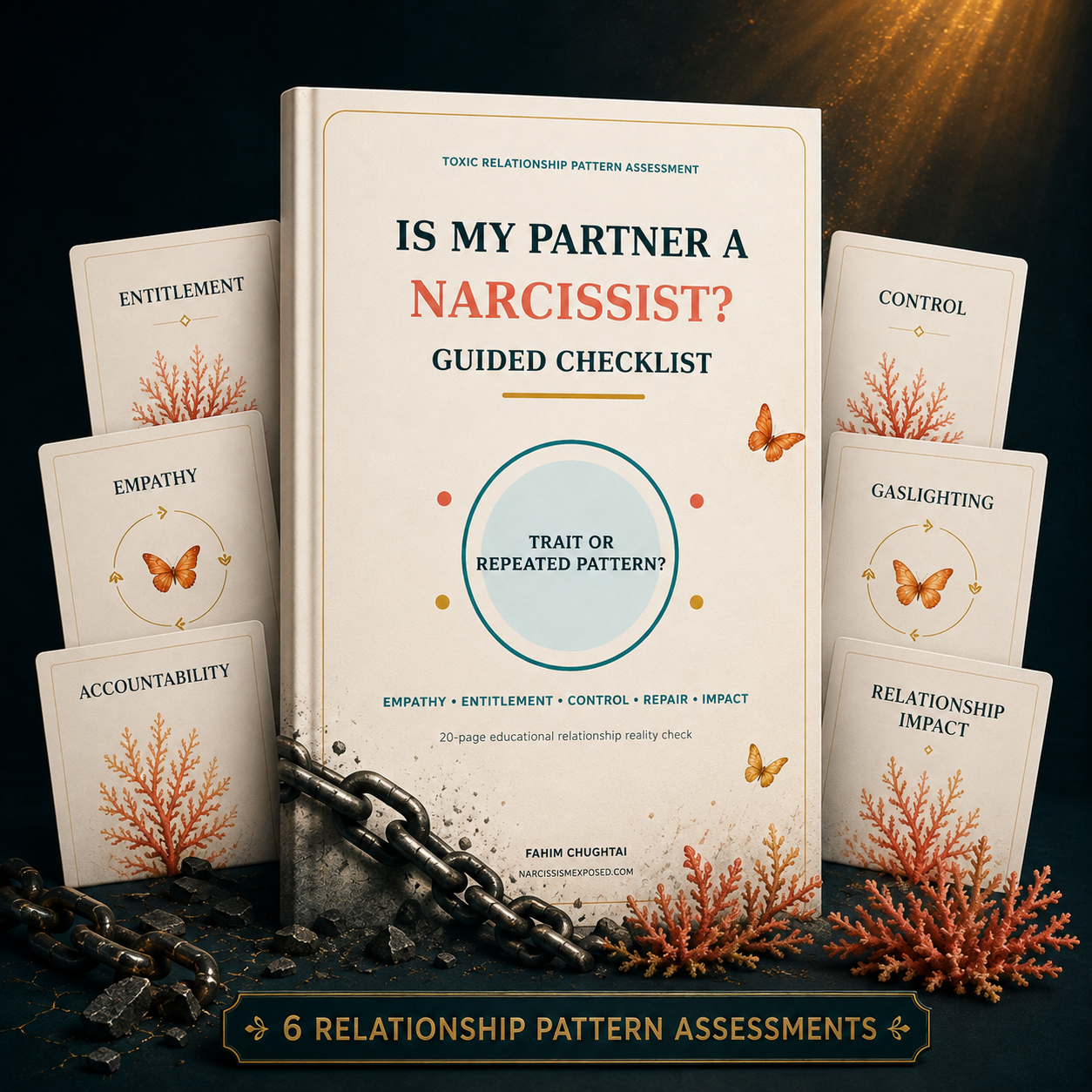
✓ Six core relationship-pattern assessment sections
✓ Never to Very Often rating scale
✓ Pattern summary and reflection prompts
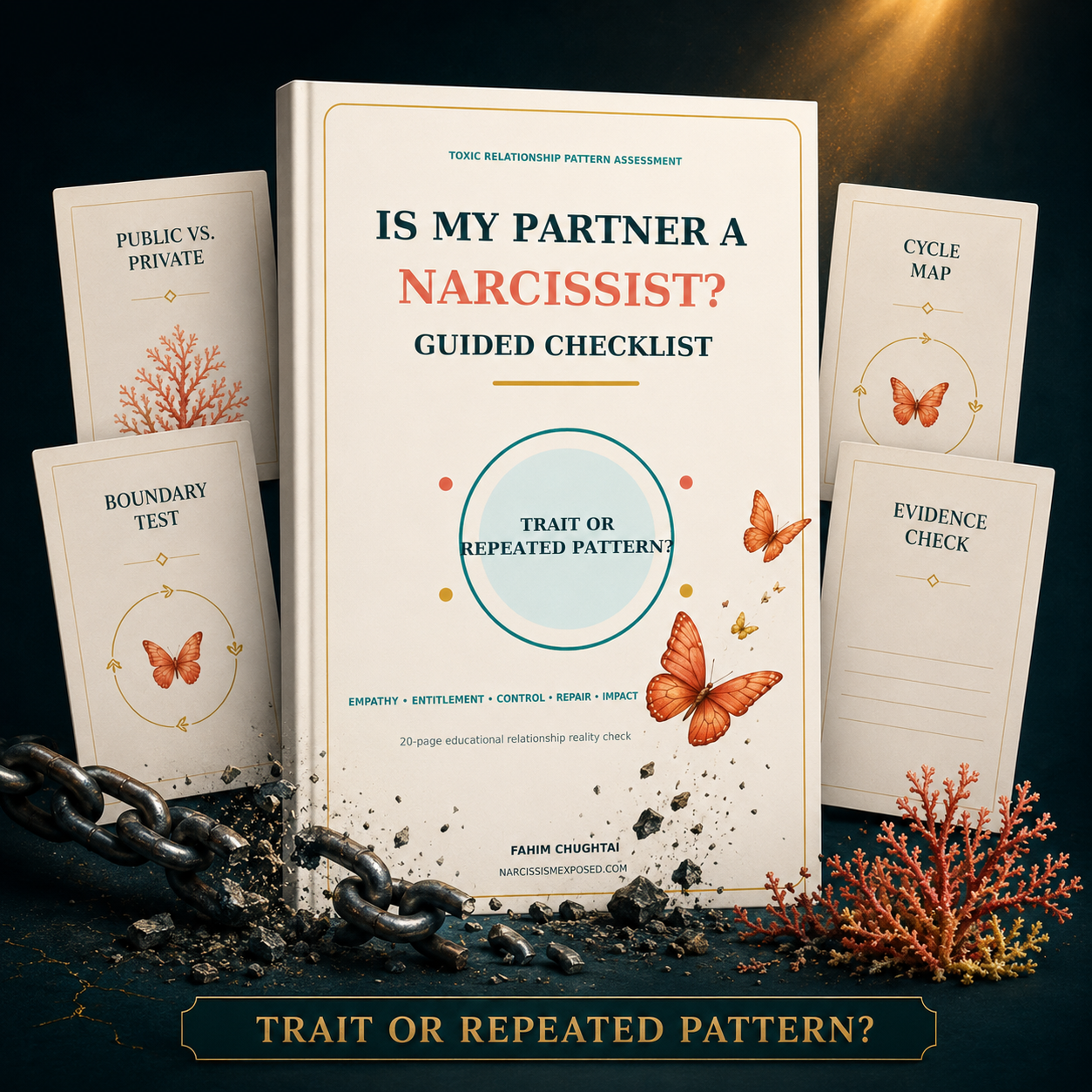
✓ Public versus private behavior exercise
✓ Accountability and repair examination
✓ Boundary and “no” response check
✓ Relationship-cycle reflection
✓ Personal impact and identity assessment
✓ Safe boundaries and trusted-support prompts
✓ Responsible next-step planning
✓ Instant digital download
6 CORE AREAS THIS CHECKLIST COVERS:
Section 1 — Grandiosity and Entitlement
Examine whether your partner regularly expects special treatment, places their needs above everyone else, acts superior, demands admiration, or becomes angry when they do not receive the attention or treatment they expect.
Section 2 — Lack of Empathy and Emotional Reciprocity
Reflect on how your partner responds to your emotions, needs, pain, and vulnerability. Consider whether they listen, show genuine concern, make space for your feelings, or repeatedly redirect attention back to themselves.
Section 3 — Avoidance of Accountability
Look at what happens when your partner causes harm. Do they acknowledge their behavior, offer a meaningful apology, and make consistent changes—or do they deny, minimize, blame you, make excuses, or apologize without changing?
Section 4 — Control and Disrespect for Boundaries
Examine how your partner reacts when you say “no,” ask for space, express a preference, or set a limit. This section explores pressure, punishment, disrespect, control, and whether you feel free to make personal choices.
Section 5 — Gaslighting and Reality Manipulation
Reflect on whether your partner denies things that happened, changes their version of events, rewrites agreements, calls you too sensitive, or leaves you confused and doubting your own memory and judgment.
Section 6 — Repeating Relationship Cycles and Personal Impact
Explore cycles of idealization, criticism, withdrawal, and return. Consider whether the same patterns keep repeating and how the relationship has affected your confidence, freedom, identity, emotional wellbeing, and ability to trust yourself.
7 GUIDED EXERCISES INCLUDED:
Exercise 1 — Public Behavior Versus Private Behavior
Compare how your partner behaves around other people with how they treat you when nobody else is present.
Exercise 2 — What Happens After Harm
Record what happens after your partner hurts, humiliates, dismisses, or upsets you. Look for accountability, repair, denial, blame, or repeated behavior.
Exercise 3 — How Your Partner Reacts When You Say “No”
Examine whether your partner respects your answer or responds with anger, pressure, guilt, silent treatment, threats, punishment, or withdrawal.
Exercise 4 — Relationship-Cycle Reflection
Map patterns of idealization, intense closeness, criticism, emotional withdrawal, and returning affection.
Exercise 5 — Behavior Across Different Relationships
Consider whether similar behaviors appear in your partner’s relationships with family members, friends, coworkers, or previous partners.
Exercise 6 — Personal Impact Assessment
Reflect on how the relationship has affected your confidence, freedom, identity, emotional energy, decision-making, and sense of safety.
Exercise 7 — Safe Boundaries, Support, and Next Steps
Identify trusted support, consider a realistic low-risk boundary, and reflect on responsible next steps based on your circumstances.
THIS CHECKLIST IS FOR YOU IF:
- You keep wondering whether your partner is a narcissist
- You feel confused by repeated relationship patterns
- Your partner behaves differently in public and private
- You are often blamed when you raise concerns
- Your partner reacts badly when you say “no”
- You feel responsible for your partner’s emotions
- Apologies happen but genuine change does not
- You feel like your confidence or identity is disappearing
- You want a private and structured way to organize your experiences
- You are recovering from narcissistic abuse or emotional manipulation
- You want to prepare your thoughts before speaking with a therapist or advocate
IMPORTANT NOTE:
This checklist is an educational self-reflection resource. It does not diagnose narcissistic personality disorder and is not a substitute for therapy, professional assessment, legal advice, or emergency support.
If you believe you may be in immediate danger, contact local emergency services or a qualified domestic abuse organization in your country.
INSTANT DIGITAL DOWNLOAD
PDF format · 20 pages · No physical item will be shipped.
Save the file to a private and secure location before completing it.
Created by Fahim Chughtai, founder of NarcissismExposed.com, with 7 years of experience supporting survivors of narcissistic abuse and toxic relationships.