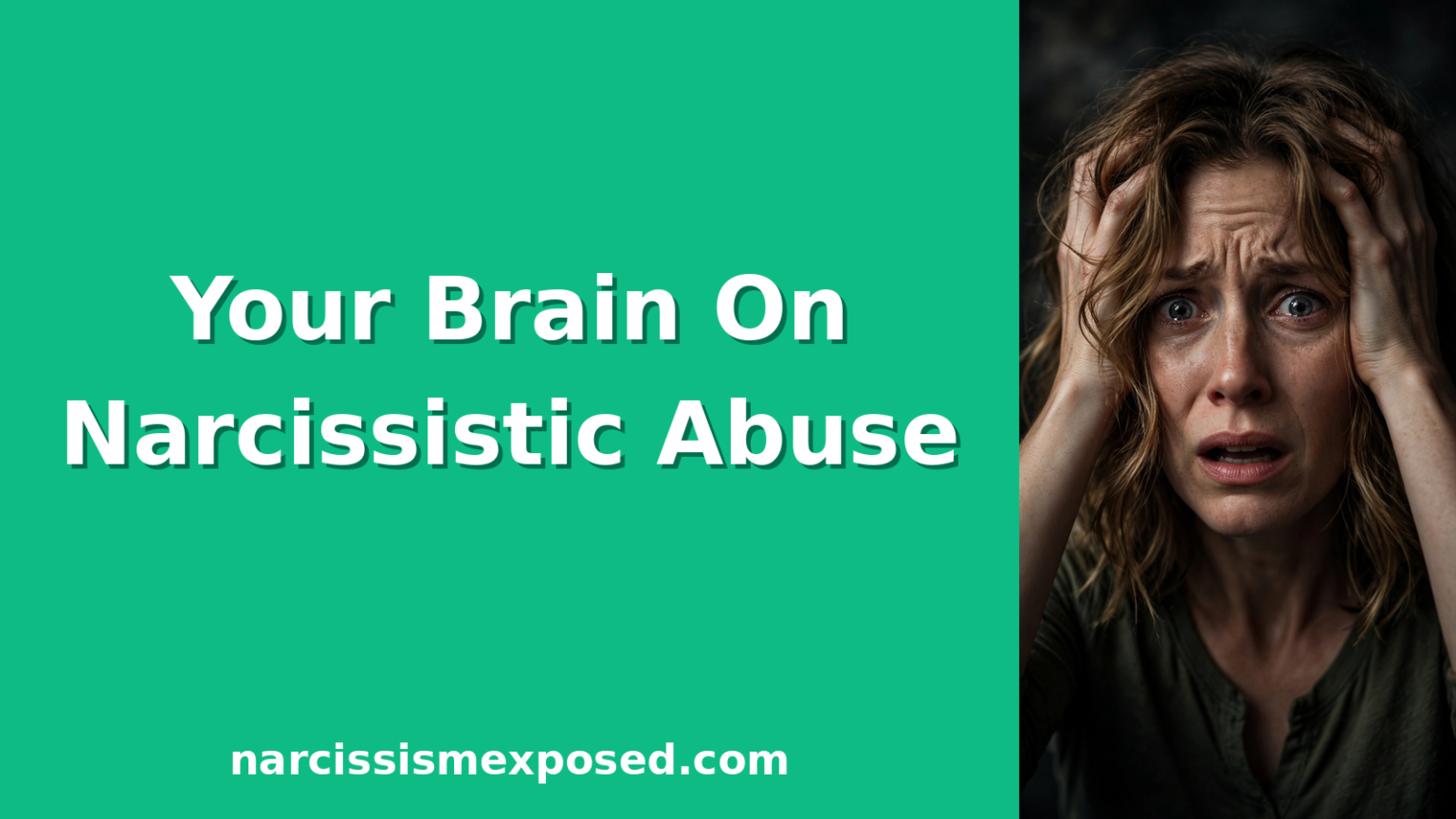
You used to trust your memory. Now you screenshot everything, just in case. You used to make decisions quickly. Now choosing what to eat for lunch feels overwhelming. Friends say you seem different, foggier, more anxious. You wonder if the relationship actually damaged your brain, or if you are just being dramatic.
- 1. Your Amygdala Goes Into Overdrive
- 2. Your Hippocampus Shrinks
- 3. Your Prefrontal Cortex Gets Weaker
- 4. Your Stress System Gets Stuck On
- 5. Your Dopamine System Gets Hijacked
- 6. Your Sense Of Self Gets Neurologically Disrupted
- 7. The Damage Looks Like PTSD Because It Is Brain Injury
- The Good News: Neuroplasticity
- What This Means For You Right Now
- Frequently Asked Questions
You are not being dramatic. If you are asking what does narcissistic abuse do to your brain, neuroscience has a clear and validating answer: sustained psychological abuse produces measurable changes in brain structure and function. This article explains the seven most documented effects, in plain language, and then the part that matters most: the brain can heal.
1. Your Amygdala Goes Into Overdrive
The amygdala is the brain’s threat detection system, a small almond shaped structure that scans for danger and triggers the fight or flight response. In a narcissistically abusive relationship, danger is constant but unpredictable: the loving partner becomes the raging accuser without warning, kindness arrives randomly between cruelties.
Under these conditions the amygdala becomes hyperreactive. It starts treating everything as a potential threat: a certain tone of voice, a delayed text reply, a look you cannot quite read. This is the neurology behind hypervigilance, the jumpiness, the stomach drop at a phone buzz, the inability to relax even in safe places. Your threat system was doing its job. It just never got the signal to stand down.
2. Your Hippocampus Shrinks
The hippocampus handles memory formation, learning, and reality testing: it is the part of the brain that files experiences into a coherent timeline and lets you trust your own recollection. Chronic stress floods the brain with cortisol, and prolonged cortisol exposure is toxic to hippocampal neurons. Research on trauma survivors consistently shows hippocampal volume reduction under sustained stress.
This is the brain science behind two of the most disorienting survivor experiences. First, the memory problems: losing words, forgetting conversations, struggling to keep a timeline straight. Second, the vulnerability to gaslighting itself: when the hippocampus is impaired, your ability to trust your own version of events weakens, which is exactly what the gaslighter exploits. The confusion was not a personal failing. It was neurology.
3. Your Prefrontal Cortex Gets Weaker
The prefrontal cortex is the brain’s executive center: decision making, planning, emotional regulation, and the ability to reason clearly about your own situation. It is also the structure most suppressed under chronic threat, because when the amygdala is screaming, the thinking brain goes quiet. Survival mode does not do long term planning.
This explains the brain fog, the indecisiveness, the feeling of watching yourself make bad choices you cannot seem to stop. Survivors often describe knowing the relationship was destroying them while feeling powerless to leave, and then hating themselves for it. That gap between knowing and doing lives right here, in a prefrontal cortex dampened by years of stress chemistry.
4. Your Stress System Gets Stuck On
The HPA axis, the hypothalamus pituitary adrenal loop, controls cortisol release. In a healthy system, cortisol spikes during threat and falls when the threat passes. In narcissistic abuse, the threat never fully passes, so cortisol stays elevated for months or years.
Chronically high cortisol damages far more than the hippocampus. It suppresses the immune system, disrupts sleep architecture, impairs digestion, raises cardiovascular risk, and accelerates cellular aging. Many of the physical symptoms survivors report, the exhaustion, the gut problems, the frequent illness, trace back to this stuck stress system. Healing the brain means calming this system first, which is why nervous system regulation, not just talk, is central to recovery.
5. Your Dopamine System Gets Hijacked
Here is the cruelest piece of the neurology. Narcissistic relationships run on intermittent reinforcement: unpredictable cycles of intense affection and cold withdrawal. The early phase often looks exactly like love bombing, and learning to tell real love from the manipulation version matters because this reward schedule is the same one that makes gambling addictive, and it hijacks the dopamine system identically.
Each unexpected kindness delivers a dopamine surge far larger than steady affection would. The brain learns to chase the high, to endure any amount of pain for the next hit of warmth. This is the chemical foundation of trauma bonding in a narcissistic relationship, and it explains why leaving feels like withdrawal: neurologically, it is withdrawal. Understanding this reframes the shame. You were not weak for staying. You were chemically hooked by design.
6. Your Sense Of Self Gets Neurologically Disrupted
The default mode network is a set of brain regions active during self reflection: it supports your sense of who you are, your autobiographical memory, your inner narrative. Sustained narcissistic abuse disrupts this network. The constant invalidation, the rewriting of your reality, the punishment of self expression, teaches the brain to suppress self referential thinking.
The result is the identity erosion survivors know so well: not knowing what you like, what you think, or who you are without the narcissist’s commentary. This is also why recovery involves rediscovering the self in such a literal, neurological sense. You are not just rebuilding confidence. You are reactivating brain networks that were forced offline.
7. The Damage Looks Like PTSD Because It Is Brain Injury
Brain imaging of abuse survivors shows patterns clinically similar to PTSD in combat veterans: amygdala hyperactivity, prefrontal impairment, hippocampal shrinkage. The injuries are real, measurable, and deserving of the same seriousness.
This matters because it ends the debate survivors have with themselves. The question was never whether you were tough enough. The question was whether sustained psychological abuse injures the brain, and the answer is yes. Naming it as injury, not weakness, is often the moment recovery truly begins.
Your brain was injured, not broken, and injured brains heal. How To Survive When You Can’t Leave Yet gives you the complete playbook for reducing the daily stress load on your nervous system right now: boundary scripts, grey rock tactics, and strategies that calm the threat response while you plan your next move.
The Good News: Neuroplasticity
Here is the fact that changes everything. The same property that allowed the damage, neuroplasticity, the brain’s ability to reorganize itself in response to experience, is the mechanism of recovery. The brain that was reshaped by abuse can be reshaped again under conditions of safety.
What the research shows helps: sustained safety away from the abuser, which lets cortisol normalize. Trauma focused therapies like EMDR and somatic experiencing, which directly target the stuck threat response. Mindfulness and body based practices, which strengthen the prefrontal cortex and calm the amygdala. Supportive relationships, which provide the co regulation the nervous system needs to learn safety again.
Recovery is not linear and it is not fast. Hippocampal volume does not rebound in a weekend. But the direction is consistent: with the right conditions, the fog lifts, memory sharpens, the startle response quiets, and decision making returns. Survivors routinely describe feeling their minds come back online, often in stages, over months and years.
What This Means For You Right Now
If you recognized yourself in these seven facts, take two things from this article. First, stop diagnosing yourself as broken. Every symptom described here is a documented neurological adaptation to sustained threat. You were responding normally to an abnormal situation.
Second, treat recovery as the serious project it is. This is not about positive thinking your way out of brain changes. It is about safety, professional support, and patience with a healing organ. If you are still in the relationship, your first recovery step is reducing exposure: start by learning how to get a narcissist to leave you alone, and read up on why trauma bonds are so hard to break so you understand exactly what you are up against chemically.
Frequently Asked Questions
Does narcissistic abuse change your brain?
Yes. Sustained narcissistic abuse is associated with measurable brain changes: amygdala hyperreactivity, hippocampal shrinkage from chronic cortisol exposure, prefrontal cortex dampening, and HPA axis dysregulation. These changes mirror patterns seen in PTSD and explain symptoms like hypervigilance, memory problems, brain fog, and emotional dysregulation.
Can narcissistic abuse cause brain damage?
Chronic psychological abuse can cause real neurological injury through prolonged stress activation. The hippocampus can shrink, impairing memory and learning, while the amygdala becomes enlarged and hyperreactive. Crucially, thanks to neuroplasticity, these changes are largely reversible with safety, time, and proper treatment once the abuse ends.
What are the symptoms of brain damage from narcissistic abuse?
Common symptoms include persistent brain fog, memory gaps, difficulty concentrating, hypervigilance, exaggerated startle response, emotional dysregulation, indecisiveness, and a distorted sense of reality. These reflect the underlying neurological changes and tend to improve significantly with trauma informed therapy and nervous system regulation.
What happens to your brain after narcissistic abuse ends?
The abuse ending starts the recovery clock, but the brain does not instantly reset. Cortisol levels need time to normalize, the amygdala needs repeated safety signals to calm, and the prefrontal cortex gradually comes back online. Most survivors notice staged improvement over months: first the crisis quiets, then clarity returns, then identity rebuilds.
Can the brain fully recover from narcissistic abuse?
The evidence is encouraging. Neuroplasticity means the brain continuously rewires based on experience, and sustained safety plus targeted support produces real structural and functional recovery. Full recovery timelines vary with abuse duration and severity, but significant healing is the norm, not the exception.
Why does gaslighting affect memory so badly?
Gaslighting attacks the hippocampus on two fronts: the chronic stress of constant contradiction impairs the structure itself, while the persistent denial of your reality trains you to distrust your own recollections. Over time this creates a feedback loop where impaired memory makes you more vulnerable to further gaslighting. Breaking the loop starts with external validation and safe reality testing.
The fog lifts. The memories sharpen. You come back. The 30 Day Trauma Bond Recovery Workbook is the day by day program for breaking the chemical bond and rebuilding the clear, steady mind the abuse tried to take from you.