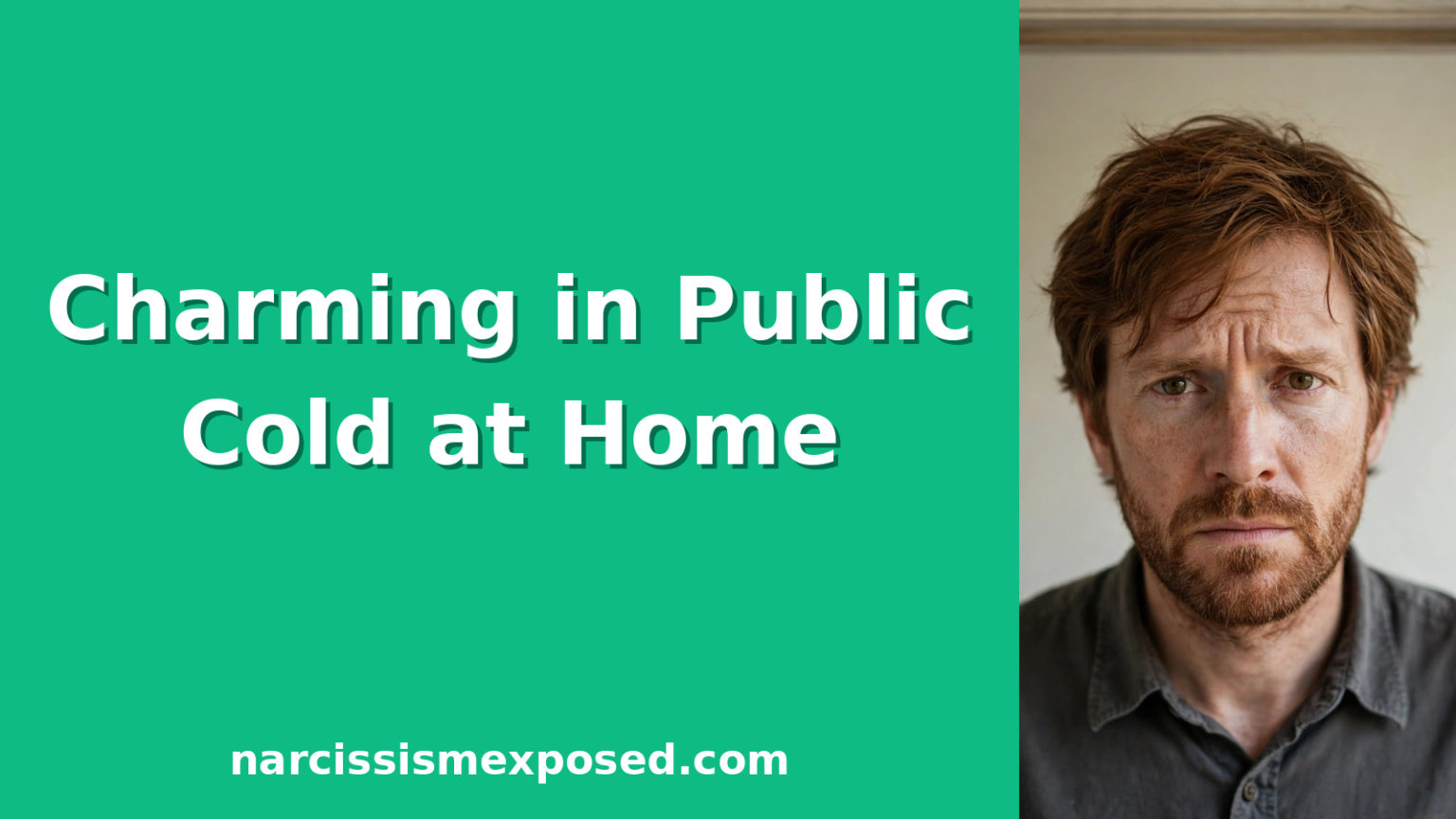
At the dinner party he pulled out your chair, laughed at your jokes, and told your friends how lucky he is to have you. In the car on the way home, the warmth switched off before you had even left the street. If that drive home feels like it was written about your life, these quotes about a partner who changes in public were written for you.
- Why Does Your Partner Act Different in Public Than at Home
- Quotes About the Charming Public Version
- Quotes About the Cold Private Version
- Quotes About the Moment the Mask Drops
- Quotes About Nobody Believing You
- Quotes About the Reverse Split
- Quotes About Trusting What You See
- Is Acting Different in Public a Sign of Narcissism
- How Do You Talk to a Partner Who Changes in Public
- What to Do When Talking Does Not Work
- How This Collection Is Different From Quotes About Leaving
- Frequently Asked Questions
A partner who changes in public is living a public private split, which means they show one version of themselves to the world and a different version to you behind closed doors. The public version is charming, generous, and warm, and the private version is cold, critical, or distant, and the gap between the two can make you doubt your own memory. This collection puts words to that split in 31 original quotes, grouped by what they describe, from the charming public version, through the cold private one, to the moment nobody believes you and the moment you start trusting what you see. This article is educational, not a diagnosis. It does not claim that any person in your life has narcissistic personality disorder, a clinical diagnosis that only a qualified professional can make.
If your partner is wonderful in front of everyone and cold the moment you are alone, you may be living with a trauma bond, not just a moody partner. A trauma bond forms when public kindness keeps pulling you back in after private coldness pushes you away, until you start waiting for the good version instead of trusting the pattern. The Trauma Bond Breaker Bundle gives you a clear plan to name the cycle, break the pull of the public performance, and rebuild trust in your own judgement, one steady step at a time.
The short answer is this. Quotes about a partner who changes in public name the gap between the charming version everyone sees and the cold version you live with at home. They help because they put words to a split that is hard to explain, and they remind you that the private version is the real one, not the performance.
Key Takeaways
- The version of your partner that everyone else sees is a performance, not proof that the private version does not exist. Kindness that only appears in front of an audience is not the same as kindness.
- A partner who changes in public is often managing their image. Admiration from strangers is easy to win, and it costs them nothing, while treating you well at home brings no applause.
- When nobody believes you, it is not because your experience is unreal. It is because the public version is convincing, and the people you tell have only ever met that version.
- The split can run in both directions. Some partners are warm in private and cold in public, and that hurts too, though it usually comes from fear or shame rather than control.
- Judge the relationship by the pattern over months, not by the best evening. If the warmth keeps switching off the moment the audience leaves, the pattern is the truth.
Why Does Your Partner Act Different in Public Than at Home
Your partner acts different in public than at home because the two settings reward different behaviour, and because a person who cares deeply about their image will work hard for applause from strangers and see no reason to work hard for you. The direct answer is that in public, warmth earns admiration, and at home, with no audience to impress, the performance stops and the colder pattern underneath takes over.
The first reason is image management, which means shaping how other people see you on purpose. A partner who manages their image wants the room to think they are generous, funny, patient, and devoted, because that reputation feels like proof of their worth. They remember names, they offer help before anyone asks, they compliment you in front of your friends, and every one of those gestures is performed where it can be seen. At home, the same gestures bring no applause, so they stop, and you are left wondering where the person from the party went.
The second reason is the need for admiration. Some people feel steady only when other people are praising them, and a party, a family gathering, or a workplace is a rich source of that praise. Home offers none of it, so the person who was glowing in public can turn flat, irritable, or critical within minutes of the front door closing. This is not an excuse for the coldness. It is the explanation for why the coldness follows the applause so reliably, and why it feels so sudden to you.
The third reason is control. At home, the audience is gone, so the tools change. Instead of charm, the pattern becomes criticism, contempt, silence, or unpredictable moods that keep you careful. The devalue tactics used by a covert partner often look like this, small put downs, constant correction, and moods that punish you for things you cannot name, all delivered where nobody else can see them. Healthline explains how trauma bonding works, describing a repeated cycle of abuse, devaluation, and positive reinforcement that leaves a person feeling tied to their partner, and the public kindness followed by private coldness is one of the clearest forms of that cycle.
The fourth reason is consequences. A partner who can be patient and polite all evening in front of people whose opinions matter has shown you that they can control their behaviour when it costs them something to lose it. That is worth noticing. If they are calm with the waiter, warm with your mother, and generous with a colleague, but cruel or cold with you the moment you are alone, the difference is not that they cannot control themselves. It is that they choose where to spend the effort, and they spend it where the audience is.
The fifth reason is exhaustion, and it is the gentlest explanation, so it deserves honesty too. Being charming all day takes energy, and some people come home drained and snap at the person closest to them because home feels like the one place they can drop the act. That can be true without the pattern being harmless. A tired person who snaps once and repairs it is different from a partner who is warm in public and cold at home every single week, and who never repairs it, and who blames you when you raise it. If you are seeing the early warning signs you are dating a narcissist, the split is rarely just tiredness, and it is worth naming the pattern rather than explaining it away.
The split can also run the other way, and that version hurts too. Some partners are warm and tender in private but go quiet, distant, or even mocking in public. That usually comes from a different place, from shame, from fear of looking soft, from social anxiety, or from a childhood where affection was something to hide. It is still painful, and you are allowed to say so, but it is not the same pattern as the partner who performs kindness for strangers and saves the coldness for you.
| What happens | In public | In private |
|---|---|---|
| Affection | Holds your hand, compliments you, calls you their love in front of friends | Cold, distant, or irritated the moment the door closes |
| Temper | Patient, funny, calm, even with strangers who annoy them | Snaps over small things, or goes silent for hours |
| Generosity | Buys the round, offers help, insists on paying | Counts every penny at home, or withholds money and warmth |
| Your words | Laughs at your jokes, tells everyone how clever you are | Interrupts you, corrects you, or says you embarrassed them |
| Your feelings | Asks how you are, listens, looks devoted | Dismisses how you feel, or tells you that you are too sensitive |
| The audience | Everyone sees a wonderful partner | Nobody sees what happens, so nobody believes you |
Quotes About the Charming Public Version
These five quotes describe the person everyone else meets, the warm, generous, funny partner who only exists while someone is watching.
1. “Everyone at the party thinks he is wonderful, and I am the only person in the room who knows the show ends in the car. The applause is real, and so is the silence that follows it.”
Watch what happens after the car door closes. That is where the truth lives.
2. “I think it pisses God off if you walk by the color purple in a field somewhere and don’t notice it.” – Alice Walker
He can be warm with strangers and cold with you, and the coldness still matters, even if the room never sees it.
3. “He remembered the waiter’s name and asked about his mother, and he could not remember one thing I told him this morning. The memory is not the problem. Where he spends it is.”
Everyone has seen the public version. Only you see what happens at home.
4. “In public he holds my hand like he is proud of me. At home he lets go of it like he is tired of me. The hand holding is not love. It is a picture of love, taken where other people can see it.”
A hand held for the camera is not the same as a hand held when nobody is watching.
5. “He is the best partner anyone has ever seen, and the worst partner I have ever lived with, and both of those things are true at the same time. That contradiction is the whole experience.”
You are not imagining it, and you are not being ungrateful for noticing it.
Quotes About the Cold Private Version
These five quotes describe what happens when the audience leaves and the warmth switches off.
6. “A woman is like a tea bag; you never know how strong it is until it’s in hot water.” – Eleanor Roosevelt
The moment the door closes, the warmth goes with it. You are not difficult for noticing that shift.
7. “He saves his patience for people who do not matter to him, and he saves his temper for the one person who loves him. Patience is a choice, and watching where it goes tells you everything.”
8. “We can learn to work and speak when we are afraid in the same way we have learned to work and speak when we are tired.” – Audre Lorde
The tone he uses at home is a choice, and you have the right to notice it.
9. “I dread the drive home more than the party, because the party is where he loves me and the car is where he stops. I start counting the minutes until the performance ends.”
The silence in the car is not an accident. It is the other half of the performance.
10. “The most common way people give up their power is by thinking they don’t have any.” – Alice Walker
The coldness at home is not your imagination. It is a pattern, and patterns can be named.
Quotes About the Moment the Mask Drops
These five quotes describe the switch itself, the exact moment the public version disappears and the private one arrives.
11. “He was laughing with my sister five minutes ago, and now he is telling me I embarrassed him. There is no line between those two people. They are the same person, and the laughter was the act.”
When the mask slips, you get a clear view of the real person, and that view is worth trusting.
12. “I am no bird; and no net ensnares me: I am a free human being with an independent will.” – Charlotte Brontë
The switch can feel like your fault, because it happens so fast. It is not your fault.
13. “I used to think the party version was the real him and the home version was a bad mood. Now I know the home version is the real him and the party version is the job. That reversal changes everything.”
14. “Turn your wounds into wisdom.” – Oprah Winfrey
The switch between the two versions is the point, and the more you watch it, the more it reveals.
15. “The worst part is not the coldness. It is how quickly he can switch it on and off, like a light, like my feelings are a room he can leave dark. The speed of the switch is what makes you doubt yourself.”
If he can turn it on and off like a light, it is not a mood. It is a choice, and choices can be named.
Quotes About Nobody Believing You
These five quotes describe the loneliness of living with a split nobody else can see.
16. “Do the best you can until you know better. Then when you know better, do better.” – Maya Angelou
If nobody believes you, the problem is not your story. It is the audience he has trained.
17. “Everyone thinks I am lucky, and I am the only person who knows what lucky costs. His reputation is my cage, because every compliment he receives makes my story harder to tell.”
The image he built in public is your cage, and his reputation is the lock.
18. “When I dare to be powerful, to use my strength in the service of my vision, then it becomes less and less important whether I am afraid.” – Audre Lorde
You do not need to win the argument with him in public. You need to see it clearly yourself, and trust what you saw.
19. “If I told the room what he said to me this morning, they would laugh, because they have only ever met the man who brings the wine. The evidence is all behind closed doors, and the audience only sees the gift.”
What happens behind closed doors matters, even if nobody else sees it.
20. “Caring for myself is not self-indulgence, it is self-preservation, and that is an act of political warfare.” – Audre Lorde
You do not need the room to believe you. You need yourself to believe you, and that is where it starts.
Quotes About the Reverse Split
These five quotes are for the other direction, a partner who is warm in private but distant, cold, or mocking in public.
21. “He is so gentle with me when we are alone that I keep waiting for that gentleness to follow us out of the house, and it never does. The private warmth is real, and so is the public coldness.”
You are not imagining it, and you are not wrong for wanting the warmth to last outside the house.
22. “I am not an angel, and I will not be one till I die: I will be myself.” – Charlotte Brontë
The private warmth and the public coldness can both be real, and the coldness still matters.
23. “He holds me like I matter when the door is shut, and he drops my hand like I embarrass him when the door is open. That drop is small, and it lands like a verdict.”
The hand drop is small, and it is everything. It is the moment his love becomes conditional on the audience.
24. “Culture does not make people. People make culture.” – Chimamanda Ngozi Adichie
Public and private love do not have to be the same, but they should be close. If they are not, ask why.
25. “Maybe he is not cruel, maybe he is just afraid to be seen loving me, but my heart cannot tell the difference, and it keeps score anyway. Fear is a kinder explanation than cruelty, and it still does not make the hurt disappear.”
If he loves you one way in private and another way in public, that is not a secret. That is a pattern.
Quotes About Trusting What You See
These six quotes are for the moment you stop explaining the split away and start believing your own eyes.
26. “There is no passion to be found playing small, in settling for a life that is less than the one you are capable of living.” – Nelson Mandela
You are not too much for wanting to be loved in public. You are a person, and you deserve to be seen.
27. “His reputation is not his character. His character is how he treats me when nobody is watching, and I finally know the difference. Reputation is what the room thinks. Character is what the closed door reveals.”
The difference is what matters. Reputation is what people say, character is what he does when nobody is watching.
28. “I kept a record, not to punish him, but to prove to myself that I was not imagining it, and the record believed me when nobody else did.”
Keep the record. Not for a court, and not to win an argument. Keep it for yourself, so that when you doubt, you can look at it and remember what really happened.
29. “I now see how owning our story and loving ourselves through that process is the bravest thing that we will ever do.” – Brené Brown
Believing yourself is not arrogant. It is the first step to seeing your relationship clearly.
30. “Being human is not hard because you’re doing it wrong, it’s hard because you’re doing it right.” – Glennon Doyle
The day you stop waiting for the public version to come home is the day you start coming home to yourself.
31. “The day I stopped waiting for the party version to come home with us was the day I started coming home to myself. I was never waiting for a person. I was waiting for a performance to become real.”
Is Acting Different in Public a Sign of Narcissism
Acting different in public can be a sign of narcissism, but on its own it does not prove it, because many things can make a person change between settings. The direct answer is that a sharp, repeated split between a charming public version and a cold private version is one of the most commonly reported patterns in narcissistic relationships, and it deserves attention, but only a qualified professional can make a diagnosis of narcissistic personality disorder.
The reason the split points toward narcissism is that it is organised around admiration. A person with strong narcissistic traits needs to be seen as wonderful, and a public setting is where that need gets fed, so they invest heavily in the performance. At home, where there is no applause to collect, the same person can become critical, controlling, or cold, because the audience is gone and the need for control takes over. WebMD describes narcissistic personality disorder as a pattern of grandiosity, a need for admiration, and a lack of empathy, which fits the public private split closely, though the pattern alone is not a diagnosis.
There are other explanations, and they matter, because getting the explanation wrong can send you down the wrong road. Social anxiety can make a person go quiet or distant in groups while being warm at home. Introversion can make a partner seem cold at a party when they are simply drained. Shame can make someone hide affection in public because they fear looking soft. Stress and exhaustion can make anyone sharper at home than they are at work. The difference is in the pattern. Anxiety and introversion are fairly consistent, and the person usually feels bad about the distance and tries to repair it. A narcissistic split is selective and repeated, the warmth appears exactly where it earns admiration, the coldness appears exactly where nobody can see it, and when you raise it, you get denial, blame, or a promise that lasts a week.
If you are trying to tell the difference, watch three things over a few months. First, does the warmth follow the audience, switching on when people arrive and off when they leave. Second, does the coldness target you specifically, while strangers, colleagues, and friends all get the best version. Third, what happens when you name it. A partner who cares will listen, even clumsily, and try to change. A partner running a pattern will deny it, blame you, or change for a week and then slide back. The signs of a narcissistic husband can help you check whether the split sits inside a wider pattern, and the question of whether a covert narcissist can change is worth reading honestly, because real change is slow, consistent, and visible over months, not a good week after a bad one.
Gaslighting often rides along with the split, and it is worth naming. When you say you were hurt at home and your partner says it never happened, or that you are too sensitive, or that you are remembering it wrong, you can end up doubting the very thing you lived through. Psychology Today explains how gaslighting works, showing how a person can be fed false information until they question what they know to be true, and the public private split makes gaslighting easier, because the charming public version gives your partner a witness list of people who will say they are lovely.
How Do You Talk to a Partner Who Changes in Public
You talk to a partner who changes in public by choosing a calm private moment, describing one specific incident, and asking for one specific change, then watching what they do over the following weeks. The direct answer is that a vague complaint about their personality will start a fight, while a concrete example they cannot deny gives them something real to respond to, and their response tells you everything.
Start with a private record before you say a word. Write down what happened, with dates where you remember them, what they did in public, what they did when you got home, and how it made you feel. Keep it factual and short, and keep it somewhere only you can reach. A record steadies your memory when denial makes you doubt it, and it gives you something solid to look at when you start wondering if you are exaggerating. Quote 28 says it plainly, the record believed me when nobody else did.
Choose the moment carefully. Never raise it in the car on the way home from an event, when the switch has just happened and tempers are high. Never raise it in front of other people, because that turns it into a public scene and gives your partner a reason to say you embarrassed them. Choose a calm evening at home, when neither of you is tired or rushed, and open with one incident, not with a lifetime of them. Try a line like, at dinner on Saturday you told everyone how proud you are of me, and in the car you told me I embarrassed you, and I need to understand how both of those can be true.
Describe what you saw, not who they are. Saying you are a fake does not help, even when it feels true. Saying you were warm with my sister and cold with me ten minutes later is something they cannot argue with, because it is a fact, and it keeps the conversation on behaviour rather than character. Then ask for one specific change, something you can actually see. When we are out, please do not correct me in front of people. When we get home, please do not go silent for the rest of the evening. One change, clearly named, is more useful than a list of twenty.
Watch what happens next, because the response is the test. A partner who cares may be defensive at first, and that is normal, but over the following weeks you should see effort, apologies that come with changed behaviour, and a willingness to talk about it again. A partner running a pattern will deny the incident, blame you for bringing it up, change for a week, and then slide back into the same split. If that is what happens, you have your answer, and the answer is not that you explained it badly. It is that they heard you and chose not to change.
What to Do When Talking Does Not Work
When talking does not work, you stop repeating the same conversation and start protecting yourself, by keeping a private record, finding one safe person, and getting support outside the relationship. The direct answer is that repeating the same plea to someone who has already decided not to hear it only teaches you that your voice does not matter, and your energy is better spent on steps that do not need their cooperation.
The first step is the record you already started. Keep writing down what happens, with dates, and keep it somewhere only you can reach. If you ever need to show a counsellor or a support service what the pattern looks like, the record will speak more clearly than any single memory, and it will remind the future you that this was real.
The second step is one safe person. You do not need a crowd, and you do not need your whole family to understand. You need one person who listens without judging, a friend, a counsellor, a support group, or another survivor who has lived this. One believer breaks the isolation that a public private split creates, because the split works by making you the only witness to the cold version.
The third step is support outside the relationship. A licensed therapist, ideally one who understands emotional abuse and trauma bonding, can help you see the pattern clearly and plan your next steps. Couples counselling is not the right first step when there is a pattern of control or intimidation, because it can be used to gather information against you, so individual support is the safer choice.
The fourth step is to watch what they do, not what they promise. Promises are cheap, and a partner who promises change after every hurt but changes nothing has given you their answer. Patterns are the truth. Promises are the hope.
If you feel unsafe at home, put safety first and do not confront them directly. Speak to a trusted friend, a counsellor, or a support service first, keep a private record, and make a safety plan before you raise the issue at home. If you are in immediate danger, contact your local emergency services or a domestic abuse support service in your area.
How This Collection Is Different From Quotes About Leaving
This collection is about living with a partner who changes in public, while the leaving collection is about the decision to go, and those are two different moments in the same journey. You cannot leave a relationship you cannot yet name, and you cannot name it while you still believe the charming public version is the real one, so these quotes belong earlier in the journey.
The short quotes about leaving a narcissist collection is for the moment you have decided to go, and it carries the language of leaving, freedom, and starting again. This collection is for the moment before that, when you are still there, still watching the switch happen every weekend, still trying to explain to people why the person they love is not the person you live with. Both collections are original, both are grouped by theme, and neither duplicates the other.
If the leaving quotes are the door, these quotes are the moment you stop standing in the hallway hoping someone will notice the switch, and start noticing it yourself. Read this collection when you need to believe your own eyes. Read the leaving collection when you are ready to act on that belief.
Frequently Asked Questions
Why does my partner act different in public than at home?
Your partner acts different in public than at home because the two settings reward different behaviour. In public, warmth earns admiration, so a partner who cares about their image works hard to look charming. At home, with no audience to impress, the performance stops and the colder pattern underneath takes over.
Is it normal for a partner to act different in public?
Small differences are normal, because everyone adjusts their behaviour a little in company. A sharp, repeated split is not normal, where your partner is warm and generous in front of others and cold, critical, or distant the moment you are alone. If the warmth switches off every time the audience leaves, the pattern deserves attention.
Is acting different in public a sign of narcissism?
It can be. A sharp, repeated split between a charming public version and a cold private version is one of the most commonly reported patterns in narcissistic relationships, because it is organised around admiration and control. On its own it does not prove narcissistic personality disorder, which only a qualified professional can diagnose.
Why does my partner ignore me in public?
Your partner may ignore you in public because they are managing their image, because they are afraid of looking soft or vulnerable, because they are socially anxious, or because they want to keep you off balance. If they are warm with everyone else and only ignore you, and they deny it when you raise it, the pattern is a warning sign worth taking seriously.
Why does nobody believe me about what my partner is like at home?
Nobody believes you because the public version is convincing, and the people you tell have only ever met that version. Their reputation creates a kind of social protection, so your story sounds impossible to people who have only seen the charm. That does not mean your experience is unreal, it means you are the only witness to the private version.
Why is my husband nice to everyone but mean to me?
Your husband is nice to everyone but mean to you because strangers cannot hurt him the way you can, and because being kind in public earns him admiration while being kind at home earns him nothing. It can also mean home is where he feels safe enough to drop the act, which is not an excuse. If the meanness is repeated and never repaired, it is a pattern, not a bad mood.
Can a partner who changes in public change for real?
A partner who changes in public can change for real, but only if they admit the split, take responsibility for it, and change their behaviour consistently over months, not just for a good week after a bad one. Real change is visible in private, where nobody is watching, and it survives even when there is no applause for it.
What should I do if my partner embarrasses me in front of others?
If your partner embarrasses you in front of others, stay calm in the moment, do not start a public argument, and raise it later in private with one specific example of what happened. Ask for one specific change, watch what they do over the following weeks, and if the behaviour repeats after you have named it clearly, get support from a counsellor or a trusted person outside the relationship.
You do not need the room to believe you before you believe yourself. If these quotes feel familiar, and you want a clear plan to name the cycle, break the pull of the public performance, and rebuild trust in your own judgement, the Trauma Bond Breaker Bundle gives you the steps, so one more charming evening does not become one more year of the same split.
Your eyes were never lying to you. The party version was a performance, the private version was the relationship, and you were the only person who had to live with both. Save the three lines that hit hardest, say one of them out loud to yourself today, and let that be the first entry in a new record, the record of the times you believed yourself and were right. The audience does not get the final word on who your partner is. You do.