

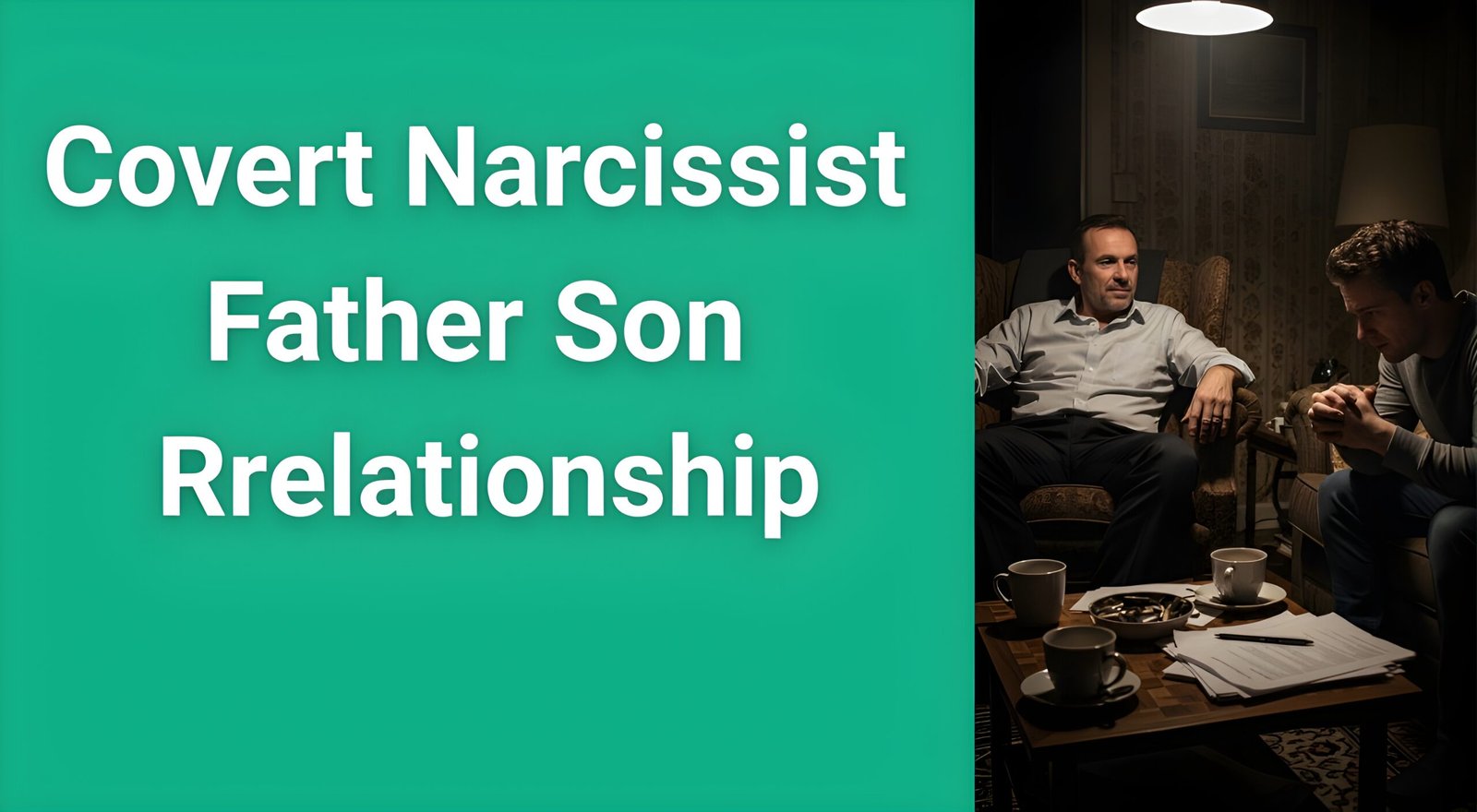
Growing up with a covert narcissist father can leave you questioning your own reality for years. Unlike the obvious grandiose narcissist who demands center stage, a covert narcissist father operates in the shadows, using subtle manipulation tactics that are much harder to identify. If you’re a son wondering whether your father’s behavior was actually emotionally abusive, you’re not alone in feeling confused about what happened to you.
The covert narcissist father son relationship creates a unique type of psychological damage that often goes unrecognized for decades. You might have grown up feeling like something was “off” about your relationship with your dad, but couldn’t quite put your finger on what it was. Maybe others told you how “lucky” you were to have such a devoted father, while inside you felt emotionally starved and constantly criticized.
Understanding the hidden patterns of covert narcissistic behavior is the first step toward healing and reclaiming your sense of self-worth. This isn’t about blame or pointing fingers – it’s about recognizing the truth so you can finally break free from toxic patterns that may still be affecting your adult relationships, career, and overall well-being.
What Makes a Covert Narcissist Father Different?
Before diving into the specific signs, it’s crucial to understand how covert narcissism differs from the more obvious grandiose type. While a grandiose narcissist father might openly boast about his achievements and demand immediate attention, a covert narcissist father appears humble, self-sacrificing, and concerned for others on the surface.
This makes the covert narcissist father son relationship particularly damaging because the abuse is hidden behind a mask of caring. Your father might have presented himself as the devoted dad who worked hard to provide for you, while simultaneously undermining your confidence through passive-aggressive comments and emotional manipulation.
The covert narcissist operates through what psychologists call “plausible deniability” – their harmful behavior can always be explained away as caring, concern, or even love. This leaves sons feeling crazy for questioning their father’s motives, especially when everyone else sees him as such a “good guy.”
12 Hidden Signs of a Covert Narcissist Father Son Relationship
1. He Makes Your Achievements About His Parenting Success
When you accomplished something growing up, did your father immediately take credit for your success? A covert narcissist father will subtly redirect praise toward himself, saying things like “Well, I always pushed him to work hard” or “He gets his determination from me.”
Your victories became his trophies, but your failures were entirely your own responsibility. This creates a confusing dynamic where you never feel like you truly own your accomplishments, leading to persistent imposter syndrome and self-doubt in adulthood.
2. He Used Guilt and Martyrdom to Control You
The covert narcissist father is a master of emotional manipulation through guilt and playing the victim. He might have said things like “After everything I’ve sacrificed for this family” or “I guess I’m just a terrible father” when you tried to assert independence or express different opinions.
This type of emotional manipulation creates what therapists call “trauma bonding” – you learned to suppress your own needs to manage his emotional state. Even as an adult, you might find yourself feeling responsible for other people’s happiness and struggling to maintain healthy boundaries.
3. He Gave You the Silent Treatment as Punishment
Instead of direct confrontation, a covert narcissist father uses passive-aggressive tactics like withdrawing affection and attention when displeased. The silent treatment is particularly damaging because it creates anxiety and abandonment fears in children.
You learned to walk on eggshells, constantly monitoring your father’s mood and adjusting your behavior to avoid triggering his emotional withdrawal. This hypervigilance often continues into adult relationships, where you might find yourself anxiously trying to please partners and friends.
4. He Compared You Unfavorably to Other Sons
Covert narcissist fathers frequently use comparison as a form of subtle abuse. He might have regularly mentioned how well other boys were doing in school, sports, or behavior, always with the implication that you weren’t measuring up.
These comparisons weren’t meant to motivate you – they were designed to keep you in a state of chronic inadequacy. You might still struggle with competitive feelings toward other men and a persistent sense that you’re not good enough, no matter what you achieve.
5. He Competed With You Instead of Supporting You
Healthy fathers want their sons to surpass them and celebrate their children’s growth. A covert narcissist father, however, sees his son as competition for attention and admiration. He might have subtly undermined your confidence before important events or downplayed your successes.
This competitive dynamic teaches you that relationships are zero-sum games where someone has to lose for another to win. You might find yourself struggling to celebrate other people’s successes or feeling threatened when friends or partners achieve something significant.
6. He Dismissed Your Emotions as “Too Sensitive”
Covert narcissist fathers often invalidate their sons’ emotional experiences by labeling them as “too sensitive,” “dramatic,” or “overreacting.” This emotional invalidation teaches you to distrust your own feelings and intuition.
As an adult, you might struggle to identify and express your emotions, often second-guessing whether your feelings are valid or justified. This emotional numbing can lead to difficulties in intimate relationships and problems with self-advocacy.
7. He Shared Inappropriate Personal Information
Boundary violations are common in covert narcissist father son relationships. Your father might have shared details about his marriage problems, financial struggles, or other adult concerns that weren’t appropriate for a child to handle.
This “emotional parentification” forces you to become your father’s therapist or confidant at an age when you needed protection and guidance. You might find yourself automatically taking on a caretaking role in relationships, often at the expense of your own needs.
8. He Made Promises He Rarely Kept
Covert narcissist fathers often make grand promises about future activities, trips, or quality time together, but consistently fail to follow through. These broken promises aren’t just disappointments – they’re part of a pattern of intermittent reinforcement that keeps you hoping and trying harder to earn his attention.
This pattern creates what psychologists call “intermittent reinforcement,” which is actually more psychologically damaging than consistent neglect because it keeps you hooked on the possibility that next time will be different.
9. He Triangulated Family Relationships
Triangulation involves bringing a third party into a two-person conflict or creating alliances that exclude certain family members. Your covert narcissist father might have shared private conversations with your mother, created “special” relationships with certain children, or played family members against each other.
This manipulation tactic ensures that he remains the center of family dynamics and prevents other family members from forming strong, independent bonds that might threaten his control.
10. He Rarely Took Responsibility for His Mistakes
When confronted about harmful behavior, a covert narcissist father will deflect, minimize, or rewrite history to avoid accountability. He might have said things like “I don’t remember that” or “You’re being too dramatic about the past.”
This gaslighting behavior teaches you to doubt your own memories and perceptions, making it difficult to trust yourself and maintain boundaries in adult relationships.
11. He Criticized Your Mother in Front of You
Covert narcissist fathers often engage in subtle character assassination of their partners, sharing complaints or criticisms with their children. This puts you in an impossible position of having to choose sides or defend your mother.
This dynamic teaches you unhealthy relationship patterns and can create lasting anxiety about intimate partnerships. You might find yourself either repeating these critical patterns or becoming hypervigilant about signs of relationship conflict.
12. He Made You Feel Responsible for His Happiness
Perhaps the most damaging aspect of the covert narcissist father son relationship is the implicit message that you are responsible for managing his emotional state. Through subtle cues and emotional manipulation, you learned that your job was to keep dad happy and stable.
This inappropriate burden continues into adulthood, where you might struggle with boundaries, people-pleasing tendencies, and difficulty prioritizing your own needs in relationships.
The Long-Term Impact on Sons
Understanding these patterns is crucial because the effects of growing up with a covert narcissist father extend far beyond childhood. Many sons carry these wounds into their adult relationships, careers, and parenting without realizing the connection to their upbringing.
Relationship Struggles
Sons of covert narcissist fathers often experience difficulties with intimate relationships. You might find yourself attracted to partners who are emotionally unavailable or critical, unconsciously recreating the familiar dynamic from childhood. Alternatively, you might struggle with commitment, fearing that getting too close will result in the same emotional manipulation you experienced growing up.
The fear of abandonment combined with difficulty trusting your own emotions can create a push-pull dynamic in relationships that leaves both you and your partner feeling frustrated and disconnected.
Career and Achievement Issues
Many sons of covert narcissist fathers struggle with imposter syndrome and difficulty owning their professional achievements. You might find yourself working excessive hours to prove your worth or, conversely, self-sabotaging when success feels uncomfortable or unfamiliar.
The constant criticism and comparison from childhood often translates into harsh self-judgment and perfectionism that interferes with career satisfaction and advancement.
Difficulty with Boundaries
Growing up with a covert narcissist father teaches you that your boundaries don’t matter and that other people’s emotional needs always come first. This can lead to chronic people-pleasing, difficulty saying no, and resentment that builds up over time.
You might find yourself automatically taking on more than your share of responsibilities in work, friendships, and romantic relationships, often feeling overwhelmed and unappreciated.
Breaking Free: Healing Strategies That Actually Work
Recovery from a covert narcissist father son relationship requires both understanding the past and actively building new patterns in the present. The healing process isn’t linear, but with consistent effort and often professional support, it is absolutely possible to break free from these toxic patterns.
Developing Emotional Awareness
The first step in healing is learning to identify and validate your own emotions. Many sons of covert narcissist fathers struggle with emotional numbing or overwhelming feelings because they were taught to suppress their authentic responses.
Start by practicing daily emotional check-ins with yourself. Notice physical sensations in your body and try to connect them with emotions. Journaling can be particularly helpful for tracking patterns and triggers that might relate back to your childhood experiences.
Setting Healthy Boundaries
Learning to set and maintain boundaries is crucial for breaking the cycle of emotional manipulation. This might mean limiting contact with your father if he continues harmful patterns, or it could involve changing how you respond to his attempts at guilt trips and emotional manipulation.
Remember that boundaries aren’t about punishing others – they’re about protecting your own emotional well-being and creating space for healthier relationships to flourish.
Rebuilding Your Identity
Many sons of covert narcissist fathers struggle with identity issues because they were taught to focus on their father’s needs rather than developing their own sense of self. Take time to explore your interests, values, and goals without considering what others (especially your father) might think or expect.
This process often involves grieving the father you needed but never had, while also recognizing your own strength and resilience in surviving a difficult childhood.
Seeking Professional Support
Working with a therapist who understands narcissistic abuse can be incredibly helpful in processing childhood trauma and developing healthier relationship patterns. Look for professionals who specialize in family trauma, attachment issues, or personality disorders.
If you’re ready to take a deeper dive into understanding your specific situation, resources like a comprehensive assessment can help you identify patterns and develop a personalized healing plan. The Narcissistic Abuse Clarity Report offers detailed insights into the dynamics you experienced and specific strategies for breaking free from these patterns.
Building Healthy Relationships
As you heal from the covert narcissist father son relationship, you’ll want to actively work on building healthier connections with others. This means learning to recognize red flags, trusting your instincts about people, and gradually opening up to those who demonstrate genuine care and respect for your boundaries.
Recovery often involves learning that healthy relationships are reciprocal, supportive, and allow for individual growth and expression. This might feel unfamiliar at first, but with practice, you can develop the skills needed for truly fulfilling connections.
Creating Your Recovery Plan
Healing from covert narcissistic abuse isn’t something you have to figure out alone. Many sons benefit from a structured approach that addresses both the psychological healing and practical relationship skills needed to move forward.
For those ready to dive deeper into their healing journey, the 30-Day Trauma Bond Recovery Workbook provides daily exercises and insights designed specifically for breaking free from narcissistic manipulation patterns. This comprehensive resource helps you identify triggers, develop coping strategies, and build the emotional strength needed for long-term recovery.
If you’re currently still living with or financially dependent on your covert narcissist father, remember that you can begin healing even while still in contact with him. The guide “How to Survive When You Can’t Leave Yet” offers practical strategies for protecting your mental health and maintaining your sense of self even in challenging circumstances.
Moving Forward with Confidence
Understanding the reality of your covert narcissist father son relationship isn’t about dwelling on the past or assigning blame. It’s about empowering yourself with knowledge so you can make different choices moving forward. You have the right to healthy relationships, emotional safety, and the freedom to be authentically yourself.
The healing process takes time, and there will be setbacks along the way. Some days you’ll feel strong and clear about your boundaries, while others might bring waves of doubt or grief. This is completely normal and part of the recovery journey.
Remember that recognizing these patterns takes tremendous courage and emotional intelligence. Many people never develop the self-awareness needed to identify subtle forms of emotional abuse, let alone take steps to heal from them.
FAQs
Q: Can a covert narcissist father change his behavior?
A: While personality disorders are generally considered fixed patterns, some individuals with narcissistic traits can develop greater self-awareness and improve their behavior with intensive therapy. However, it’s important to base your decisions on current behavior patterns rather than hoping for change.
Q: Is it normal to still love my father despite recognizing these patterns?
A: Absolutely. Love and recognition of harmful behavior can coexist. You can love your father while also protecting yourself from continued emotional manipulation. This complex mix of emotions is completely normal and valid.
Q: How do I know if I’m becoming like my narcissistic father?
A: Self-awareness and concern about narcissistic traits are actually positive signs that you’re not developing the same patterns. Focus on building empathy, taking responsibility for your mistakes, and maintaining healthy boundaries in relationships.
Q: Should I confront my father about his behavior?
A: Confrontation rarely leads to acknowledgment or change with narcissistic individuals and often results in increased manipulation or emotional attacks. Focus your energy on your own healing and boundary-setting rather than trying to change his behavior.
Q: How can I break these patterns with my own children?
A: Awareness is the first step. Consider working with a family therapist, practicing emotional validation with your children, and modeling healthy boundary-setting. Your commitment to breaking the cycle can create a healthier legacy for future generations.
Your Journey to Emotional Freedom Starts Today
Breaking free from the patterns established in a covert narcissist father son relationship is challenging work, but it’s also incredibly rewarding. As you develop stronger boundaries, emotional awareness, and healthier relationship skills, you’ll discover parts of yourself that have been suppressed for years.
The path forward involves grieving what you didn’t receive as a child while also celebrating your resilience and capacity for growth. You survived a difficult upbringing and have the strength to create the emotionally healthy life you deserve.
Recovery isn’t about achieving perfection – it’s about progress, self-compassion, and the gradual development of trust in your own worth and judgment. Every step you take toward understanding and healing creates ripples of positive change that extend to all areas of your life.
Your story doesn’t end with the pain of your childhood. With awareness, support, and commitment to your healing journey, you can write new chapters filled with authentic connections, emotional safety, and genuine self-acceptance. The covert narcissist father son relationship that once defined your reality can become simply one part of your story – not the ending, but the catalyst for tremendous personal growth and freedom.