
Understanding the difference between narcissistic collapse vs burnout can be life-changing when you’re feeling emotionally drained and questioning your reality. While both experiences involve overwhelming exhaustion and emotional breakdown, they stem from completely different psychological mechanisms and require distinct approaches to recovery.
- What Is Narcissistic Collapse?
- Understanding Burnout Syndrome
- Key Differences Between Narcissistic Collapse vs Burnout
- Physical Symptoms: How Your Body Responds
- Who Is Most At Risk?
- The Recovery Process: Different Paths to Healing
- When Professional Help Is Essential
- Special Considerations: Trauma Bonds and Recovery Burnout
- Creating Your Action Plan
- Prevention Strategies
- The Path Forward: Hope and Healing
- Frequently Asked Questions
If you’re waking up each morning with that familiar dread, questioning whether you’re losing your mind, or feeling trapped in cycles of emotional chaos, you’re not alone. The distinction between narcissistic collapse and traditional burnout affects millions of people worldwide, yet most struggle to identify which experience they’re actually facing.
What Is Narcissistic Collapse?
Narcissistic collapse occurs when someone with narcissistic personality traits experiences a severe blow to their self-image or ego. This psychological crisis happens when their carefully constructed facade of superiority and grandiosity becomes impossible to maintain.
During narcissistic collapse, the individual’s defense mechanisms fail catastrophically. Their usual confidence crumbles, often resulting in rage, depression, withdrawal, or vindictive behavior. The collapse can be triggered by criticism, failure, rejection, or any situation that threatens their inflated self-perception.
The key characteristic of narcissistic collapse is that it represents a breakdown of the false self—the grandiose image the narcissist presents to the world. When this image becomes unsustainable, the underlying fragile self-esteem becomes exposed, creating intense psychological pain.
Understanding Burnout Syndrome
Burnout, in contrast, represents a state of physical, emotional, and mental exhaustion caused by prolonged stress and overwhelming demands. Unlike narcissistic collapse, burnout typically develops gradually over time in response to chronic workplace stress, caregiving responsibilities, or other sustained pressures.
The World Health Organization recognizes burnout as an occupational phenomenon characterized by three main dimensions: emotional exhaustion, depersonalization, and reduced personal accomplishment. Recovery burnout, a specific type affecting abuse survivors, occurs when the healing process itself becomes overwhelming.
Burnout affects your ability to function normally but doesn’t necessarily involve the ego-driven breakdown seen in narcissistic collapse. Instead, it reflects genuine exhaustion from giving too much for too long without adequate recovery.
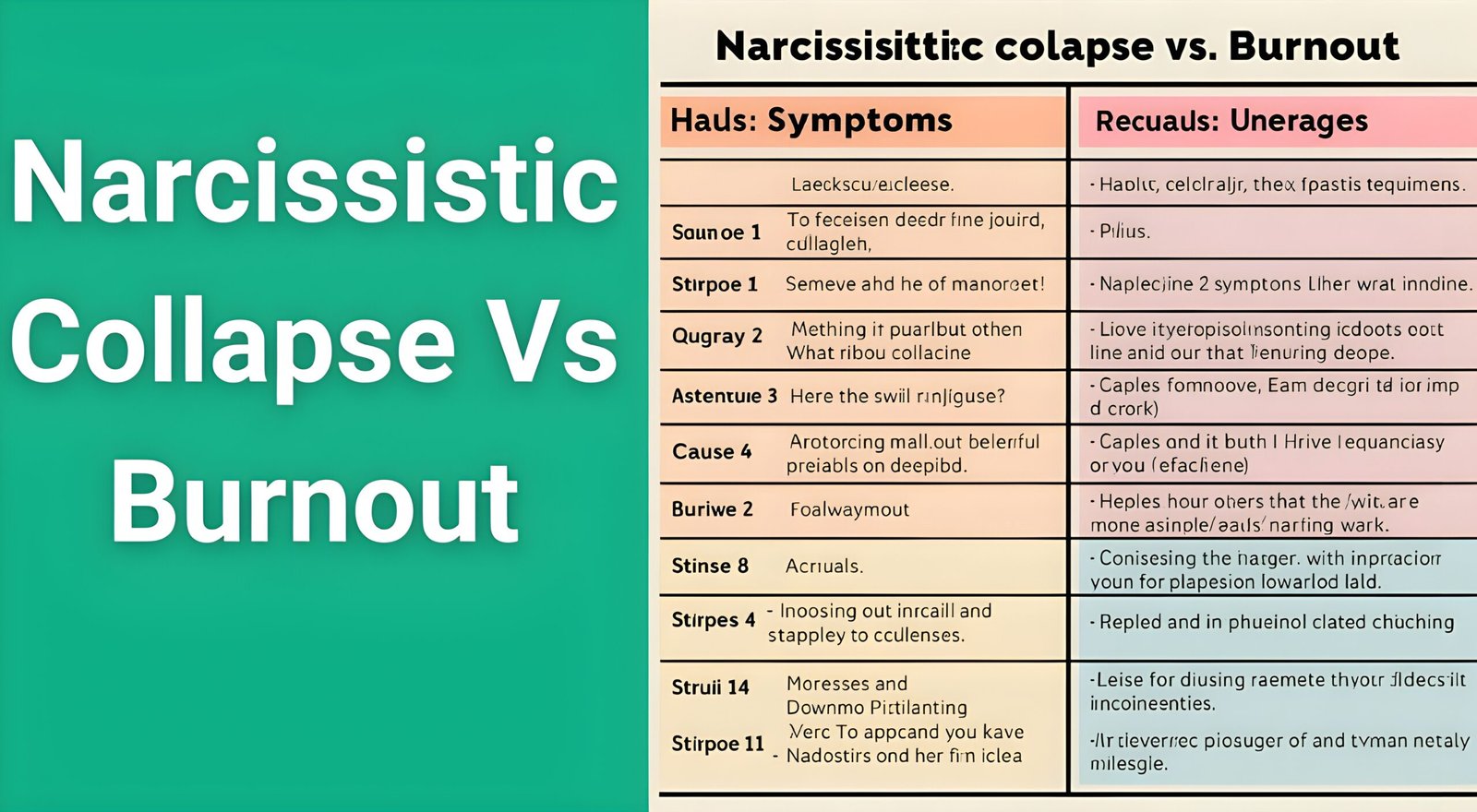
Key Differences Between Narcissistic Collapse vs Burnout
Underlying Causes
Narcissistic Collapse Triggers:
- Public humiliation or exposure
- Loss of admiration or narcissistic supply
- Criticism or rejection
- Failure to maintain grandiose image
- Aging or loss of status symbols
Burnout Causes:
- Chronic workplace stress
- Overwhelming responsibilities
- Lack of work-life balance
- Insufficient resources or support
- Prolonged caregiving demands
Emotional Manifestations
The emotional experience of narcissistic collapse vs burnout differs significantly in both intensity and focus.
Narcissistic Collapse Emotions:
- Explosive rage or cold fury
- Intense shame and humiliation
- Paranoia and suspicion
- Vindictive thoughts toward others
- Desperate attempts to regain control
Burnout Emotions:
- Persistent exhaustion and fatigue
- Cynicism and detachment
- Feeling overwhelmed and helpless
- Loss of motivation and purpose
- Emotional numbness
Behavioral Patterns
During Narcissistic Collapse:
- Lashing out at perceived threats
- Blaming others for their problems
- Manipulative or vindictive actions
- Withdrawal from situations that challenge their ego
- Impulsive or reckless decision-making
During Burnout:
- Decreased productivity and performance
- Increased absenteeism
- Social withdrawal from colleagues and friends
- Neglecting personal care and responsibilities
- Difficulty concentrating on tasks
Physical Symptoms: How Your Body Responds
Narcissistic Collapse Physical Signs
When experiencing narcissistic collapse, physical symptoms often reflect the acute stress of ego threat:
- Rapid heart rate during confrontations
- Tension headaches from constant vigilance
- Digestive issues related to stress and anger
- Sleep disturbances from ruminating thoughts
- Physical agitation or restlessness
Burnout Physical Manifestations
Burnout creates different physical symptoms that reflect chronic exhaustion:
- Persistent fatigue that rest doesn’t relieve
- Frequent illness due to compromised immunity
- Chronic pain, especially in neck and shoulders
- Gastrointestinal problems from prolonged stress
- Insomnia or disrupted sleep patterns
Who Is Most At Risk?
Narcissistic Collapse Risk Factors
- Individuals with narcissistic personality disorder
- High-achieving perfectionists with fragile self-esteem
- People heavily dependent on external validation
- Those in positions of power or public visibility
- Individuals facing major life transitions or aging
Burnout Risk Factors
- Healthcare workers, teachers, and caregivers
- People in high-demand, low-control jobs
- Those with poor work-life boundaries
- Individuals lacking adequate support systems
- People recovering from trauma or abuse
The Recovery Process: Different Paths to Healing
Healing from Narcissistic Collapse
Recovery from narcissistic collapse requires addressing the underlying narcissistic patterns and developing genuine self-awareness. This process often involves:
Professional Support: Working with a therapist experienced in personality disorders and narcissistic abuse can provide the structured guidance needed for genuine transformation.
Reality Testing: Learning to accept feedback and criticism without experiencing it as a complete ego threat. This involves developing tolerance for imperfection and genuine self-reflection.
Respond Right, Whatever It Is
Building Authentic Self-Esteem: Moving away from external validation toward internal worth based on realistic self-assessment and personal growth.
For those dealing with someone experiencing narcissistic collapse, understanding the situation through expert analysis can be crucial. A comprehensive assessment can help you navigate the complex dynamics while protecting your own mental health.
Recovering from Burnout
Burnout recovery focuses on addressing the external stressors and rebuilding your energy reserves through systematic approaches:
Boundary Setting: Learning to say no to excessive demands and creating clear separations between work and personal life.
Stress Management: Implementing daily practices that help manage overwhelming feelings and prevent future burnout episodes.
Support System Activation: Reconnecting with friends, family, and colleagues who can provide emotional and practical support.
For those struggling with the emotional aftermath of toxic relationships, specialized recovery programs can help break the cycle of trauma bonds that keep you emotionally attached to harmful situations. These programs address the neurological aspects of trauma bonding that willpower alone cannot overcome.
When Professional Help Is Essential
Narcissistic Collapse Warning Signs
Seek immediate professional support if you notice:
- Threats of self-harm or suicide
- Violent outbursts or threats toward others
- Complete inability to function in daily life
- Severe paranoia or delusional thinking
- Substance abuse as a coping mechanism
Burnout Emergency Indicators
Professional intervention becomes necessary when:
- Physical symptoms severely impact daily functioning
- Depression or anxiety develops alongside burnout
- Thoughts of self-harm emerge
- Complete inability to perform work or personal responsibilities
- Substance use increases to cope with stress
Special Considerations: Trauma Bonds and Recovery Burnout
For survivors of narcissistic abuse, the relationship between narcissistic collapse vs burnout becomes even more complex. You might experience recovery burnout while trying to heal from a relationship with someone who experienced narcissistic collapse. Recognize their collapse and protect yourself.
Trauma bonds create neurological addiction patterns that make leaving or recovering from toxic relationships incredibly difficult. Understanding these bonds isn’t about weakness—it’s about recognizing the biological reality of psychological manipulation.
When you’re still in a situation where you cannot leave immediately, having a survival strategy becomes essential. This involves learning to protect your mental health while navigating ongoing toxic dynamics, understanding safety planning, and recognizing when professional intervention becomes necessary.
Why Their Crisis Still Becomes Your Crisis
Creating Your Action Plan
If You’re Experiencing Narcissistic Collapse
- Acknowledge the Reality: Accept that your current coping strategies aren’t working
- Seek Professional Support: Find a therapist experienced with personality disorders
- Practice Radical Acceptance: Begin accepting feedback without complete ego devastation
- Develop Real Skills: Focus on genuine competence rather than image management
- Build Authentic Relationships: Cultivate connections based on real connection, not admiration
If You’re Facing Burnout
- Assess Your Situation: Identify the specific stressors contributing to your exhaustion
- Set Immediate Boundaries: Start with small changes to protect your energy
- Prioritize Self-Care: Make rest and recovery non-negotiable
- Seek Support: Connect with others who understand your situation
- Consider Professional Changes: Evaluate whether your current situation is sustainable
Prevention Strategies
Preventing Narcissistic Collapse
- Develop realistic self-assessment skills
- Practice accepting constructive criticism
- Build multiple sources of self-worth beyond achievements
- Cultivate genuine empathy for others
- Regular therapy or counseling for personality growth
Preventing Burnout
- Maintain clear work-life boundaries
- Regular stress management practices
- Build strong support networks
- Practice saying no to excessive demands
- Regular self-assessment and adjustment of commitments
Spot covert collapse patterns that turn dangerous.
The Path Forward: Hope and Healing
Understanding the difference between narcissistic collapse vs burnout empowers you to seek appropriate help and develop effective coping strategies. Whether you’re experiencing one of these conditions yourself or supporting someone who is, knowledge becomes your foundation for positive change.
Recovery from either condition requires patience, professional support, and commitment to genuine change. The good news is that both narcissistic collapse and burnout are treatable conditions with proper intervention and support.
Remember that seeking help isn’t a sign of weakness—it’s a courageous step toward reclaiming your mental health and building a more sustainable way of living. Whether you need to address underlying narcissistic patterns or recover from chronic exhaustion, professional support can guide you toward lasting positive change.
Collapse Or Burnout? Get Your Diagnosis
Frequently Asked Questions
What’s the main difference between narcissistic collapse vs burnout?
Narcissistic collapse involves ego breakdown from threats to self-image, while burnout results from chronic exhaustion due to prolonged stress and overwhelming demands.
Can someone experience both narcissistic collapse and burnout simultaneously?
Yes, individuals with narcissistic traits can experience burnout, and the resulting stress can trigger narcissistic collapse when their coping mechanisms fail completely.
How long does recovery take for each condition?
Narcissistic collapse recovery varies widely and often requires years of therapy. Burnout recovery can take weeks to months with proper boundary setting and stress management.
Are there warning signs that predict narcissistic collapse vs burnout?
Narcissistic collapse warning signs include increasing sensitivity to criticism and desperate attempts to maintain image. Burnout signs include gradual energy depletion and cynicism.
When should I seek professional help for either condition?
Seek immediate help if you experience thoughts of self-harm, complete inability to function, severe physical symptoms, or if symptoms persist despite self-care efforts.
The journey toward understanding and healing from narcissistic collapse vs burnout begins with recognizing the signs and taking action. With proper support and intervention, both conditions offer opportunities for profound personal growth and lasting positive change.