

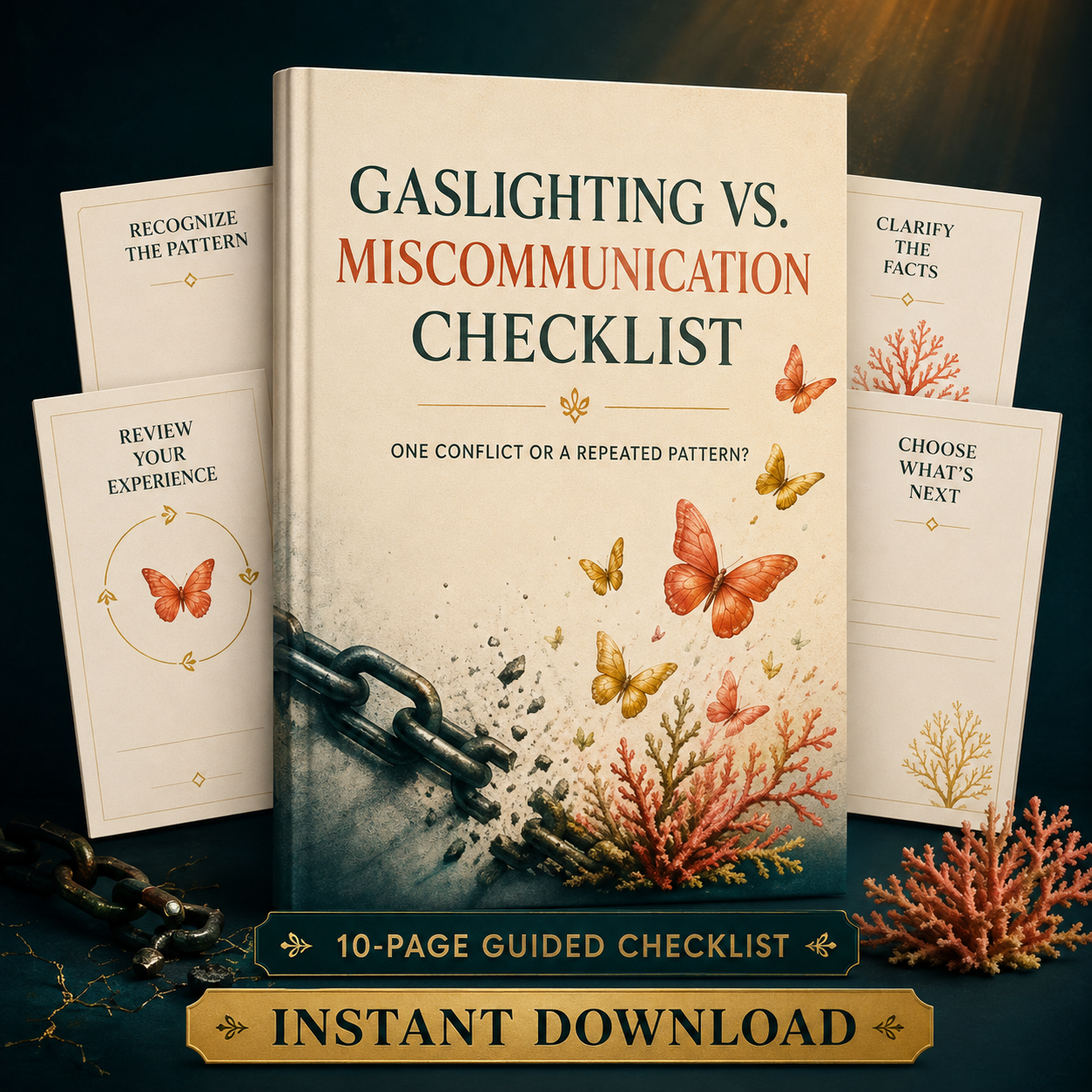
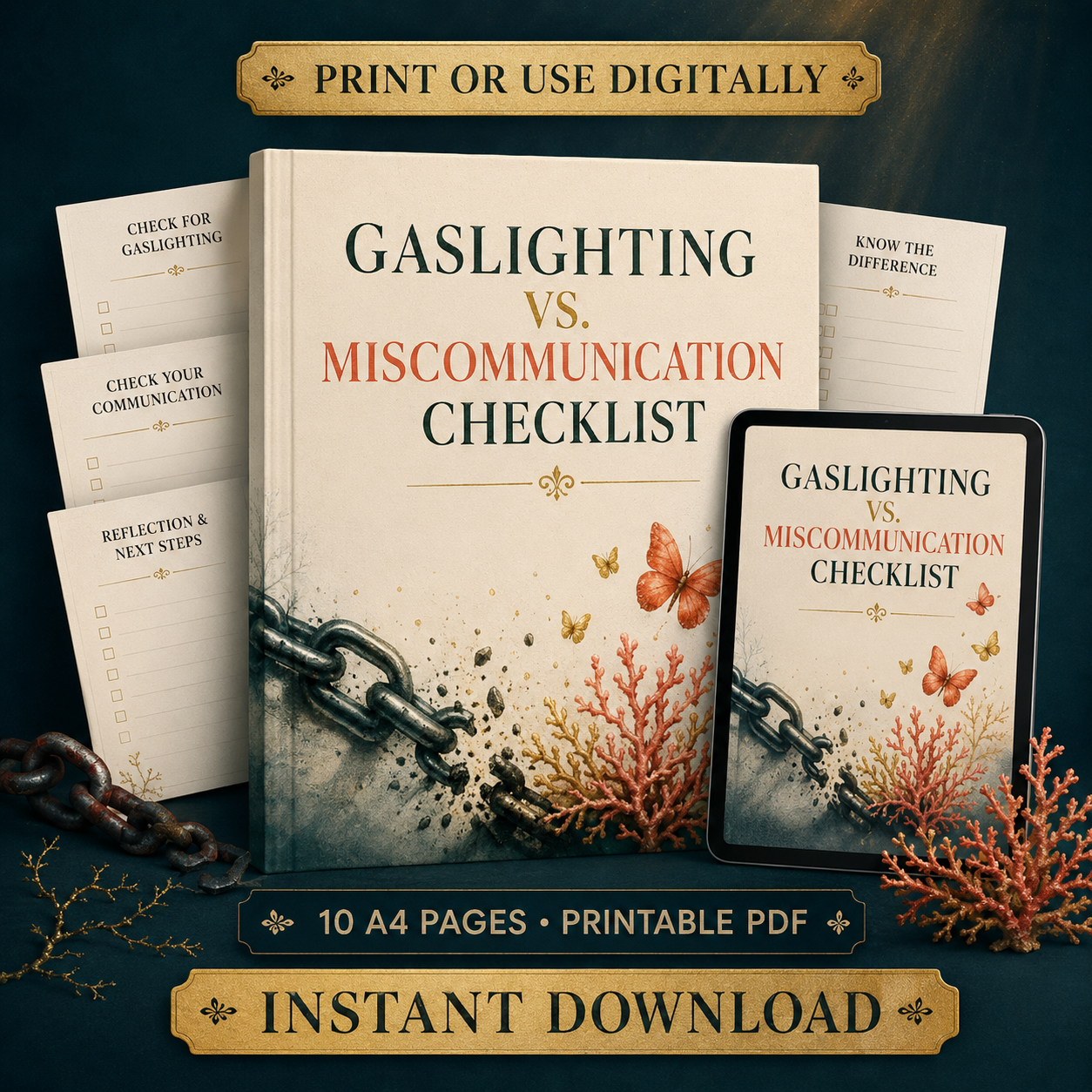
Gaslighting vs miscommunication checklist — a 10-page guided worksheet to help you finally understand the difference between an ordinary communication problem and a repeated pattern of reality manipulation.
Because not every argument is gaslighting. And not every gaslighting situation looks like an obvious lie.
The difference lies in what happens when you raise a concern. Healthy miscommunication allows room for clarification — questions get answered, mistakes get acknowledged, both people can speak, and conversations end with some form of resolution. Gaslighting does something different. It systematically dismantles your confidence in your own memory, perception, and judgment — one denied conversation at a time.
This checklist gives you a clear, structured framework to examine what is actually happening in your relationship — based on repeated patterns, not isolated moments.
WHAT IS INSIDE YOUR CHECKLIST:
✓ Gaslighting and miscommunication explanations
✓ Healthy repair versus reality manipulation comparison
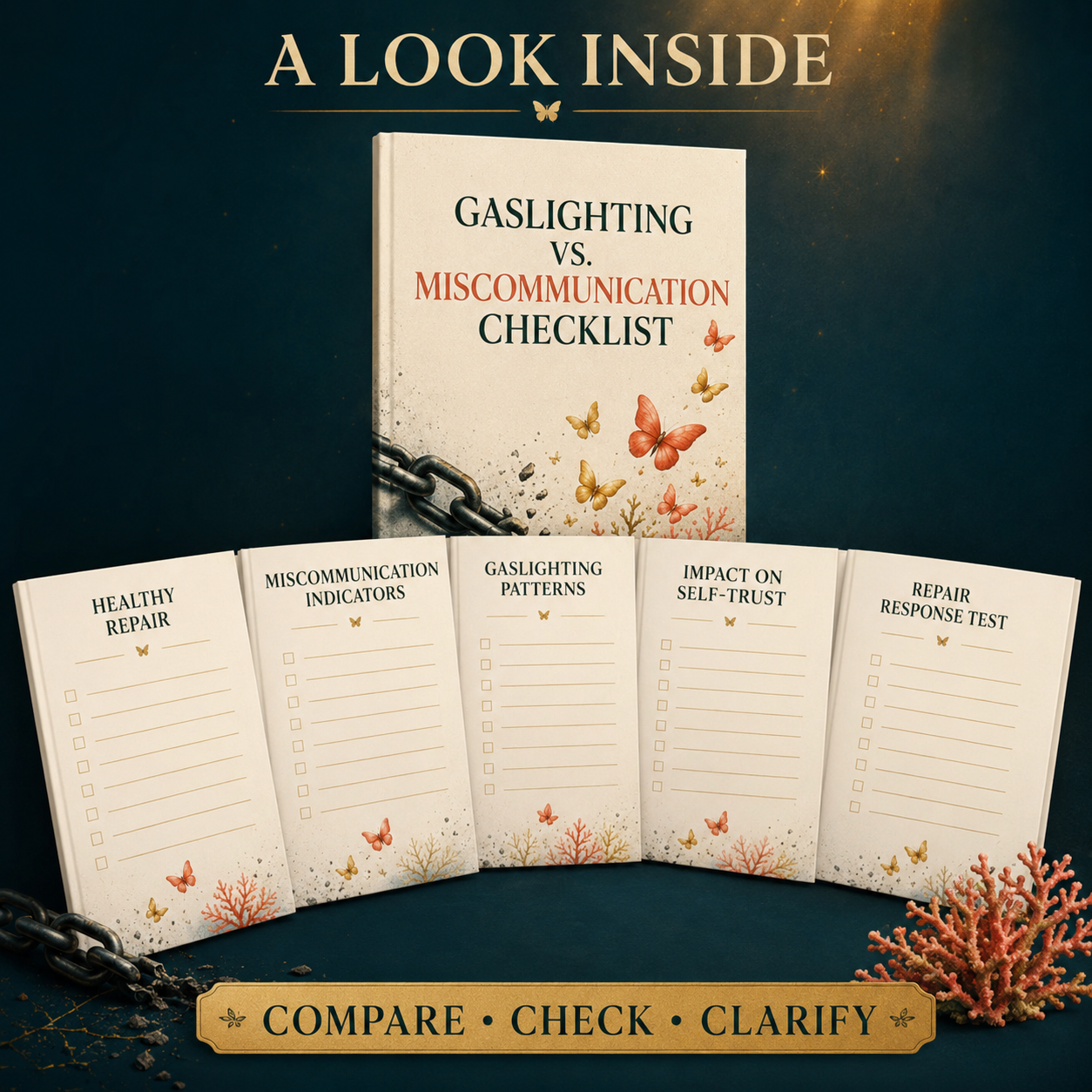
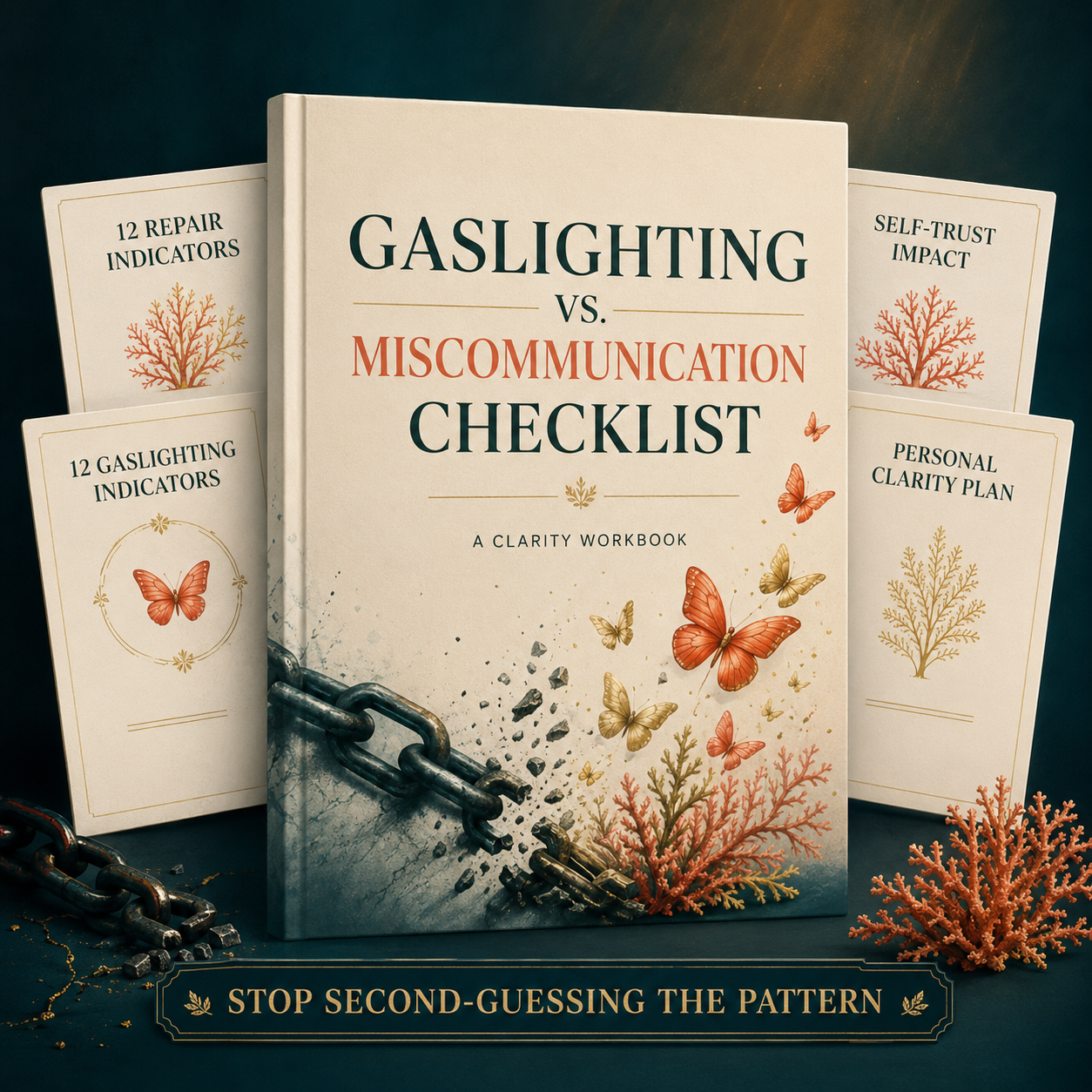
✓ 12 miscommunication and repair indicators
✓ 12 possible gaslighting pattern indicators
✓ Self-trust impact checklist
✓ Repair Response Test
✓ Real incident comparison exercise
✓ Three-part reflection score
✓ Pattern interpretation guidance
✓ Personal clarity and next step plan
✓ 10 guided A4 pages
✓ Instant digital PDF download
THIS CHECKLIST HELPS YOU EXAMINE:
Whether questions receive direct and honest answers
Whether mistakes can be acknowledged without deflection
Whether explanations remain consistent over time
Whether evidence creates clarity or gets dismissed and rewritten
Whether accountability leads to actual changed behavior
Whether conversations end with resolution or greater self-doubt
How repeated interactions are affecting your memory, confidence, and daily decisions
MISCOMMUNICATION VS GASLIGHTING:
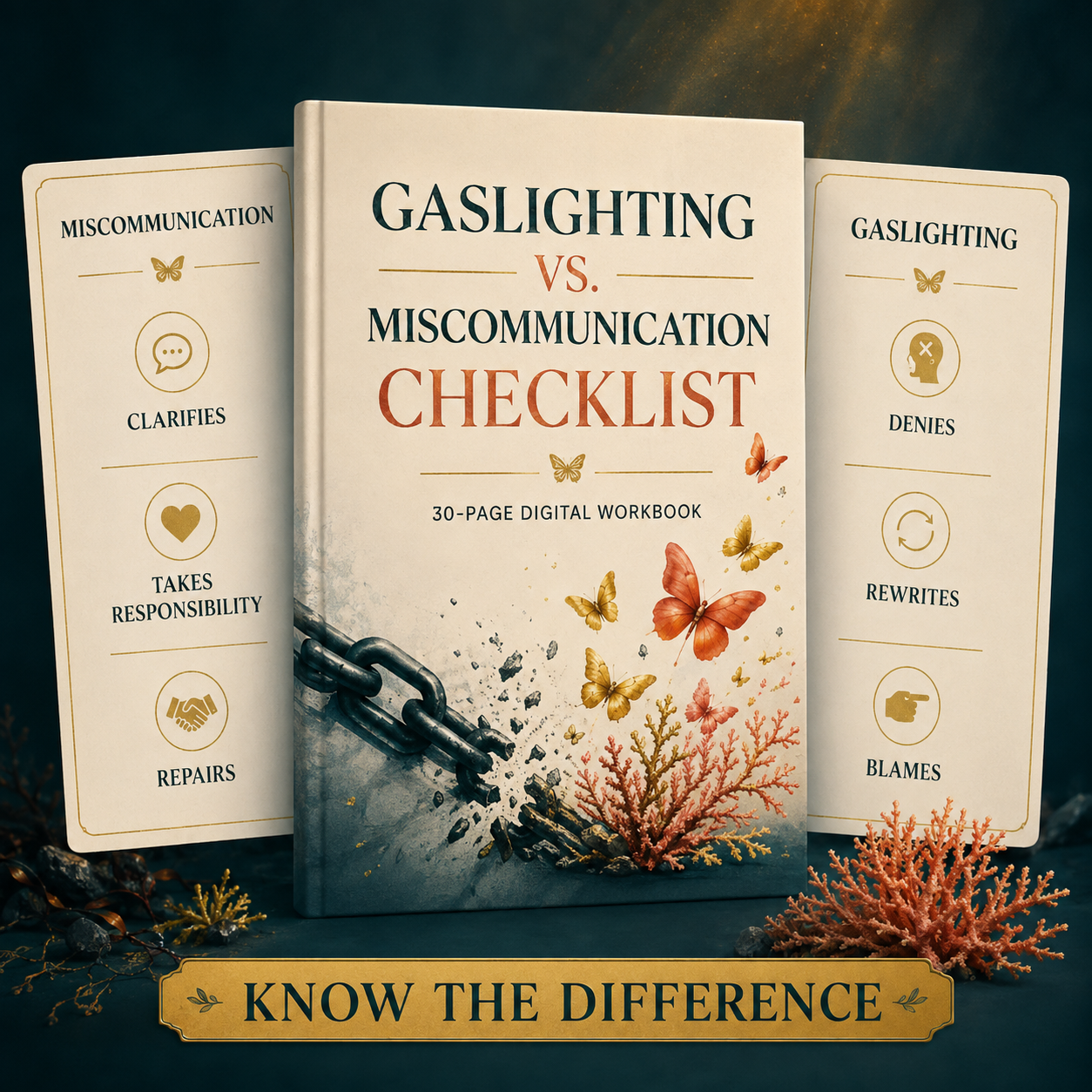
Miscommunication generally allows both people to clarify what happened, acknowledge misunderstandings, and repair the situation. It may cause hurt and confusion but leaves room for honest conversation and mutual accountability.
Gaslighting patterns may involve repeatedly denying events that occurred, rewriting agreements that were made, dismissing evidence as irrelevant or fabricated, shifting blame consistently back onto you, attacking your memory or emotional stability, and conversations that always end with you apologizing for something you cannot quite name.
THIS CHECKLIST IS FOR YOU IF:
You leave conversations more confused than when they started
You cannot tell whether you are dealing with a communication style difference or deliberate manipulation
Your concerns are consistently met with denial, deflection, or blame shifting
You find yourself apologizing without knowing what you did wrong
You have started doubting your memory of conversations and agreements
You want a structured tool to assess repeated patterns before speaking to a therapist
You are recovering from narcissistic abuse or emotional manipulation
You want clarity without labeling or diagnosing anyone
IMPORTANT NOTE:
This checklist does not diagnose another person or automatically label every disagreement as gaslighting. It helps you assess repeated behavior, the possibility of repair, and the overall impact on your self-trust — so you can make clearer, safer decisions.
INSTANT DIGITAL DOWNLOAD — PDF format. 10 pages. A4 size. No physical item will be shipped. Print at home or use digitally on any compatible device.
Created by Fahim Chughtai — founder of NarcissismExposed.com, 7 years supporting survivors of narcissistic abuse and toxic relationships.