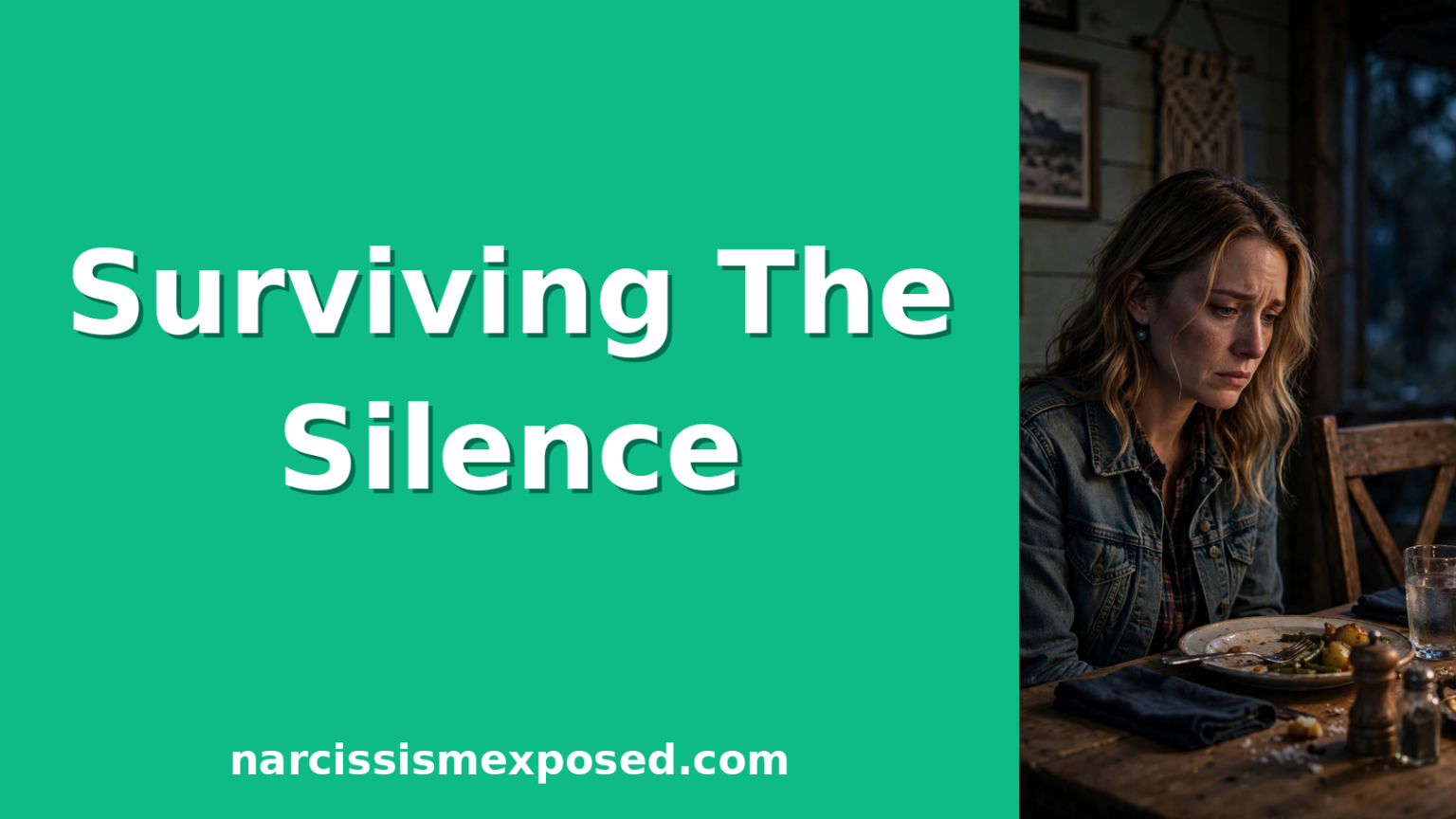
The house is quiet, but it is not peaceful. You said something at breakfast, something small, and now it is day three of nothing. No good morning, no eye contact, dinner eaten in silence while they scroll their phone like you are furniture. If you are living with the silent treatment in a marriage, you already know this is not two adults cooling off. This is punishment, and it is designed to make you crack first.
The silent treatment in a marriage is one of the most common weapons in a narcissistic partner’s arsenal. It is the deliberate withdrawal of communication, affection, and acknowledgment, used to punish you for a perceived offense and to train you never to repeat it. This article covers what it really is, how it differs from healthy space, the seven ways to survive it without losing yourself, and the line where silence becomes emotional abuse.
What The Silent Treatment In A Marriage Actually Is
A healthy person sometimes needs space after a fight. They say I need an hour, they take it, they come back and talk. The narcissistic silent treatment has none of those features. It arrives without warning, often over something minor, a tone of voice, a joke, an expressed need. There is no agreed timeframe. It ends when the silent partner decides it ends, usually without apology or resolution, as if nothing happened.
The signature characteristics are consistent. It is wildly disproportionate to the trigger. It is prolonged and undefined, days or weeks, not hours. It comes with a punishing coldness, not just absence but a visible icy presence, in the same room acting as if you do not exist. And it is a repeated pattern, not a one time lapse. If this sounds like your marriage, the deeper mechanics are covered in this breakdown of the covert narcissist’s silent treatment, which explains why the quiet ones use it most.
The purpose is control, not resolution. The silence is engineered to produce a specific response in you: anxiety, self doubt, and eventually surrender. You start replaying what you did wrong. You apologize for things you are not sure you did. You agree to things you do not want, just to make the coldness stop. That is not a side effect. That is the entire point.

Silent Treatment vs Healthy Space vs Stonewalling
Not all silence is abuse, and knowing the difference protects you from both overreacting and underreacting. Healthy space is communicated, time limited, and followed by repair. I need thirty minutes to calm down, then we will talk. That is respect.
Stonewalling, one of psychologist John Gottman’s famous four horsemen of relationship doom, is shutting down during conflict, going blank, leaving, refusing to engage. It is destructive, but it is often driven by emotional flooding, the person is overwhelmed and shuts down. The narcissistic silent treatment is different from stonewalling in one crucial way: it is deliberate and strategic. It is not overwhelm. It is a calculated withdrawal deployed after the fact, sometimes days after the original disagreement, as punishment for noncompliance.
The test is simple. Ask: was the silence communicated, time limited, and followed by a real conversation? If yes, it was space. If the silence was sudden, indefinite, icy, and ended with them acting like nothing happened while you were expected to be grateful the freeze is over, it was the silent treatment. Trust the pattern, not their explanation.
How Long Is Too Long
Nobody gives you a number, so here is one. A healthy cooling off period is measured in hours, rarely more than a day. The narcissistic silent treatment is measured in days and weeks. If your spouse regularly goes silent for multiple days over minor issues, if you have ever counted the days on a calendar, if the children have started asking why mommy or daddy is not talking to you, it has crossed every line that matters.
Duration is also a diagnostic tool. A partner who needs a day to cool off and then returns ready to resolve is struggling with communication. A partner who can watch you cry at the dinner table for a week and feel nothing is showing you who they are. The Mayo Clinic’s overview of narcissistic personality disorder describes the lack of empathy at the core of these patterns, and the ability to sustain punishing silence toward someone they claim to love is that lack of empathy in its purest form.
7 Ways To Survive The Silent Treatment In A Marriage
1. Name It Out Loud, To Yourself First
The silence works by making you doubt your own perception. Is it really that bad? Am I overreacting? Maybe they just need space. Name it plainly, in your journal or to a trusted friend: my spouse is giving me the silent treatment as punishment. The moment you label it, the fog starts lifting. You stop negotiating with yourself about whether you are allowed to be upset, and you start dealing with what is actually happening.
2. Do Not Chase, Apologize, Or Perform
This is the hardest rule and the one that breaks the cycle. The silence is designed to make you chase: the anxious texts, the elaborate apology for something minor, the special dinner to thaw them out. Every chase teaches them that silence works, and the next freeze will be longer. Do not apologize for things you did not do just to end the discomfort. Do not perform happiness to lure them back. Go about your life at normal volume. The discomfort you feel is the withdrawal talking, not evidence that you did something wrong.
3. Run The 72 Hour Protocol
Here is what to do during the silence, hour by hour. In the first 24 hours, say one calm sentence and then stop: I am here when you are ready to talk respectfully. Then live your life. Do not ask what is wrong twice. In hours 24 to 48, redirect the anxious energy: exercise, call a friend, work on something that is yours. Do not monitor their mood for signs of thawing. By hour 48 to 72, assess the pattern honestly. Is this a bad day or the monthly freeze? Write down what triggered it and how long it lasted. If the silence regularly passes 72 hours, you are not dealing with a communication problem. You are dealing with a control system, and your response needs to escalate from coping to planning.
4. Set The Boundary Once, Calmly, Outside The Freeze
Never try to set boundaries during the silence. It will be used as proof that you are the difficult one. Wait for a neutral moment, a calm day, and say it once: When you go silent for days instead of talking to me, I experience it as punishment. I will not chase you during a freeze. If it continues, I will [consequence]. The consequence has to be real and yours to enforce: I will spend the weekend with my sister, I will start sleeping in the guest room, I will begin documenting this pattern. Then enforce it the next time, without a speech. Boundaries with a narcissistic spouse are covered in depth in this guide on how to set boundaries that actually hold.
5. Document The Pattern
Keep a private log: date the silence started, what triggered it, how long it lasted, how it ended. This serves two purposes. First, it protects your reality. When they later claim it was just a few hours or that you are exaggerating, you have the record. Second, if the marriage ever reaches a lawyer’s office, a documented pattern of emotional punishment is evidence. Save it somewhere they cannot access. The spouses who are believed are the spouses with dates.
6. Build Your Life Outside The Freeze Zone
The silent treatment is most devastating when your spouse is your whole world, because then their withdrawal is total isolation. Rebuild the world they shrank: friendships, family, work, hobbies, a therapist who understands narcissistic abuse. This is not about preparing to leave, though it helps if you ever do. It is about making the silence survivable. When you have a full life, three days of someone’s icy punishment is unpleasant instead of annihilating.
7. Know When The Silence Has Become Abuse
Here is the line. Occasional poor communication is a marriage problem. A sustained, deliberate pattern of withholding communication, affection, and acknowledgment as punishment is emotional abuse. The markers: it happens regularly, it lasts days, it follows minor or invented offenses, it is used to control your behavior, and you are afraid of triggering it. If you are modifying your entire personality to avoid the freeze, you are not in a marriage with communication issues. You are in an abusive dynamic. Psychology Today’s overview of narcissism and toxic relationship patterns is worth reading if you need an outside voice to confirm what you already feel.
If the silence is just one weapon in a larger arsenal of mind games, you need the full defense manual. The Gaslighting Recovery Bundle ($47) gives you the reality-check system for every tactic, the silent treatment, the blame shifting, the rewritten history, so their version of your marriage stops overwriting your own.
What To Do When They Finally Break The Silence
The freeze ends the way it began: on their terms. They will act warm, or normal, or slightly magnanimous, as if the last week was a minor blip. Here is your script for that moment, and it matters more than anything you do during the silence.
Do not pretend it did not happen. A calm, brief acknowledgment: I want to talk about the last four days before we move on. If they deflect, minimize, or flip the blame back onto you, you have your answer about whether this will change. Do not accept a reset without repair. The pattern survives on your relief that the freeze is over, which makes you willing to drop it just to keep the peace. That relief is exactly what they are counting on.
If the conversation goes nowhere, say so plainly and end it: I am not willing to pretend this is fine. We can try again tomorrow. Then follow through on the consequence you set. The first repaired freeze is the hardest. It is also the moment the dynamic starts to change, because for the first time, the silence had a cost.
Frequently Asked Questions
What does silent treatment do to a marriage?
It erodes trust, intimacy, and the partner’s sense of reality. Over time it trains the receiving spouse to suppress their needs, avoid conflict at all costs, and walk on eggshells. Marriages cannot survive without repair, and the silent treatment replaces repair with punishment. The long term effects include anxiety, depression, and a trauma bond to the very person causing the pain.
What type of person uses the silent treatment?
It is most associated with narcissistic and emotionally immature personalities who use withdrawal as control. People with narcissistic traits deploy it deliberately as punishment. Others use it from emotional flooding or poor skills, but the key difference is pattern and intent: the narcissistic version is prolonged, icy, repeated, and ends without accountability.
How long should the silent treatment last?
A healthy cooling off lasts hours, not days. If the silence regularly stretches past 24 to 72 hours, or if you are counting days on a calendar, it has stopped being space and become punishment. There is no acceptable duration for silence used as a weapon.
Is silent treatment emotional abuse?
When it is a sustained, deliberate pattern used to punish and control, yes. Mental health professionals classify prolonged withholding of communication and affection as a form of emotional abuse. The occasional need for space is not abuse. Weeks of icy punishment for minor offenses is.
What does silent treatment look like in a relationship?
It looks like sudden withdrawal after a disagreement or perceived slight: no eye contact, one word answers or none, sleeping separately without discussion, acting as if you do not exist while sharing the same home, and then resuming normal behavior days later as if nothing happened, with no apology and no resolution.
Does silent treatment work in a marriage?
It works at getting compliance through fear, which is why narcissistic partners keep using it. It does not work at resolving anything, building intimacy, or creating a healthy marriage. Every freeze buys short term obedience at the cost of long term trust, until there is no trust left to spend.
You do not have to earn back someone’s voice by abandoning your own. If you cannot leave the marriage yet, or you are staying while you build your strength, the How To Survive When You Can’t Leave Yet workbook gives you day by day strategies to protect your mind and your sense of self while you decide what comes next.