You apologised again, and you are not even sure what for. You walked into the conversation knowing exactly what happened, and you walked out wondering if you imagined the whole thing. If that cycle feels familiar, the books on gaslighting in this guide can help you name it, understand it, and start trusting your own mind again.
Gaslighting is a form of psychological manipulation where one person systematically makes another doubt their memory, their perception, and their sanity, and the books on gaslighting below are the best place to start learning how it works. This guide reviews 12 real books, every one of them published and verifiable, and tells you honestly what each one covers, who it helps most, and where it falls short. No book here will fix a relationship on its own, and no book can diagnose anyone in your life. What the right book can do is give you language for what is happening, proof that you are not losing your mind, and practical steps for what to do next. That is exactly what this guide promises, and the first three sections deliver it before you reach a single book review.
What Is Gaslighting
Gaslighting is psychological manipulation where someone makes you question your own memory, perception, and sanity through denial, minimisation, and reality distortion, so they can keep control over you. It is not a single lie, and it is not an ordinary disagreement. It is a pattern, repeated over weeks, months, or years, in which the gaslighter denies things they clearly said or did, rewrites shared history, and tells you that your feelings are wrong, until you stop trusting your own mind and start relying on their version of events instead.
The term comes from Patrick Hamiltons 1938 play Gas Light, later made into the 1940 and 1944 films Gaslight, in which a husband dims the gas lights in their home and then denies that anything has changed, until his wife believes she is losing her mind. Dr Robin Stern, a therapist and associate director at the Yale Center for Emotional Intelligence, popularised the modern understanding of the pattern with her 2007 book The Gaslight Effect, and the Psychology Today overview of gaslighting describes it as an insidious form of manipulation in which victims are deliberately fed false information that leads them to question what they know to be true, often about themselves.
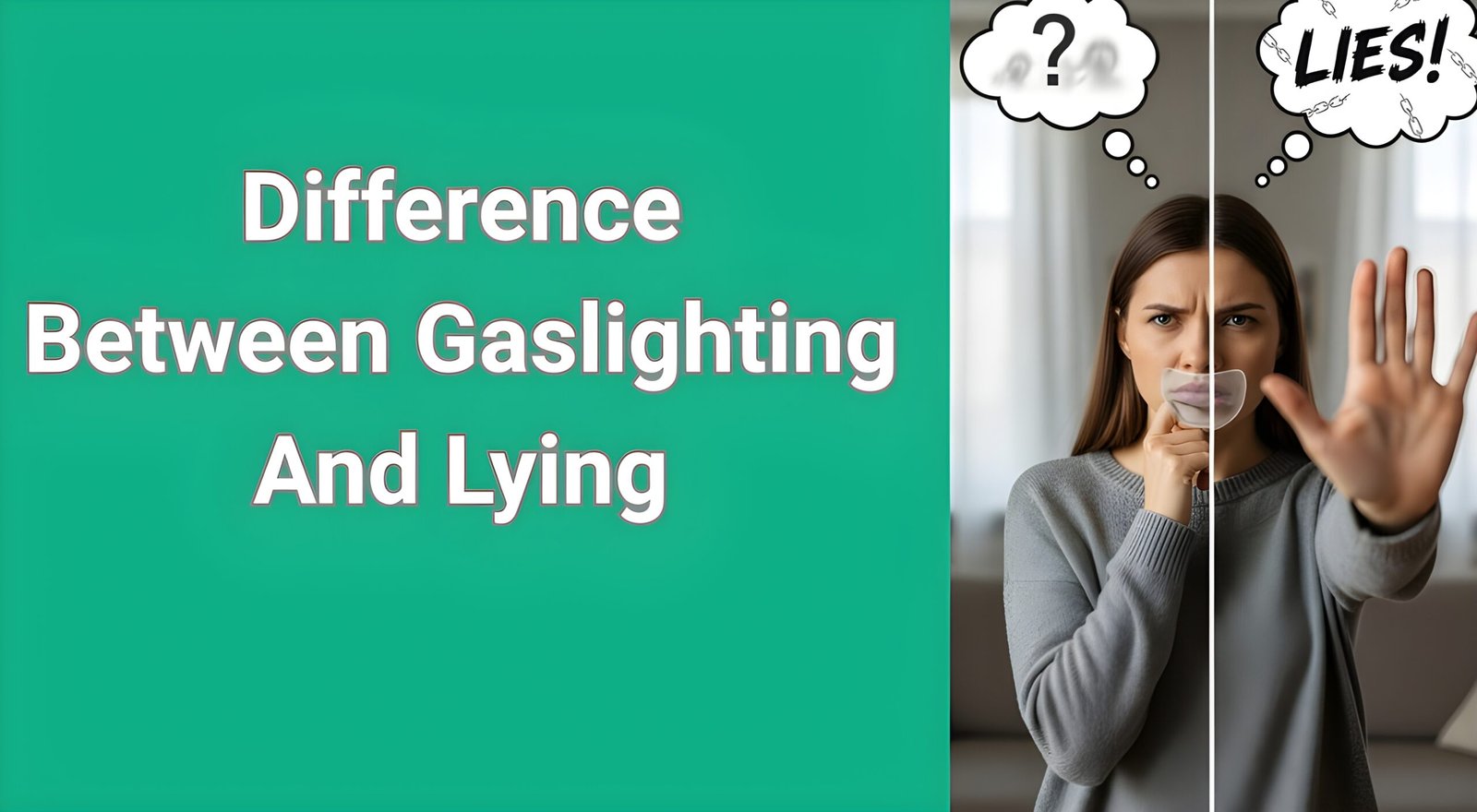
Gaslighting is different from lying. A lie is a single false statement. Gaslighting is a campaign. The gaslighter denies your experience, minimises your feelings, shifts blame onto you, withholds information, and sometimes turns other people against you, all while insisting that you are the confused one. People who gaslight often show traits linked to personality disorders marked by a disregard for others, and the Mayo Clinic overview of antisocial personality disorder describes that pattern in plain terms, including repeated lying, manipulation, and lack of remorse. Over time the effect is not just confusion about one event. It is a loss of confidence in your own judgment about everything.

The Signs Of Gaslighting
The signs of gaslighting are easiest to recognise as a pattern, not as one incident. Read this list slowly and notice how many of them show up with the same person.
You constantly second guess yourself, even about small decisions you used to make without thinking. You apologise all the time, for things you did not do and for feelings you are allowed to have. You feel confused, anxious, or on edge most of the time, especially around one person. You are told you are too sensitive, crazy, or paranoid whenever you raise a concern. You make excuses for the other persons behaviour to your family and friends. You find yourself lying or hiding things to avoid conflict. You have stopped doing the activities you used to enjoy. You feel as if you are losing your sense of self, or you no longer recognise the person you have become. You save screenshots, recordings, or notes, not for court, but just to prove to yourself that something really happened. You constantly wonder if you are overreacting, and you ask other people to confirm what is real.
Our guide to the 15 warning signs of gaslighting goes through each of these signs in more detail, with examples of how they show up in daily life. If several of them fit one relationship in your life, that is worth taking seriously, even if no single incident on its own looks dramatic enough to count.
How Gaslighting Works In Three Stages
Dr Stern describes three stages that many people move through, though not every gaslighting dynamic includes all three. In the first stage, disbelief, something strange happens and you brush it off as a one off, because the person seems loving and the incident seems small. In the second stage, defence, the incidents keep happening and you start pushing back, arguing your case, gathering evidence, trying to prove what you know happened. In the third stage, depression, you grow exhausted from the constant arguing and you start accepting their version of reality just to keep the peace. You try harder to earn their approval, you second guess yourself more, and your energy drains away until you feel low and hopeless.
That third stage is why gaslighting is so damaging. It does not just change what you believe about one argument. It changes what you believe about yourself. The Healthline guide to gaslighting signs lists the same progression, and notes the emotional changes that come with it, constant anxiety, loss of confidence, emotional numbness, and a lingering sense that something is not right even when you cannot name what it is.
The Effects Of Gaslighting On Mental Health
Gaslighting can affect your mental health in serious and lasting ways. People who have been gaslit over a long period often develop anxiety, depression, and persistent self doubt. Many describe difficulty making decisions, trouble sleeping, and a constant feeling of being on edge. Some develop symptoms of post traumatic stress, including flashbacks to arguments, hypervigilance, and emotional numbness. Self blame is common, and research discussed by Psychology Today has examined whether self blame helps explain the link between gaslighting and depression, particularly in parent child relationships.
These effects do not mean you are weak, and they do not mean the damage is permanent. They mean the manipulation worked the way it was designed to work, by attacking the very tools you use to judge reality. Recovery is possible, and it usually starts the same way, with someone naming the pattern plainly and you realising you are not the only person this has happened to. A book is often the first place that naming happens, because a book cannot argue back, minimise you, or rewrite what you just read.
If you are in immediate danger, or if someone has threatened you, contact local emergency services or a domestic abuse support service first. A book is for understanding and healing, not for emergencies.
How To Pick The Right Book In 30 Seconds
If you are overwhelmed and you just want one book, start here.
If you are still unsure whether what is happening to you is gaslighting, read The Gaslight Effect by Dr Robin Stern. It is the single best starting point, and it is the book every other book on this list is measured against.
If you want practical exercises and a workbook you can write in, read The Gaslighting Recovery Workbook by Amy Marlow-MaCoy. It is the most hands on book on this list.
If you are healing after leaving, read The Gaslight Effect Recovery Guide by Dr Robin Stern, then Its Not You by Dr Ramani Durvasula.
If the gaslighter is your mother or your parent, read Will I Ever Be Good Enough by Dr Karyl McBride, or Toxic Parents by Dr Susan Forward and Craig Buck.
If you want to understand why he does it, read Why Does He Do That by Lundy Bancroft.
If you want a faith based perspective, read The Emotionally Destructive Relationship by Leslie Vernick.
If you want to understand covert manipulation and hidden abuse, read In Sheeps Clothing by Dr George Simon or The Covert Passive Aggressive Narcissist by Debbie Mirza.
The rest of this guide reviews all 12 books in full, so you can check the recommendation against your own situation before you commit your time and money.
The 12 Best Books On Gaslighting
Every book below is real, published, and widely available in print, ebook, and audiobook. For each one you will find what it covers, who it helps most, and one honest limitation. Read the limitation as carefully as the praise. The wrong book at the wrong time can leave you feeling worse, not better.
Book 1, The Gaslight Effect By Dr Robin Stern
What it covers: The Gaslight Effect, first published in 2007, is the book that gave this pattern its modern name. Dr Stern, a therapist who has worked with people in emotionally abusive relationships for decades, explains how gaslighting works through real cases from her practice. She describes the three types of gaslighters, the glamour gaslighter who uses charm, the good guy gaslighter who seems caring while undermining you, and the intimidator gaslighter who uses fear, and she walks through the three stages of the gaslight effect, disbelief, defence, and depression. The book includes checklists to help you recognise whether you are being gaslit, guidance on deciding which relationships can be saved and which you need to leave, and five rules for turning off the gas, practical steps for refusing to accept a rewritten reality.
Who it helps most: Anyone who suspects they are being gaslit but cannot quite name it yet. If you keep thinking something is wrong but you cannot explain what, this is the book that will make everything click. It is especially helpful if the gaslighter is a partner or a parent, because most of the case studies come from those relationships.
Honest limitation: The book was written before gaslighting became a widely discussed term, so some of the language feels dated, and it focuses mainly on romantic and family relationships, with little on gaslighting at work or in medical settings. It also describes the problem far more thoroughly than it prescribes the solution, so you may finish it understanding everything and still wondering exactly what to do on Monday morning. Pair it with a workbook, like Book 3 or Book 4 below, if you want practical exercises.
Book 2, Gaslighting By Stephanie Moulton Sarkis
What it covers: Gaslighting, published in 2018 by Stephanie Moulton Sarkis, a therapist and author specialising in narcissistic abuse, is a clear, direct guide to recognising manipulative and emotionally abusive people and breaking free from them. Sarkis explains the tactics gaslighters use, denial, lying, minimisation, blame shifting, and isolation, and shows how they appear in romantic relationships, families, friendships, and workplaces. The book includes warning signs, scripts for responding to gaslighting in the moment, guidance on setting boundaries, and advice on rebuilding your self esteem after the relationship ends. It is shorter and more practical than The Gaslight Effect, and it reads like a conversation with a knowledgeable therapist who is firmly on your side.
Who it helps most: People who want a practical, up to date handbook rather than a deep clinical exploration. If you are currently in a gaslighting relationship and you need to know what to say and what to do this week, this is the book to reach for. It is also a good choice if you found The Gaslight Effect too long or too case study heavy.
Honest limitation: Because it covers so much ground in a short book, some sections feel brief, especially the healing section, which is shorter than the recognition section. Readers who have already left the relationship may find the first half familiar and want more depth on recovery, which is where Books 3 and 4 come in.
Book 3, The Gaslight Effect Recovery Guide By Dr Robin Stern
What it covers: The Gaslight Effect Recovery Guide is Dr Sterns follow up to her original book, and it is built as a guided journal rather than a book you simply read. It helps you identify whether you are part of a gaslighting pattern, understand the dynamics of the relationship, and pull yourself out of it through writing prompts, reflection exercises, and mindset shifts. The guide covers how to recognise gaslighting in romantic relationships, families, and workplaces, how to leave a gaslighting relationship safely, and how to rebuild trust in your own judgment. It is designed to be worked through slowly, a little at a time, rather than read in a weekend.
Who it helps most: People who have already recognised the gaslighting and are ready to do the recovery work. If you have read The Gaslight Effect or you already know what is happening, and now you need a structured way to process it, this guide gives you that structure. It works well alongside therapy, because the written exercises give you clear material to bring to sessions.
Honest limitation: It is a journal, not a book of new information, so if you have not read The Gaslight Effect first, some of the exercises will assume knowledge you do not have yet. It also requires you to write honestly about painful experiences, which can feel overwhelming without support, so do not work through the hardest sections alone late at night if you can avoid it.
Book 4, The Gaslighting Recovery Workbook By Amy Marlow-MaCoy
What it covers: The Gaslighting Recovery Workbook, published in 2020 by Amy Marlow-MaCoy, a licensed professional counsellor, is an interactive workbook for rebuilding self esteem and healing from an abusive relationship. It is organised in two parts. The first part explains what gaslighting is, how it works in romantic, professional, and family relationships, and how it affects your sense of self. The second part focuses on recovery, with exercises on assertiveness, communication, boundaries, self esteem, and building healthy relationships. The workbook uses daily logs, visualisations, journaling prompts, and positive affirmations, and it includes a section on trauma near the end.
Who it helps most: People who learn by doing rather than by reading. If you have read enough about gaslighting and you want to start rebuilding, this workbook gives you a daily practice. It is also a good choice if you are working with a therapist, because several readers report bringing the exercises to their sessions and working through them together.
Honest limitation: It is a workbook, so it is only useful if you actually write in it. Readers who buy it hoping for a book to read straight through may be disappointed by the amount of blank space and prompts. It is also gentler and less clinical than Stern or Sarkis, which some readers love and others find too soft for the severity of what they went through.
Book 5, Why Does He Do That By Lundy Bancroft
What it covers: Why Does He Do That, published in 2002 by Lundy Bancroft, a counsellor who spent years working with abusive men, is the clearest explanation ever written of how controlling men think. Bancroft argues that abusive behaviour is not caused by anger, stress, childhood trauma, or low self esteem, but by attitudes of entitlement, and he shows how those attitudes produce specific tactics, including gaslighting, intimidation, isolation, and economic control. The book includes detailed profiles of different types of abusive men, the demand man, the Mr Sensitive, the water torturer, and others, with real examples of their language and behaviour. It also covers what happens in couples counselling with an abusive partner, why it so often makes things worse, and how to tell whether an abusive partner is genuinely changing.
Who it helps most: Women in relationships with angry, controlling men who want to understand why he does what he does. If you have spent years wondering whether he gaslights you because he is stressed, because he had a hard childhood, or because you provoke him, this book will answer that question firmly and clearly. It is also essential reading for friends and family members who want to support someone in an abusive relationship without blaming her.
Honest limitation: The book is written specifically about abusive men in heterosexual relationships, so it does not cover gaslighting by women, by parents, or in same sex relationships. Its tone is blunt and uncompromising, which many readers find validating, but some find too stark if they are not ready to hear that the behaviour is a choice rather than a mistake.
Book 6, In Sheeps Clothing By Dr George Simon
What it covers: In Sheeps Clothing, by Dr George Simon, a psychologist specialising in manipulative people, explains how covertly aggressive people use manipulation tactics, including gaslighting, guilt, shame, playing the victim, and feigning ignorance, to get what they want while looking innocent. Simon argues that the most dangerous manipulators are not the obviously aggressive ones, but the ones who hide their aggression behind a mask of concern, confusion, or helplessness. The book teaches you how to recognise specific tactics in the moment, how to stop responding to them, and how to set boundaries with people who will never admit what they are doing.
Who it helps most: People dealing with a manipulator who does not look like a manipulator. If the person gaslighting you is widely liked, seems kind and reasonable to everyone else, and makes you look like the difficult one whenever you object, this book will explain exactly how that works. It is also useful for workplace gaslighting, where the manipulator is often a colleague or a boss who uses charm and plausible deniability.
Honest limitation: The book is older and its examples can feel dated, and it focuses more on recognising manipulation than on healing from it. It will help you see the tactics clearly, but you will need one of the recovery books on this list for the healing work that comes after.
If you have recognised the gaslighting and now you need practical tools, not just understanding, start with the words and the plan. The Gaslighting Recovery Bundle gives you word for word replies for the moment you freeze, a way to anchor your memory so it cannot be rewritten, and a 90 day journal that rebuilds your trust in your own mind, one day at a time.
Book 7, Its Not You By Dr Ramani Durvasula
What it covers: Its Not You, published in 2024 by Dr Ramani Durvasula, a clinical psychologist and one of the best known voices on narcissistic abuse, is a guide to identifying and healing from narcissistic people. Durvasula explains how narcissistic relationships work, why they are so hard to leave, and why the damage lasts long after the relationship ends. Gaslighting appears throughout the book as one of the core tactics narcissistic people use to keep control, alongside love bombing, devaluation, and discard. The second half of the book focuses on healing, with guidance on grief, boundaries, rebuilding identity, and deciding what kind of contact, if any, to keep with a narcissistic person.
Who it helps most: People healing from a relationship with a narcissistic person, especially if the gaslighting was part of a wider pattern of narcissistic abuse. If you have left the relationship but you still hear their voice in every decision you make, this book speaks directly to that experience. It is also the most current book on this list, and it reflects the latest understanding of narcissistic abuse.
Honest limitation: It is a book about narcissistic relationships in general, not a book about gaslighting specifically, so if gaslighting is your only concern and narcissism is not part of the picture, Books 1 or 2 will serve you better. It is also written primarily for people who have already left, so if you are still in the relationship, the healing sections may feel premature.
Book 8, Becoming The Narcissists Nightmare By Shahida Arabi
What it covers: Becoming The Narcissists Nightmare, by Shahida Arabi, is a guide to understanding narcissistic manipulation tactics, including gaslighting, and developing practical responses to them. Arabi explains how narcissistic people use specific tactics to maintain psychological control, how to recognise those tactics in real time, and how to protect yourself with boundaries that actually hold. The book includes strategies for maintaining your sense of self, rebuilding self worth after emotional abuse, and breaking free from toxic relationships. It is written in a direct, empowering style that many readers describe as the book that finally made them angry enough, in a healthy way, to stop accepting the abuse.
Who it helps most: People who have spent a long time being gaslit by a narcissistic partner or family member and who are ready to fight back, calmly and strategically, rather than just understand what happened. If you need validation that what happened was real, and practical strategies for dealing with it, this book delivers both.
Honest limitation: The title is deliberately provocative, and the tone is more confrontational than the other books on this list. That is exactly what some readers need, but if you are in a fragile place, or if you are still living with the gaslighter, the fighting back framing may not be safe or realistic for your situation right now. Read it when you have some distance, or when you have support in place.
Book 9, Will I Ever Be Good Enough By Dr Karyl McBride
What it covers: Will I Ever Be Good Enough, published in 2008 by Dr Karyl McBride, a therapist specialising in narcissistic families, is the standard book on healing for daughters of narcissistic mothers. McBride explains how narcissistic mothers use gaslighting, invalidation, and conditional love to control their daughters, and how that shapes the daughters adult relationships, self esteem, and sense of identity. The book includes a recovery programme with steps for grieving the mother you never had, setting boundaries with the mother you do have, and building a life based on your own values rather than her approval. It includes questionnaires, exercises, and real case studies from McBrides practice.
Who it helps most: Daughters of narcissistic or gaslighting mothers, and anyone raised by a parent who rewrote their reality. If your mother insisted that painful things never happened, told you that you were too sensitive whenever you objected, or made you feel that love had to be earned, this book will feel like it was written about your childhood. It is also useful for therapists working with adult children of narcissistic parents.
Honest limitation: It is written specifically for daughters of narcissistic mothers, so sons, and people whose gaslighting parent was their father, may find less that speaks directly to them. Book 10 below covers parental gaslighting more broadly.
Book 10, Toxic Parents By Dr Susan Forward And Craig Buck
What it covers: Toxic Parents, by Dr Susan Forward and Craig Buck, is a classic guide to overcoming the hurtful legacy of toxic parents and reclaiming your life. Forward explains how toxic parents use manipulation, including gaslighting, guilt, and denial, to control their adult children, and how those patterns continue into adulthood long after the child has left home. The book covers different types of toxic parents, the inadequate parent, the controlling parent, the alcoholic parent, the verbally abusive parent, and the physically abusive parent, and it gives practical techniques for confronting parents, setting boundaries, and breaking the cycle so you do not repeat it with your own children.
Who it helps most: Anyone who was gaslit by a parent and is still carrying the effects as an adult. If family members insist that your childhood was not that bad, or that you are remembering it wrong, this book will help you trust your own memory. It is also a good choice if the gaslighting in your family involved more than one parent, or if you want to understand the wider pattern of toxic parenting rather than one specific dynamic.
Honest limitation: It is an older book, and some of the language and examples feel dated. It is also broader than gaslighting, so if parental gaslighting is your only concern, you may find some chapters less relevant. But for understanding the family system that made the gaslighting possible, it remains one of the best books available.
Book 11, The Covert Passive Aggressive Narcissist By Debbie Mirza
What it covers: The Covert Passive Aggressive Narcissist, by Debbie Mirza, is a guide to recognising and recovering from hidden emotional and psychological abuse. Mirza, who writes from personal experience, explains how covert narcissists use subtle tactics, including gaslighting, silent treatment, triangulation, and plausible deniability, to control their partners while appearing kind and reasonable to everyone else. The book walks through the three phases of a relationship with a covert narcissist, idealisation, devaluation, and discard, and it includes practical advice on setting boundaries, seeking support, and recovering your sense of self.
Who it helps most: People in relationships with someone who seems wonderful to the outside world and confusing or cruel behind closed doors. If you have ever thought that nobody would believe you because he or she is so nice to everyone else, this book was written for you. It is short, clear, and easy to read, which matters when your concentration has been damaged by months or years of gaslighting.
Honest limitation: Mirza writes from personal experience rather than clinical training, so the book is less rigorous than Stern or Sarkis, and some of its claims are based on her own story rather than research. It is best read as a validation and recognition guide, alongside a clinically grounded book like Book 1 or Book 2, rather than on its own.
Book 12, The Emotionally Destructive Relationship By Leslie Vernick
What it covers: The Emotionally Destructive Relationship, by Leslie Vernick, a Christian counsellor, is a faith based guide to recognising and responding to emotionally destructive marriages. Vernick explains how gaslighting, manipulation, control, and chronic disrespect operate inside a marriage, and she addresses the specific confusion that people of faith often feel, whether enduring mistreatment is what God wants, whether setting boundaries is selfish, and whether leaving is ever justified. The book includes guidance on confronting destructive behaviour, setting consequences, and making decisions about the marriage from a position of clarity rather than fear.
Who it helps most: Readers who want their faith to be part of the healing, not something they have to set aside to get help. If you have been told that a good spouse endures anything, or that questioning your partner means you lack faith, this book will help you separate genuine faith from teaching that has been used to keep you silent. It is also useful for church leaders and friends supporting someone in a destructive marriage.
Honest limitation: It is written specifically about marriage from a Christian perspective, so it will not fit readers who are not in a marriage, or who are not looking for a faith based approach. The theological framing is central to the book, so if you want a secular guide, choose one of the other books on this list instead.
How To Choose The Right Book For Your Situation
The best book on gaslighting is the one that matches your situation right now, not the one with the most five star reviews. Use this section to narrow the list down to one or two titles.
If you are still in the relationship and you are not sure what is happening, start with The Gaslight Effect or Sarkiss Gaslighting. Both will help you name the pattern, and both include guidance on deciding whether the relationship can be saved. Do not start with a healing book, because healing books assume you have already left, and they can make you feel as if you are failing for staying.
If you have left and you are healing, start with The Gaslight Effect Recovery Guide or The Gaslighting Recovery Workbook, then move to Its Not You. The workbooks give you structure when your days feel shapeless, and Durvasulas book helps you understand the wider narcissistic pattern so you do not walk into the same dynamic again. For a memoir that shows what healing looks like from the inside, many readers also recommend Fake by Stephanie Wood, a true story of a woman who slowly realised the man she loved did not exist.
If the gaslighter is your parent, start with Will I Ever Be Good Enough if your mother is the gaslighter, or Toxic Parents for a broader picture of family gaslighting. Parental gaslighting is different from partner gaslighting, because you cannot simply leave your childhood, and these two books understand that difference.
If the gaslighting is happening at work, start with In Sheeps Clothing, which covers covert manipulation by colleagues and bosses, and Sarkiss Gaslighting, which includes workplace examples. Document what happens, with dates, and keep copies outside work, because workplace gaslighting is often denied most fiercely when there is no written record.
If you want a faith based perspective, start with The Emotionally Destructive Relationship. It is the only book on this list written from a Christian counselling perspective, and it deals directly with the spiritual confusion that gaslighting creates for people of faith.
If you are worried that you might be the one gaslighting, start with The Gaslight Effect and In Sheeps Clothing, and read them honestly, looking for your own behaviour rather than someone elses. Stern describes three types of gaslighters, and Simon explains how manipulation works from the inside, which can help you recognise patterns you did not know you had. No mainstream book is written solely for people who gaslight, and that is a real gap in the available books. If you recognise yourself in these pages, the most useful next step is not another book, but a therapist who works with controlling behaviour, because change requires honest feedback from someone who is not inside the dynamic with you.
Books On Gaslighting To Skip Or Read With Caution
Not every book with gaslighting in the title is worth your time, and some can do real harm. Here is what to watch for.
Skip self published books by authors with no credentials, no clinical background, and no lived experience that they describe openly. The market for books on gaslighting is full of short, hastily written titles that repeat the same few pages of general advice and pad the rest with repetition. Check the author before you buy. A therapist, a counsellor, a researcher, or a survivor writing honestly about their own experience can all write a useful book. An author with no background at all, writing under a name you cannot verify, usually cannot.
Read workbooks with inflated promises with caution. Any book that promises to cure gaslighting, to make the gaslighter change, or to fix your relationship in a set number of days is selling you a fantasy. Gaslighting is a pattern of behaviour, not a problem with a quick fix, and no book can change another person. The honest books on this list promise understanding, language, and tools. That is enough, and it is also the truth.
Be careful with fiction marketed as help. Thrillers about gaslighting, like Gone Girl by Gillian Flynn or Behind Closed Doors by B. A. Paris, are gripping novels, and they can help you feel less alone, but they are not guides. They dramatise gaslighting for entertainment, and they do not teach you how to respond to it, how to set boundaries, or how to heal. Enjoy them as novels, and do not mistake them for advice.
Finally, do not buy every book on this list at once. Twelve books is a library, not a reading plan. Choose one, read it properly, and do the exercises if it is a workbook. When you finish it, choose the next one based on what you still need. Reading about gaslighting can become its own way of avoiding action, and the point of these books is to help you act, not to keep you reading forever.
What To Do After You Finish The Book
Reading is the beginning, not the end. Here is what to do next, in order.
First, write down what you recognised. Keep a short note of the tactics you saw in your own life, with dates and examples. Your memory will be challenged, and your notes will not be. Our guide on how to respond to gaslighting gives you short replies you can use the next time it happens, so you are not left searching for words in the moment.
Second, tell one trusted person. Choose someone outside the relationship, someone who has no reason to take the gaslighters side, and tell them what you have learned. Saying it out loud to a real person is different from reading it in a book, and it breaks the isolation that gaslighting depends on.
Third, get professional support if you can. A therapist who understands emotional abuse can help you process what happened, practise boundaries, and rebuild trust in your own judgment. If the gaslighting is happening in a relationship you are still in, consider speaking to a therapist on your own first, before any joint counselling, because couples counselling with a gaslighter can be used against you. Our guide on gaslighting in relationships explains why that matters and what to do instead.
Fourth, make a plan, even a small one. It might be keeping a journal, opening a bank account in your own name, or simply deciding that you will not apologise for things you did not do. Small, concrete steps rebuild the self trust that gaslighting eroded, and they prove to you, with evidence, that your judgment works.
You do not need to read all 12 books before your life gets better. If you want exact words for the next hard conversation, a plan to protect your peace while you are still in contact, and a steady way to document what is happening, the Survival Workbook gives you all three, so one more rewritten conversation does not become one more year of doubting yourself.
Frequently Asked Questions
What is the best book on gaslighting?
The best book on gaslighting for most people is The Gaslight Effect by Dr Robin Stern, first published in 2007. It gave the pattern its modern name, it explains the three types of gaslighters and the three stages of the gaslight effect, and it is the book every other book on this list is measured against. If you want practical exercises as well, pair it with The Gaslighting Recovery Workbook by Amy Marlow-MaCoy.
What is gaslighting?
Gaslighting is a form of psychological manipulation where someone systematically makes you doubt your memory, your perception, and your sanity through denial, minimisation, and reality distortion, so they can keep control over you. It is a repeated pattern, not a single lie, and it leaves you unsure of your own judgment. The term comes from Patrick Hamiltons 1938 play Gas Light, in which a husband denies changing the gas lights in their home until his wife believes she is losing her mind.
What are the signs of gaslighting?
The signs of gaslighting include constantly second guessing yourself, apologising all the time, feeling confused or anxious around one person, being told you are too sensitive or crazy when you raise a concern, making excuses for the other persons behaviour, and saving screenshots or notes just to prove to yourself that something really happened. The clearest sign is the pattern, several of these together, with the same person, over months or years.
What does gaslighting do to you?
Gaslighting makes you doubt your memory, your perception, and your judgment, and over time it can leave you anxious, exhausted, and unsure of who you are. You may find it hard to make simple decisions, you may withdraw from friends and family, and you may start relying on the gaslighters version of events because your own feels unreliable. These effects are the result of a deliberate pattern of manipulation, not a sign that something is wrong with you.
What are the psychological effects of gaslighting?
The psychological effects of gaslighting often include anxiety, depression, persistent self doubt, difficulty making decisions, trouble sleeping, and symptoms of post traumatic stress, including flashbacks and hypervigilance. Many people also experience a loss of confidence and a damaged sense of identity. These effects can last long after the gaslighting relationship ends, but recovery is possible with support, boundaries, and time.
What is The Gaslight Effect book about?
The Gaslight Effect, by Dr Robin Stern, explains how gaslighting works through real cases from her therapy practice. It describes the three types of gaslighters, the glamour gaslighter, the good guy gaslighter, and the intimidator gaslighter, and the three stages of the gaslight effect, disbelief, defence, and depression. It includes checklists to help you recognise gaslighting, guidance on deciding which relationships can be saved, and five rules for turning off the gas.
What book does gaslighting come from?
The word gaslighting comes from Patrick Hamiltons 1938 play Gas Light, later made into the 1940 and 1944 films Gaslight. In the story, a husband dims the gas lights in the home and denies that anything has changed, until his wife believes she is losing her mind. Dr Robin Sterns 2007 book The Gaslight Effect then gave the term its modern psychological meaning.
Are there books on how to stop gaslighting?
There is no mainstream book written solely for people who want to stop gaslighting, which is a real gap. The closest books are The Gaslight Effect by Dr Robin Stern, which describes the three types of gaslighters and how the pattern works, and In Sheeps Clothing by Dr George Simon, which explains manipulation from the inside. If you recognise your own behaviour in these books, the most useful next step is a therapist who works with controlling behaviour.
Are there Christian books on gaslighting?
Yes, the best known Christian book on this subject is The Emotionally Destructive Relationship by Leslie Vernick, a Christian counsellor. It addresses gaslighting, manipulation, and control inside marriage from a faith based perspective, including whether enduring mistreatment is what God wants and whether setting boundaries is selfish. It is written specifically about marriage, so it will not fit every situation.
What are the best books on gaslighting in relationships?
The best books on gaslighting in relationships are The Gaslight Effect by Dr Robin Stern, Gaslighting by Stephanie Moulton Sarkis, and Why Does He Do That by Lundy Bancroft. Sterns book is the best starting point for naming the pattern, Sarkiss book is the most practical handbook for responding in the moment, and Bancrofts book is the clearest explanation of why a controlling partner behaves the way he does.
What are the best books on healing from gaslighting?
The best books on healing from gaslighting are The Gaslight Effect Recovery Guide by Dr Robin Stern, The Gaslighting Recovery Workbook by Amy Marlow-MaCoy, and Its Not You by Dr Ramani Durvasula. The two workbooks give you structured exercises for rebuilding self trust, and Durvasulas book helps you understand the wider narcissistic pattern so you can heal fully and avoid repeating it.
Can gaslighting cause anxiety and depression?
Yes, gaslighting can cause anxiety and depression. People who have been gaslit over a long period often develop constant anxiety, low mood, persistent self doubt, and difficulty trusting their own judgment. Research has also examined the link between gaslighting and depression, including whether self blame helps explain it. If you are experiencing anxiety or depression, speak to a mental health professional, because support makes recovery faster and steadier.