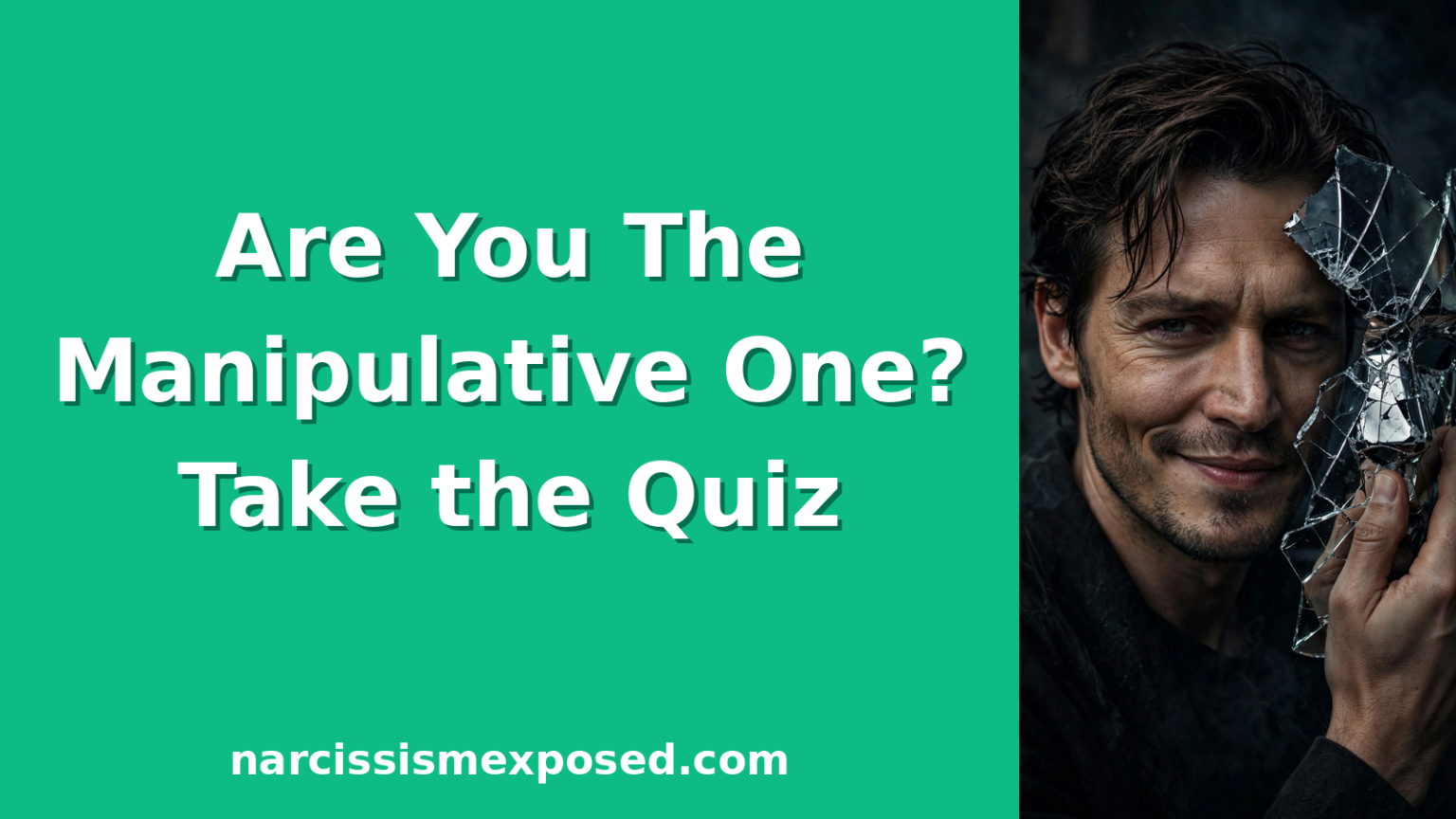
It is a brave question, and most people never ask it out loud. If you have ever caught yourself mid-argument thinking, am I the manipulative one here, this how manipulative am i quiz was made for you. Maybe someone you love told you that you guilt-trip them. Maybe you noticed that silence has become your favorite weapon, or that favors you do always seem to come with invisible strings attached. Asking the question does not make you a bad person. It makes you one of the few people honest enough to look in the mirror. This free quiz measures 10 observable patterns of manipulative behavior, the specific, real-life tactics people use to steer others without asking directly. Answer honestly, and in about 3 minutes you will have a score that shows you exactly where you stand. One honest note before we begin: this quiz is an educational self-reflection tool. It is not a medical diagnosis,
it cannot diagnose you or anyone else with a personality disorder, and a high score does not mean you are a narcissist.
Take the "How Manipulative Am I? Quiz" quiz below
What This Quiz Measures
This quiz measures how often you use 10 specific manipulative tactics in your real relationships. Each question describes an observable behavior, not a feeling or a motive. Giving someone the silent treatment to punish them. Laying on charm to get your way. Making someone feel guilty so they change their decision. Playing the victim to win sympathy. Twisting the truth, shifting blame, using ultimatums, pitting people against each other, keeping score with favors, and refusing to take responsibility. You answer on a simple frequency scale: Never, Rarely, Sometimes, or Often. Your answers are scored from 0 to 30, and your total places you in one of three bands: low, moderate, or strong manipulative tendencies.
What this quiz does not measure is why you do these things. Manipulation is a behavior pattern, and behavior patterns have histories. Many people who score in the moderate or high range learned these tactics in childhood, often in homes where direct requests were punished, ignored, or mocked. A child who could not simply say what they needed learned to get needs met sideways: through tears, through guilt, through performance. That history explains the pattern. It does not excuse the damage the pattern does now. Understanding where a tactic came from is useful for changing it. Using the history as a permanent excuse is just another tactic.
Being Strategic Is Not the Same as Being Manipulative
Before you take the quiz, it helps to draw a clean line, because a lot of people confuse the two and then use the confusion to dodge the question. Being strategic means planning how to communicate honestly for the best outcome. Rehearsing a difficult conversation. Choosing the right moment to raise a hard topic. Framing feedback kindly so the other person can hear it. That is skill, and healthy relationships need it.
Being manipulative means steering someone toward your outcome while hiding your real intent, so they cannot give informed consent to what is happening. The flattery that is really a leash. The tears that appear exactly when accountability arrives. The favor that was never a gift. The difference is not the tactic itself, it is the honesty underneath it. A direct request respects the other person’s freedom to say no. Manipulation is what happens when you want the yes so badly that you remove their freedom to choose.
There is also a difference worth naming between occasional manipulation and a manipulative pattern. Almost everyone has guilt-tripped someone once, usually when they were hurt and out of tools. That is a lapse. A pattern is when these tactics become your default operating system: the first thing you reach for, the thing you do without thinking, the approach you defend when someone names it. This quiz is built to detect the pattern, not to punish the lapse. If you recognize yourself in several of these questions, that recognition is the beginning of change, not a verdict on your character. People who study what a narcissist really is and the 12 traits to watch for sometimes worry the description fits them. The reassuring truth is that genuinely asking whether you are the problem is something people with entrenched narcissistic patterns almost never do.
10 Manipulative Patterns This Quiz Checks
Before you take the quiz, look through the 10 patterns it is built on. They are the specific, observable tactics people ask about most:
- You give someone the silent treatment to punish them or get your way.
- You lay on flattery or charm mainly to get someone to do what you want.
- You make someone feel guilty to influence their decisions.
- You play the victim or exaggerate your suffering to get sympathy or compliance.
- You withhold information or twist the truth to keep an advantage.
- You shift blame onto others instead of admitting you were wrong.
- You use threats, ultimatums, or emotional withdrawal to control someone’s behavior.
- You pit people against each other so you come out on top.
- You do favors mainly so the other person will owe you later.
- People tell you that you are hard to argue with because you never take responsibility.
If several of these hit uncomfortably close to home, you are in the right place. The quiz below turns these patterns into a scored result so you can see the full picture instead of guessing or rationalizing.
A Note Before You Start
Answer based on your real-life patterns across time, not on one dramatic week and not on who you wish you were. The most useful scores come from people who are honest about the tactics they have used for years, even the ones they are ashamed of. There are no trick questions and no passing grade. A low score does not make you a saint, and a high score does not make you a monster. Both are simply information about how you handle conflict, needs, and power in relationships. If a question does not quite fit your life, pick the closest honest answer and keep going. When you finish, you will get your score out of 30 and a clear explanation of what your band means, plus practical next steps for replacing these tactics with direct communication that actually works.
How Manipulative Am I? Quiz
Answer honestly. There are no right or wrong answers.
Start by entering your details. Your result is personalised for you.
Your details stay private. We never share your information.
Interpreting Your Results: What Your Score Means
Your quiz result is a score from 0 to 30. Every question was scored from 0 (Never) to 3 (Often), and your total falls into one of three bands. Here is what each band means in plain words.
0 to 10: Low manipulative tendencies. Your answers describe someone who mostly communicates directly, even when it is uncomfortable. You take responsibility, you do not keep score with favors, and you rarely use guilt or silence as tools. That is a genuinely healthy pattern, and in a world full of game-players it is worth protecting. If you took this quiz because someone accused you of being manipulative, trust the pattern your answers show, not the label someone put on you. Sometimes an accusation of manipulation is itself a manipulation tactic, a way to make you doubt your own directness. Keep communicating clearly and keep letting people say no to you.
11 to 20: Moderate manipulative patterns. Several of your answers point to real patterns worth looking at honestly. Maybe guilt does some of your talking. Maybe silence becomes a weapon when you are hurt. Maybe favors come with invisible strings attached, or accountability always seems to land on someone else. This does not make you a bad person, and it does not mean you have a disorder. It means you learned strategies that get results but damage trust, and strategies can be unlearned. The fact that you took this quiz is itself a good sign. People who never question their behavior are the ones who never change it. Your work now is to notice the tactic in the moment, name it silently, and choose the direct version instead. Say what you want. Accept the no. Apologize without the performance.
21 to 30: Strong manipulative patterns. Your answers describe someone who regularly steers people through guilt, charm, victimhood, or control rather than asking for things directly. Hear this clearly: this is a pattern, not a life sentence, and patterns are changeable. This quiz is not a diagnosis of any disorder. But the people around you feel the cost of these tactics even when you do not intend harm, and the relationships you want cannot survive them. The way out is not shame, which only drives the tactics underground. The way out is building the direct-communication muscles you never developed: asking plainly, tolerating rejection, sitting with guilt instead of outsourcing it, and letting people be angry with you without retaliating. If you want to understand the mechanics of what you have been doing, reading about how blame-shifting works and how DARVO flips accountability will show you the exact moves to retire.
What to Do With Your Result
A score is only useful if it changes something. If you landed in the low band, take it as confirmation and keep going. Protect your directness, especially around people who punish honesty. If someone in your life keeps calling your clear boundaries manipulative, that is worth examining on its own, because false accusations are a known control tactic. Reading up on the signs you are being gaslit can help you tell the difference between genuine feedback and someone rewriting your reality.
If you landed in the moderate band, pick one tactic and work on it for a month. Just one. If it is the silent treatment, practice saying I need an hour and then coming back, instead of disappearing for days. If it is guilt, practice making a direct request and accepting the answer without the sigh, the tears, or the history lesson. If it is score-keeping with favors, practice giving one thing with no strings and noticing how uncomfortable it feels. That discomfort is the old pattern protesting. Let it protest. Tell one trusted person what you are working on, because secrecy is where manipulative patterns thrive and daylight is where they die.
If you landed in the high band, take your result seriously and act on it, starting with honesty about the cost. These tactics work in the short term, which is why they survive. They fail in the long term, which is why your relationships keep breaking in the same place. Consider working with a therapist who understands personality patterns and accountability, not just one who validates your feelings. And do the reading: understanding what gaslighting actually is in relationships will help you recognize when you are doing a version of it yourself. Change here is absolutely possible, but it requires the one thing manipulation avoids: sustained, uncomfortable honesty.
Frequently Asked Questions
Does a high score mean I am a narcissist?
No. This quiz measures behaviors, not a personality disorder, and only a qualified professional can diagnose narcissistic personality disorder after a proper evaluation. Many people with strong manipulative patterns do not have NPD. They have learned tactics, often from childhood, that they never examined. The meaningful difference is this: people with entrenched narcissistic patterns rarely ask whether they are the problem. You just did.
Can manipulation be unintentional?
Yes, and this is one of the most misunderstood parts of the topic. Many people manipulate without conscious malice. They learned in childhood that direct requests get punished, so they developed sideways strategies: tears, guilt, charm, withdrawal. The intent may not be cruel, but the impact lands the same way. Unintentional manipulation still needs to change, because the people on the receiving end cannot feel your intentions, only your tactics.
What is the difference between manipulation and persuasion?
Persuasion is open about its goal. A salesperson persuading you wants you to know they are selling. Manipulation hides its goal so you cannot evaluate it. If you would be embarrassed for the other person to see exactly what you are doing and why, that is useful information. Persuasion respects the other person’s right to decide with full information. Manipulation depends on them not having it.
I only manipulate one person, not everyone. What does that mean?
It usually means that specific relationship has a dynamic that pulls the tactics out of you, which is worth examining from both sides. Sometimes one relationship is where all your unmet needs and old wounds live, so that is where the worst tactics surface. Sometimes the other person is themselves manipulative and you are mirroring them. Either way, the tactic is still yours to retire. You cannot control their behavior. You can control whether you keep reaching for the same tools.
How do I stop being manipulative for good?
Change happens in three layers. First, awareness: catching the tactic in the moment instead of an hour later. Second, replacement: having a direct alternative ready, like a plain request or an honest I am upset because statement. Third, tolerance: sitting with the discomfort when directness does not get you what manipulation would have gotten you. Most people can make real progress on the first two within months. The third is the long game, and it is where a good therapist earns their fee.